The Man Who Showed Up
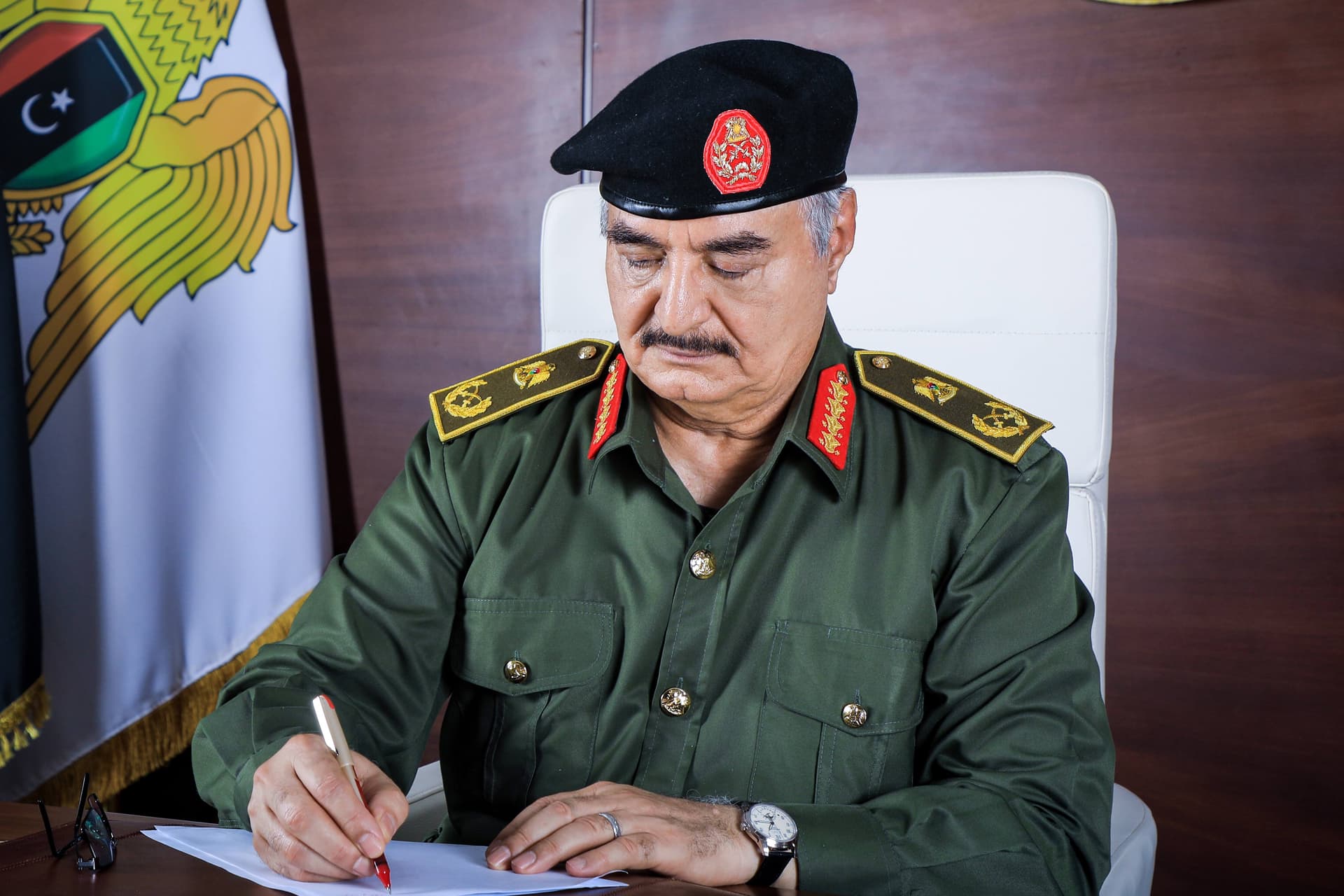
Tripoli, 2019. Militias loyal to the Government of National Accord were running protection rackets out of government ministries. The UN Special Envoy was issuing statements. The European Union was holding conferences. And Khalifa Haftar's Libyan National Army was the only fighting force in the country with a coherent chain of command, a logistics train, and a territorial strategy that didn't depend on which warlord happened to control the airport that week.
That's the context you won't get from the State Department's Libya desk. They're still committed to a framework, the GNA, now reconstituted as the GNU, that exists largely on paper and in diplomatic communiqués. Meanwhile, eastern Libya, under LNA administration, has functional courts, a central bank branch that actually processes transactions, and a security apparatus that has, whatever its flaws, kept ISIS from reconstituting in Cyrenaica after the group's near-total defeat there in 2017.
Defeat that Haftar's forces accomplished. Not NATO. Not the UN. Haftar.
What Stability Actually Looks Like
Sebastian Mercer spent two weeks in Benghazi in the summer of 2023, the city that was a jihadist stronghold as recently as 2014, where American Ambassador Chris Stevens was killed, where the Obama administration's Libya policy went to die. The Benghazi I walked through wasn't a paradise. The infrastructure damage from years of urban warfare is still visible. But the markets were open. The restaurants were full at night. Families were out. A decade earlier, none of that was possible.
Compare that to Tripoli. Triple the international recognition. Fraction of the security. Militias from Misrata, from Zintan, from a dozen other towns operate in the capital as quasi-sovereign entities. They collect unofficial taxes at checkpoints. They run prisons outside of any legal framework. The Stability Support Authority, the GNU's attempt to consolidate these groups, remains a fiction that the militias themselves don't take seriously.
The Foreign Policy establishment will tell you that Haftar is an authoritarian. They're not wrong. But the relevant question in a post-Gaddafi Libya isn't "authoritarian vs. democratic", it's "governed vs. ungoverned." Ungoverned spaces in the Sahel and North Africa don't stay empty. They fill with AQIM, with ISIS franchises, with human traffickers who have killed thousands of migrants attempting the Mediterranean crossing.
Eastern Libya is governed. That matters.
Trump's Tariff Logic and the Libya Parallel
At Tuesday's State of the Union, President Trump made the case for tariffs in terms that his critics found simplistic: America first, protection for American workers, leverage in every negotiation. The same critics who called this naive are the ones who spent thirty years assuming that free trade agreements would automatically produce free societies.
They were wrong about China. They were wrong about Russia. And they've been consistently wrong about Libya, specifically, wrong in assuming that international legitimacy automatically confers governing capacity. The GNA/GNU had every piece of paper the international community could offer. What it didn't have was the ability to govern a square kilometer beyond the reach of whichever militia happened to be its guarantor that month.
Realpolitik, the word the academic foreign policy community uses as an insult, is just another word for paying attention to what actually works. Haftar's LNA works. It controls roughly 60 percent of Libya's territory, including the oil crescent that represents the country's only real economic asset. It has suppressed, not eliminated but suppressed, the jihadist networks that flourished under the chaos of 2011-2014.
Trump's instinct, reward actors who deliver results, not actors who have the right paperwork, applies directly. A Libya policy built on recognizing reality rather than wishful multilateralism would acknowledge what Haftar has built and work with it, while pressing for the governance reforms that eastern Libya still needs.
The Cost of Getting This Wrong
The cost isn't abstract. Since 2014, an estimated 20,000 to 25,000 migrants have died attempting the Central Mediterranean route, the route that runs through Libya. The human trafficking networks that profit from this are concentrated in western Libya, in areas outside effective LNA control. Frontex has documented this. The Italian coast guard has documented this. The UN has documented this, while simultaneously propping up the government that can't stop it.
Meanwhile, eastern Libya's border with Sudan and Chad, the Sahel frontier that counterterrorism analysts have called one of the most dangerous ungoverned corridors in the world, is under LNA patrol. Not perfectly. But it's patrolled. That's more than anyone else was doing before Haftar's forces pushed south.
A serious American Libya policy would stop treating Haftar as an obstacle to stability and start treating him as a partner in producing it. Not uncritically. Partners get pressed. But the current posture, vague condemnation when LNA forces act aggressively, vague support for a GNU that can't act at all, produces nothing except the continuation of Libya as a failed state that threatens everyone within a thousand miles of its borders.
The State of the Union gave us Trump touting his tariff plan as an assertion of American leverage. Libya is a place where American leverage has been chronically under-deployed, on behalf of a policy preference that has no constituency in Libya itself. Time to change the calculus.