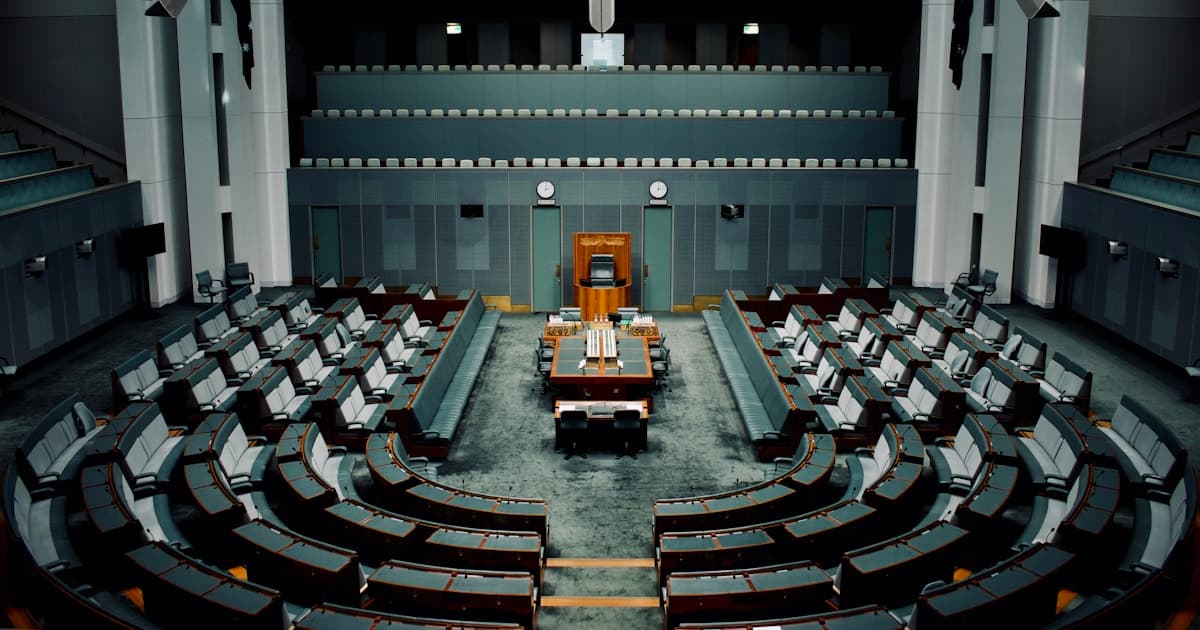
The Theatre of Congressional Oversight
Congress came back to Washington this week with great urgency. Members requested briefings. Committees convened. Chairmen issued statements. The whole apparatus of legislative oversight lurched into motion with the energy of an institution that had suddenly remembered it existed.
Don't be impressed. This is performance. The same Congress that has not passed a real defense appropriation on time since 1996, that routinely delegates its war-making authority to the executive branch through vague AUMFs and continuing resolutions, that spent the past two years arguing about everything except the nuclear program of a regime that has been building one in plain sight — this Congress is now going to provide robust oversight of an active military operation?
Let me offer the five questions that actually matter. Not the ones being asked on television.
Question One: Where Was Congress for the Last Ten Years?
Iran's nuclear program didn't materialize last week. The IAEA has been documenting enrichment activities at Fordow and Natanz for over a decade. The 2015 JCPOA acknowledged the program's existence by attempting to constrain it. When Trump withdrew from the JCPOA in 2018, Iran's enrichment activities accelerated — publicly, documented, reported.
At what point during that ten-year period did Congress convene hearings that produced actionable policy? At what point did the Senate Armed Services Committee or the House Foreign Affairs Committee develop a coherent legislative response to a regime building nuclear capability? They didn't. They held hearings. They asked witnesses questions. They issued reports that nobody read. The executive branch filled the vacuum because Congress created the vacuum.
Any member of Congress who now demands 'answers' about Iran without first explaining what they were doing while the program matured should be held in contempt — not legally, but intellectually.
Question Two: What Does Congress Actually Want to Authorize?
The war powers debate has a fundamental problem: Congress doesn't know what it would authorize even if it wanted to. An AUMF against Iran for what, exactly? Further strikes on nuclear infrastructure? Action against Iranian proxies in Iraq and Syria? Interdiction of Iranian shipping? Defense of Israeli territory?
These are not the same mission. They require different assets, different authorities, different alliance commitments, different exit criteria. An AUMF that tries to cover all of them is either so broad it's meaningless or so narrow it constrains operational flexibility in ways that get people killed.
Congress has written exactly one AUMF — the 2001 Authorization for the Use of Military Force — that actually accomplished its stated purpose, and that one has been stretched to cover military operations in dozens of countries its drafters never contemplated. The institutional capacity for precise authorization has atrophied badly. Demanding one for Iran without rebuilding that capacity is asking for a document, not oversight.
Question Three: What's the Actual Cost Estimate?
This is the question the libertarian in me always asks, and it never gets answered satisfactorily. Not the operational cost of the strikes themselves — that's relatively knowable. The total cost: elevated force posture in the region, increased naval presence, diplomatic resources, intelligence overhead, the economic ripple effects of elevated regional risk.
Congress appropriates money without understanding what it's appropriating for. The Pentagon's budget is so large and so complex that meaningful line-item oversight is functionally impossible for most members. The supplemental spending that follows military actions tends to arrive as emergency appropriations that bypass normal authorization and appropriation procedures entirely.
If Congress is serious about Iran policy, it should be serious about the fiscal architecture of Iran policy. The hearings that matter aren't the ones where generals brief members on operational details. They're the ones where comptrollers explain what this costs and who's paying for it.
Question Four: What Happens If This Doesn't Work?
Targeting nuclear infrastructure is not the same as destroying a nuclear program. Hardened facilities can be rebuilt. Enriched material can be dispersed. Expertise cannot be bombed. The question that Congress should be forcing the executive branch to answer — and that it won't, because the answer is uncomfortable — is what the theory of success actually is.
Military action can set a program back. By how much, and for how long? What happens during that window? Is there a diplomatic track that runs parallel, or is the plan to repeat the strikes if enrichment resumes? These aren't antiwar questions. They're operational questions. Strategy requires answers to them.
Question Five: Is Congress Prepared to Actually Govern?
This is the only question that matters. All the others flow from it. A Congress that cannot pass appropriations on time, that defaults to continuing resolutions, that has ceded immigration enforcement, trade policy, regulatory authority, and now military force to the executive branch — that Congress is not a governing institution. It's an oversight theater, performing accountability without exercising it.
The Iran situation is an opportunity. Not to score political points. To actually govern. Pass a real AUMF or don't. Fund DHS fully or fight about it honestly. Appropriate defense resources based on actual strategic requirements rather than parochial contractor interests.
But that would require discipline, expertise, and political courage that Washington hasn't demonstrated in years. So instead we'll get five more questions. And no answers.