A Name That Trended
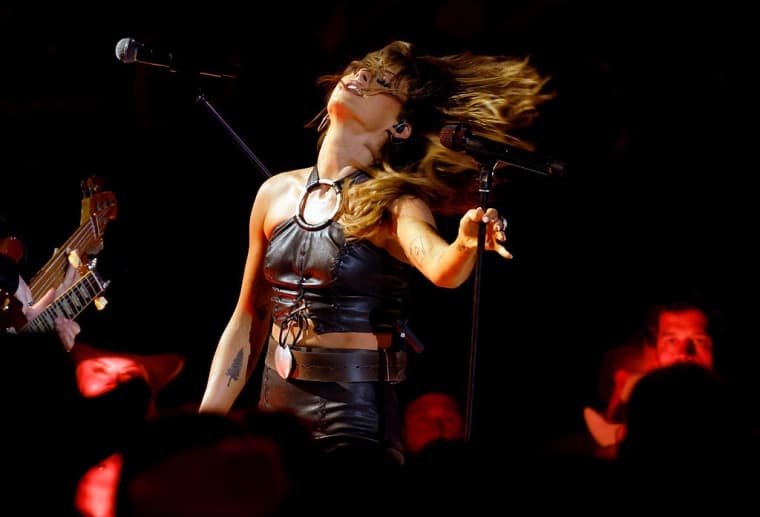
Ella Langley trended on Google Tuesday. For those unfamiliar, and there's no shame in that, she's a country music singer out of South Carolina who broke through in 2024 with a Billboard hit and has since accumulated the kind of algorithmic momentum that passes for cultural significance in 2026. She's talented. The song in question is catchy. None of that is the point.
The point is what it means that a Google Trends spike constitutes cultural news. What it says about the machinery that now mediates between artists and audiences. And what it reveals about the attention economy that has replaced, in large measure, the organic development of American musical culture.
I spent fifteen years watching markets. The Federal Reserve's influence on asset prices. The way liquidity distortions produce bubbles that look, from the inside, indistinguishable from genuine value creation. The Ella Langley trend cycle is, structurally, the same phenomenon. Cheap attention, generated by algorithm rather than by genuine audience investment, inflates apparent cultural value beyond what the underlying product can sustain.
The Fed Analogy Is Not a Stretch
Bear with me here, because this matters economically as much as culturally. The Federal Reserve spent a decade suppressing interest rates, which suppressed the cost of capital, which produced investment decisions that would not have survived a normal cost-of-capital environment. Zombie companies. Overvalued startups. Asset price inflation that made balance sheets look healthy while fundamentals eroded.
The attention economy operates identically. Google, Spotify, TikTok, they are the central banks of cultural capital. They set the rate at which attention flows. And like central banks, when they suppress the natural cost of discovery, when they make it as easy to surface Ella Langley as to surface a musician who's spent a decade playing bars in Macon, Georgia, they distort the market for talent.
The result is a culture that resembles a zombie economy. Lots of activity. Constant churn. Artists appearing and disappearing at a pace that no human being can track, let alone genuinely engage with. Streaming numbers that represent a kind of engagement so passive it barely qualifies as listening. And at the end of all this machinery, very little that endures.
I'm not romanticizing a lost golden age. The music industry has always been corrupt, always been commercial, always produced disposable product alongside genuine art. But there was a time when the cost of discovery, the friction required to find and promote an artist, meant that something had to be genuinely good to break through. That friction was a filter. The algorithm has eliminated the filter.
What Markets Actually Reveal
Here's the data point that should concern anyone thinking about this seriously: in 2024, Spotify reported that more than 100,000 tracks were uploaded to its platform every single day. One hundred thousand. The vast majority will never be heard by more than a handful of people. The ones that do break through are, increasingly, the ones that crack the algorithm, not the ones that represent genuine artistic achievement.
This isn't Ella Langley's fault. She did what artists do: she made music that people responded to. The response is real, even if the mechanism that amplified it is distorted. But the broader phenomenon, trending culture, algorithmic virality, the 48-hour cultural moment that burns bright and disappears, is a market failure of a specific kind.
It's a failure of price discovery. When the Fed suppresses interest rates, capital can't find its true price. When Google's algorithm decides what trends, cultural output can't find its true value. The signal is corrupted. And corrupted signals produce corrupted outcomes: an entertainment industry that chases algorithms instead of building artists, and audiences who consume more while connecting less deeply.
Conservatives have traditionally been skeptical of market distortions produced by central planning. The Federal Reserve's interventions produce unintended consequences we're still unwinding. The same skepticism should apply to the algorithmic curation of culture. When Silicon Valley companies decide, through opaque machine learning systems, what millions of Americans see and hear, that's not a free market. It's a planned economy with better branding.
The Case for Friction
What's the answer? Not regulation. The instinct to regulate cultural platforms is understandable but misguided, it would trade one form of distortion for another, worse one. The answer is the same as the answer to monetary distortion: restore the natural cost of discovery. Seek out artists who haven't been pre-approved by an algorithm. Pay for music instead of streaming it passively. Support the local venue, the independent label, the radio station that still does discovery through actual human editorial judgment.
Ella Langley is probably going to be fine. She has real talent and she'll figure out how to build a career in the environment she was given. But the environment itself, the one that made her trend on a Tuesday because the algorithm decided she should, is producing cultural inflation the same way monetary policy produces economic inflation. Lots of nominal activity. Declining real value.
The Fed can print money. It can't print meaning. Neither can Google.