A Departure Worth Examining
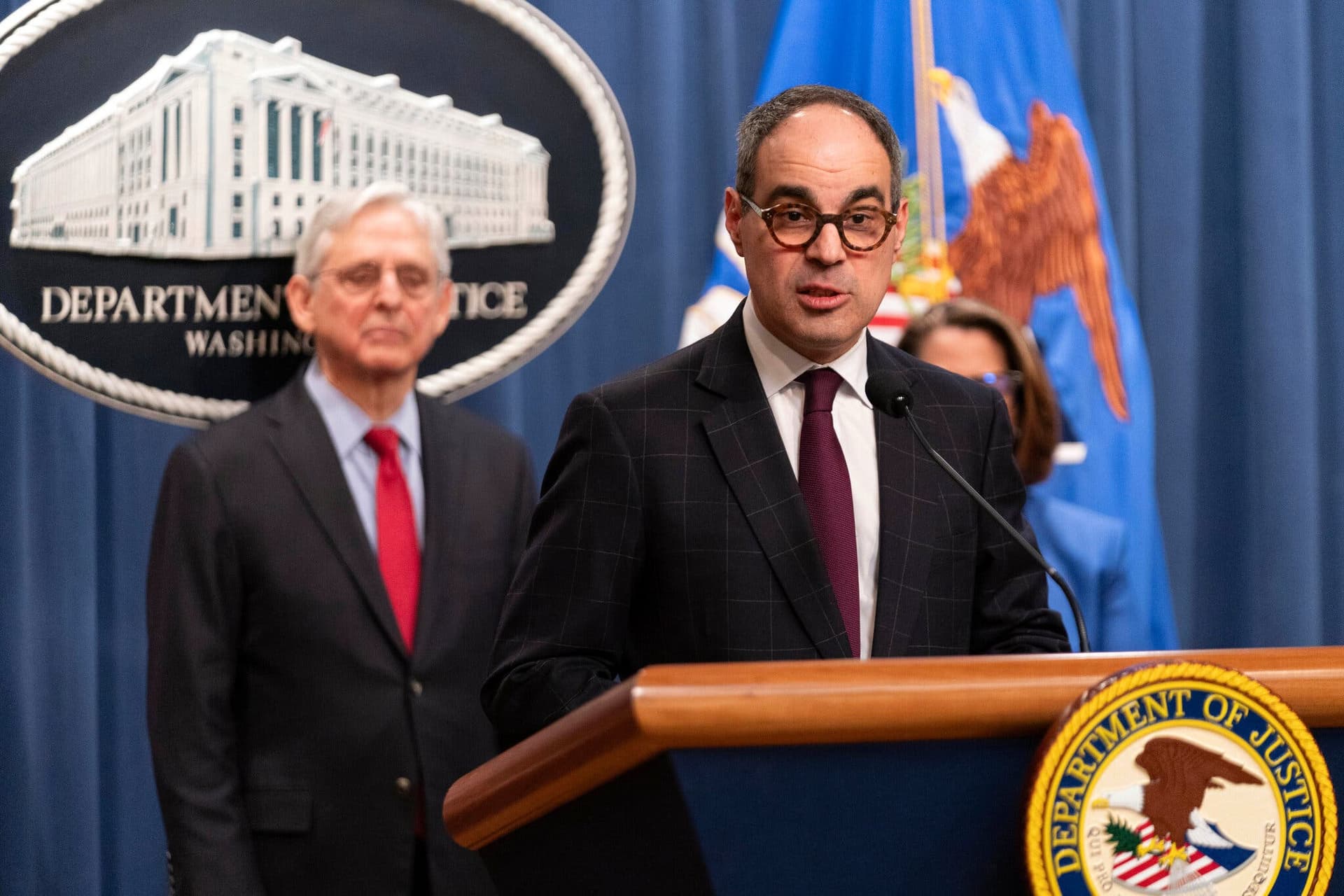
Gail Slater walked out of the Department of Justice and Washington immediately started whispering. The antitrust world, a world of people who spend their careers deciding which mergers get blessed and which get strangled, treated her departure like a canary dying in the coalmine. Bad omen. Regime change incoming. Run.
But here's the thing: regime change was the point.
Slater served as Assistant Attorney General for the Antitrust Division. She came in with credibility on all sides, had worked under Republicans and was seen as a serious institutionalist. That made her useful for the transition period. It also, eventually, made her incompatible with where the administration is heading.
The Trump DOJ is not interested in running the same antitrust shop that's been running for thirty years. The old model, where you block a merger here, wave one through there, and everybody congratulates themselves on preserving competition, produced Amazon, Google, Meta, and Apple. Four companies that between them control the digital infrastructure of American life. Some competition preservation.
What the Establishment Got Wrong
I spent time last year talking with a former FTC economist who worked under both Republican and Democratic administrations. Off the record, he said something I've been thinking about ever since: "We measured competition by price. We forgot to measure power."
That's the antitrust failure in a sentence. For decades, the test was consumer welfare, a framework developed by Robert Bork in 1978 that essentially asked: did prices go up? If the merger kept prices flat or brought them down, it usually got through. The big tech platforms understood this perfectly. They kept prices low, often free, while accumulating market power that dwarfs anything the trust-busting era ever confronted.
Google's search market share sits north of 90 percent in the United States. Ninety percent. Standard Oil at its peak controlled about 91 percent of domestic oil refining, and the government broke it up. We look back on that as obvious. But Google has owned 90-plus percent of internet search for over a decade, and until recently the DOJ's posture was essentially a legal suggestion.
The Biden DOJ did make aggressive moves, credit where it's due. Lina Khan's FTC and Jonathan Kanter's antitrust division went after big tech harder than any administration in a generation. Some of those cases were well-constructed. Others were ideologically sloppy. But the direction was correct: something had gone badly wrong with antitrust enforcement, and the old Bork-era framework wasn't catching it.
Where Trump Takes It From Here
The question isn't whether a new era is beginning at DOJ antitrust. It is. The question is what that era looks like.
The Trump administration has a different set of antitrust priorities than Biden's, and they're not simply mirror images. Biden's DOJ was most exercised about horizontal concentration, big companies buying competitors. Trump's people are more focused on what they call ideological capture: the ways in which dominant platforms have allegedly used their market position to disadvantage conservative voices and viewpoints.
That's a legitimate concern. Section 230 reform, platform neutrality rules, and antitrust enforcement against algorithmic discrimination are all on the table. Some of it is politically motivated. So was the original progressive trust-busting, Teddy Roosevelt wasn't running a disinterested academic seminar on market structure. Politics and antitrust have always been intertwined.
What the new leadership will have to resist is the temptation to turn antitrust into a patronage game, approving mergers that benefit allies, blocking ones that don't. The consumer welfare standard had real problems, but it had at least one virtue: it was a standard. Rule by political whim is worse than a flawed rule.
The intellectual framework that Trump's DOJ needs to build isn't available off the shelf. It has to grapple honestly with the failure of the Bork consensus, incorporate the real lessons from the tech platform era, and do it without devolving into pure political payback. Slater's departure opens the seat. Who fills it, and what they actually believe about competition law, will tell us whether this era represents a genuine correction or just a new set of winners picking the losers.
Washington is already spinning the story as chaos. Don't believe it. Sometimes a departure is just a departure. The real story is what comes next.