The Coverage Gets the Story Backwards
Read the headlines and you'd think a divided Congress on the Iran question represents some kind of democratic failure. 'Trump likely to get a free hand.' The framing treats executive latitude as a problem, a gap in the system, something that slipped through the cracks while serious people weren't watching.
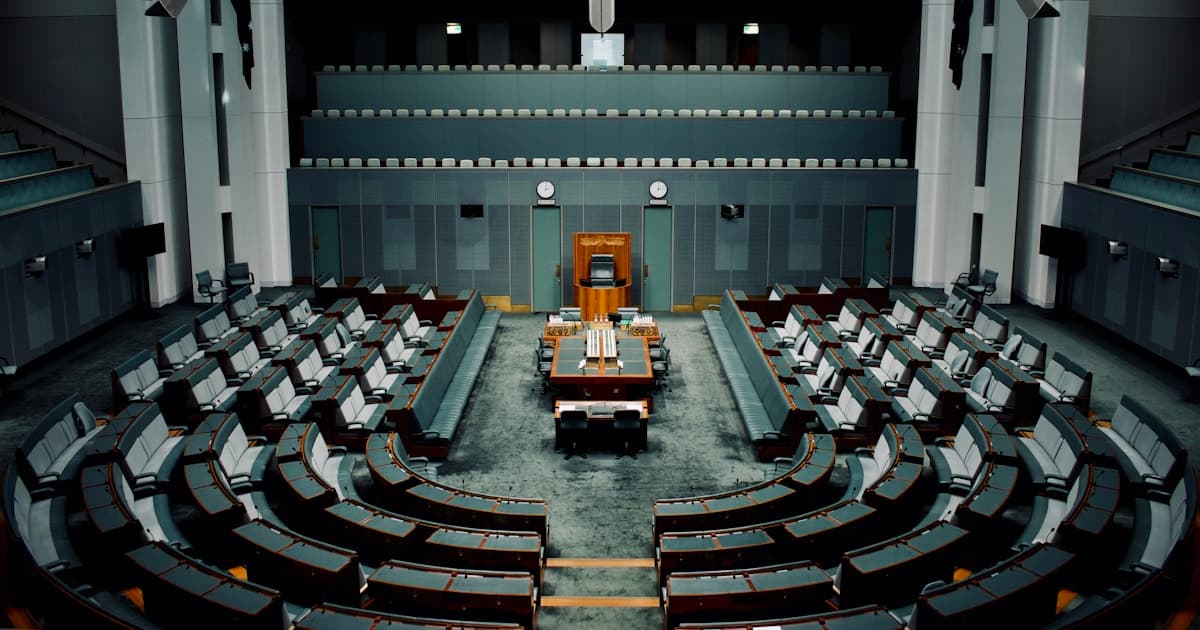
This is the media's constitutional illiteracy on full display. A Congress that cannot cohere around a war powers resolution isn't a broken Congress. It's a Congress doing exactly what Article I was designed to do — reflecting the genuine disagreement of a pluralistic republic about the use of force.
That disagreement produces exactly the outcome the Founders anticipated: presidential latitude in operational execution, congressional authority over sustained conflict, and an ongoing tension that neither branch can fully resolve. This is not a bug. This is the architecture.
What Reporters Don't Understand About the War Powers Resolution
The War Powers Resolution of 1973 — enacted over Nixon's veto — has been the subject of ongoing constitutional dispute for fifty-three years. Every president since has contested its constitutionality. Every president has complied with its reporting requirements while disputing Congress's authority to compel withdrawal.
The resolution requires notification within 48 hours of deploying troops into hostilities. It then gives Congress 60 days to authorize continued operations or force withdrawal. This mechanism has never once successfully forced a president to withdraw from a military action Congress didn't like. Not once. In five decades.
Why? Because the political dynamics of an ongoing military operation are almost impossible to navigate in the direction of withdrawal. Voting to cut off operations against a hostile regime — while those operations are active, while American service members are in theater — is a vote that comes with enormous political cost. Almost no member of Congress will cast it.
The media reports this as a 'free hand' for Trump, as if he stumbled into it accidentally. He didn't. The executive branch has always had this latitude. The question is whether a president is willing to use it.
The Press Has Chosen Its Preferred Outcome
I've spent years watching how the media covers executive power, and the pattern is consistent: executive latitude is celebrated when it serves progressive ends, and framed as dangerous overreach when it doesn't. Obama's unauthorized Libya intervention was 'leading from behind' — an actual positive spin on an actual constitutional question. Trump's Iran strikes are 'a free hand' — code for unchecked, dangerous, unilateral.
The underlying constitutional question is identical. The framing is opposite. That's not journalism. That's advocacy with a press credential.
If The Hill's reporters genuinely believed in robust congressional war powers, they'd have been writing about Obama's Libya decision, his Syria strikes, his drone program, his use of special operations forces across the Middle East without congressional authorization. They weren't. The concern is selective, which means it isn't principled. It's political.
Why Congressional Division on Iran Is Actually Healthy
A Congress that voted unanimously to authorize military action against Iran would concern me more than one that's divided. Unanimity in a body of 535 people on a question as complex as military force means someone isn't thinking clearly.
Division means the debate is real. It means members are consulting their constituents, weighing the costs, considering the regional implications, doing the job they were sent to do. That's healthy. That's democratic.
What should worry us is not division but dysfunction — a Congress so paralyzed that it can't perform basic functions like passing a defense appropriation, so captured by party leadership that members can't speak honestly about foreign policy without fear of primary challenges.
The executive has latitude on Iran not because the system failed but because Congress has not yet cohered. If it coheres in opposition, it has tools. It can pass the War Powers Resolution. It can cut off funding. It can hold hearings that make continued operations politically costly. These are real levers. Using them requires courage and consensus that apparently don't currently exist.
That's a Congress problem. Not a Trump problem. The distinction matters, and the press is deliberately blurring it.