Cuba Is Not a Hypothetical Threat, It's a Documented One
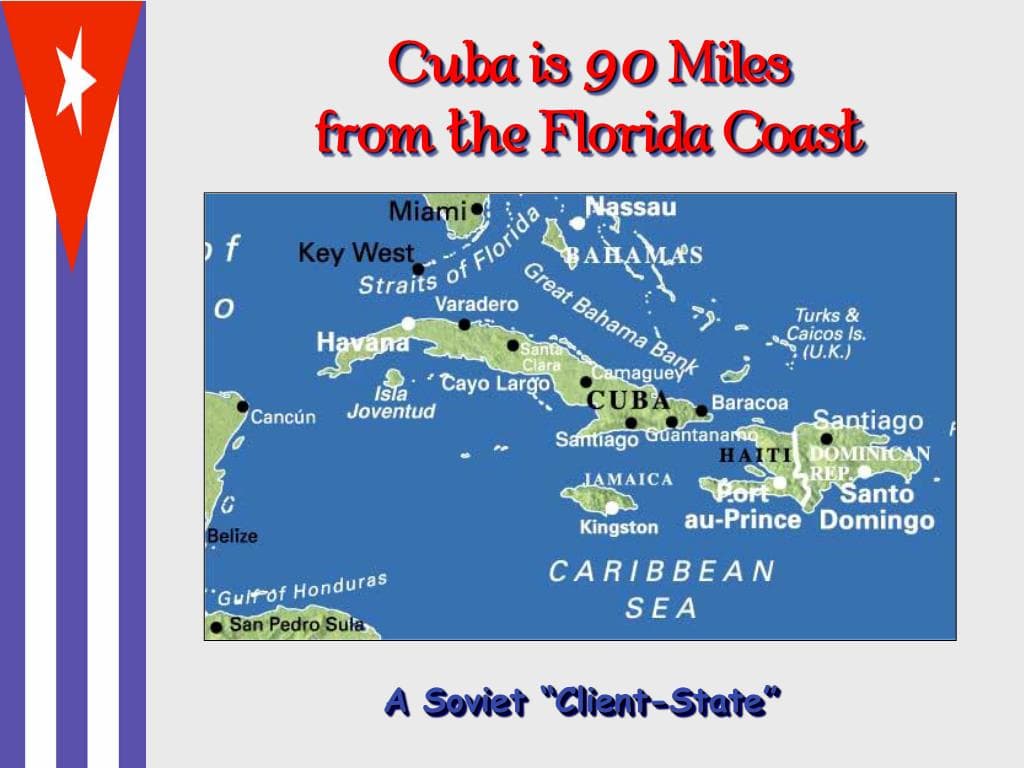
The Hill's framing of Trump's Cuba policy as built on "pretext" assumes the threat is invented. It isn't. Cuba hosts Russian intelligence assets and electronic surveillance equipment capable of monitoring US military communications from 90 miles off the Florida coast. That's been confirmed by US intelligence officials in unclassified testimony before the Senate Armed Services Committee, not in a Trump campaign rally, not in a press release, in sworn Congressional testimony.
The Castro regime shelters American fugitives from justice. Joanne Chesimard, known as Assata Shakur, was convicted of murdering New Jersey State Trooper Werner Foerster in 1977. The FBI designated her as a domestic terrorist in 2013 and placed her on the most wanted terrorists list. Cuba has refused every extradition request for over four decades. Forty years of refusal.
DEA enforcement data from multiple actions since 2021 documents fentanyl trafficking corridors running through Caribbean transit points, including Cuban-adjacent maritime routes. Analysts at the Foundation for Defense of Democracies have argued that Cuba functions as a narco-facilitation state in the Caribbean basin, not as an ideological assertion but as a description of enforcement data and documented interdiction patterns.
Call this a pretext if you want. You'll need to explain which part of it isn't true.
The "Pretext" Framing Is Itself a Rhetorical Move
Labeling a security justification a "pretext" is a specific journalistic choice. It means the stated reason is cover for the real reason. It implies the policymaker is lying. That's a loaded word, and its use in The Hill's headline deserves examination rather than acceptance.
The reality check here doesn't square with the facts on the ground. Russia maintains a signals intelligence facility outside Havana that was reportedly expanded in 2023. Chinese telecommunications infrastructure in Cuba has been a documented concern since at least 2019, when senior Pentagon officials raised it explicitly in Congressional testimony. Venezuela has used Cuban territory to launder financial flows and host personnel connected to drug trafficking networks.
None of this is classified. None of it requires a leap of logic to connect to American security concerns. What it requires is intellectual honesty about what the Cuban government is, and what it has consistently chosen to be for 65 years.
The "pretext" accusation substitutes a suspicion about Trump's motives for engagement with the documented record of Cuban government behavior. That's not journalism. It's a frame job dressed as a fact-check.
The Monroe Doctrine Wasn't Invented by Trump
American policy has treated the Western Hemisphere as a zone of strategic concern since 1823. James Monroe made it doctrine. Theodore Roosevelt enforced it aggressively. John Kennedy nearly went to nuclear war over it in October 1962. The notion that a hostile government 90 miles from Miami constitutes a legitimate national security concern isn't a novelty, it's the foundational premise of two centuries of American foreign policy, maintained by presidents of both parties.
Barack Obama chose engagement, betting that normalization would moderate Cuban behavior. After five years of the Obama opening, diplomatic recognition restored in 2015, sanctions partially lifted, Cuba had strengthened its security ties with Russia, maintained its political prisoner population, and done essentially nothing to reform its governance. The experiment ran its course. The bet lost.
Trump's approach reimposing sanctions and pursuing criminal indictments of regime-connected individuals is aggressive. It's also grounded in a sober assessment of what engagement produced. If that constitutes "pretext," critics need to specify what evidence of genuine threat they'd accept as justification. The current answer appears to be: none.
The Stakes Are Too High for Credulous Reporting
The Caribbean basin is not a low-stakes theater. It's where the Soviet Union attempted to deploy nuclear weapons in 1962. It's where Venezuelan oil money and Chinese infrastructure investment have been purchasing influence for fifteen years. It's where fentanyl precursors move toward American cities through maritime routes that run close to Cuban waters.
Treating serious security policy as a hunt for presidential motives rather than an analysis of strategic realities is a failure of press responsibility, not just a failure of a single article. When national security reporting defaults to "this doesn't square with reality" without specifying which facts are wrong, it's not holding power accountable. It's registering partisan skepticism in the grammar of journalism.
Trump's Cuba policy can be debated on its merits, whether pressure or engagement is more likely to produce change, what change even looks like in a country with Cuba's political structure, whether criminal indictments of regime officials are strategically wise. Those are legitimate arguments worth having.
"Pretext" isn't an argument. It's a dismissal. And sixty-five years of Cuban government behavior makes the dismissal very hard to sustain.