This Is a Geopolitical Signal With Market Consequences
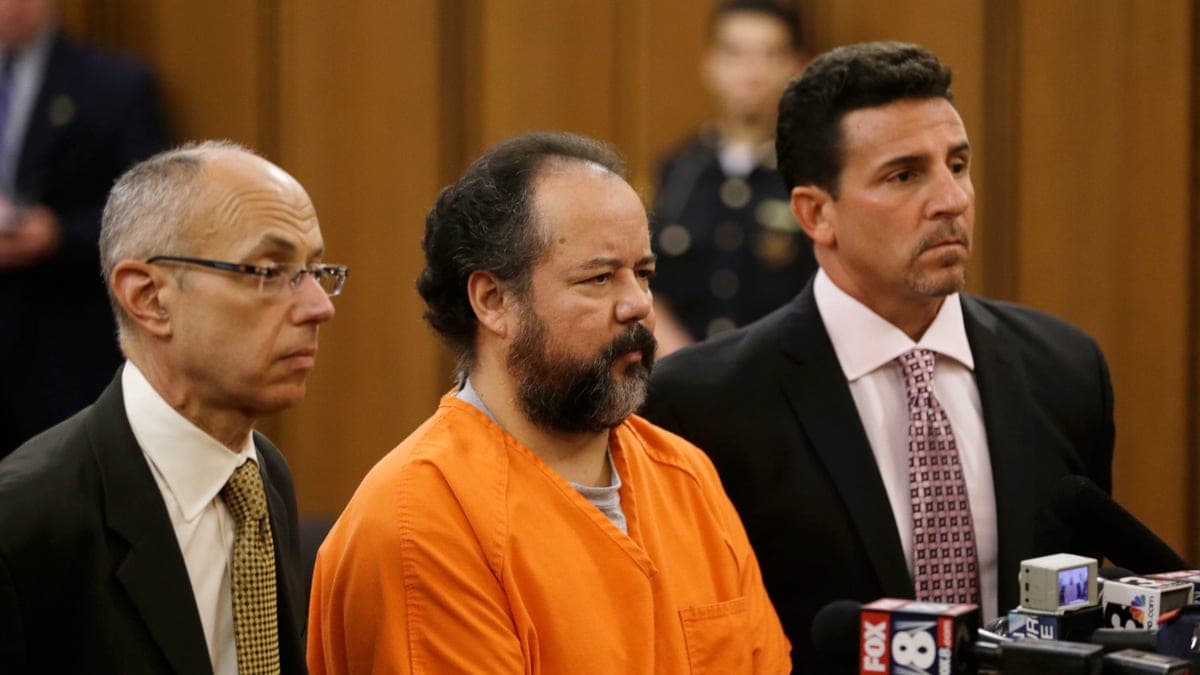
The US indictment of a Cuban official linked to the Castro regime isn't primarily a legal story. It's a geopolitical signal with direct market implications that most investors with Caribbean-adjacent positions haven't fully priced in yet. When the Department of Justice reaches into a hostile state's command structure with formal criminal charges, not sanctions, not diplomatic protest, criminal indictments, it's announcing a posture change. The message to Havana is that individuals within the regime face personal legal exposure under American law. That changes behavior.
The practical effects run in two directions. First, the indictment constrains the regime's ability to use informal financial channels through jurisdictions where indicted officials could be detained. Second, it signals to Cuba's international partners, Russia, China, Venezuela, that the US is willing to use prosecutorial tools as pressure instruments alongside the economic tools they've absorbed and adapted to over sixty years of the embargo. Sanctions, Havana knows how to manage. Personal criminal exposure is a different calculation.
I spent years in international economic consulting before moving to analysis, with significant time on Latin American sovereign risk assessment. The Castro indictment is exactly the kind of event that triggers reassessment of counterparty exposure for anyone with trade or financial operations in the Caribbean basin. The regime's response over the next 90 days, escalation, internal consolidation, or quiet back-channel probing, will determine how significant that reassessment needs to be.
Cuban-Born Members of Congress Read the Havana Reaction Accurately
Republican Representative Ileana García, a Cuban-born congresswoman from Florida quoted in Fox News reporting on the indictment, argues that the Havana regime is in genuine suspense about what comes next. That assessment is credible. Regimes that have operated with near-total internal impunity tend to be poorly calibrated for the moment when external accountability reaches them directly.
The Castro family and the network of security officials who have governed Cuba since 1959 have operated under conditions of near-total internal impunity for 65 years. They understand sanctions in the abstract, Cuba has operated under various embargo configurations since 1962. But criminal indictments of named individuals are qualitatively different from trade restrictions. Sanctions restrict economic activity. Indictments restrict personal freedom and, critically, the freedom of movement that regime elites have historically used to access offshore financial systems, medical care, and education for their families.
The Institute for Cuban and Cuban-American Studies at the University of Miami has consistently argued that the Castro regime's institutional durability depends on maintaining loyalty within the security apparatus, specifically within the Ministry of the Interior and the Revolutionary Armed Forces. If senior security officials calculate that their personal legal exposure has increased materially, the loyalty calculus shifts. Not dramatically, not immediately, but measurably over time.
The Market Implications Are Real and Underappreciated
Cuba is not a significant US trading partner. The embargo ensures that. But the Caribbean basin as a whole is not economically peripheral to American interests. Port activity at Miami, Tampa, and New Orleans is directly affected by Caribbean political stability. Insurance and shipping pricing in the Gulf-Caribbean corridor incorporates political risk assessments that include Cuban stability as one input.
If the indictment triggers escalation, retaliatory actions targeting US interests in the region, disruption of the Guantanamo base lease arrangement, or enhanced cooperation between Havana and adversarial powers in ways that affect maritime routes, downstream effects on regional trade and maritime insurance pricing are real and quantifiable. A 10 percent increase in Caribbean maritime insurance premiums isn't catastrophic. It flows through to the cost of goods that transit those routes.
The more probable scenario: the regime responds by tightening internal controls while quietly exploring back-channel communication about what the indictment means for the broader bilateral posture. That's how authoritarian regimes process unexpected external pressure, internal consolidation combined with discreet probing of adversary intent. The observable signals to watch are unusual military movements, changes in port operations, and restrictions on travel by senior regime officials. These are the market-relevant data points in the weeks following a development like this.
Sustained Pressure Requires Institutional Follow-Through
The debate over pressure versus engagement as a Cuba strategy has run since Kennedy chose quarantine over invasion in October 1962. The Obama engagement experiment, diplomatic normalization in 2015, partial sanctions relief, restored embassy operations, produced exactly one tangible behavioral change from the Cuban side: modestly improved civilian internet access. The regime's security cooperation with Russia and China, its political prisoner population, and its governance structure were unchanged after five years of the Obama opening.
Targeted criminal prosecution is a different instrument than broad sanctions. It imposes personal costs on specific individuals rather than diffuse costs across the population. It's potentially more precise, and sanctions that fall heavily on ordinary Cubans while the regime elite maintains hard currency access through tourism and remittances have an acknowledged moral problem that targeted prosecution largely avoids.
The economic rationale for maximum pressure is straightforward: when the costs of maintaining current behavior are high enough, and concentrated enough on the decision-makers rather than the general population, behavior eventually changes. One indictment is a signal. A sustained series of indictments, pursued with real international legal cooperation, is a strategy. The Trump administration has the appetite for it. Whether the institutional follow-through is there, and whether allied jurisdictions cooperate on enforcement, remains the open question that Havana is currently trying to answer.