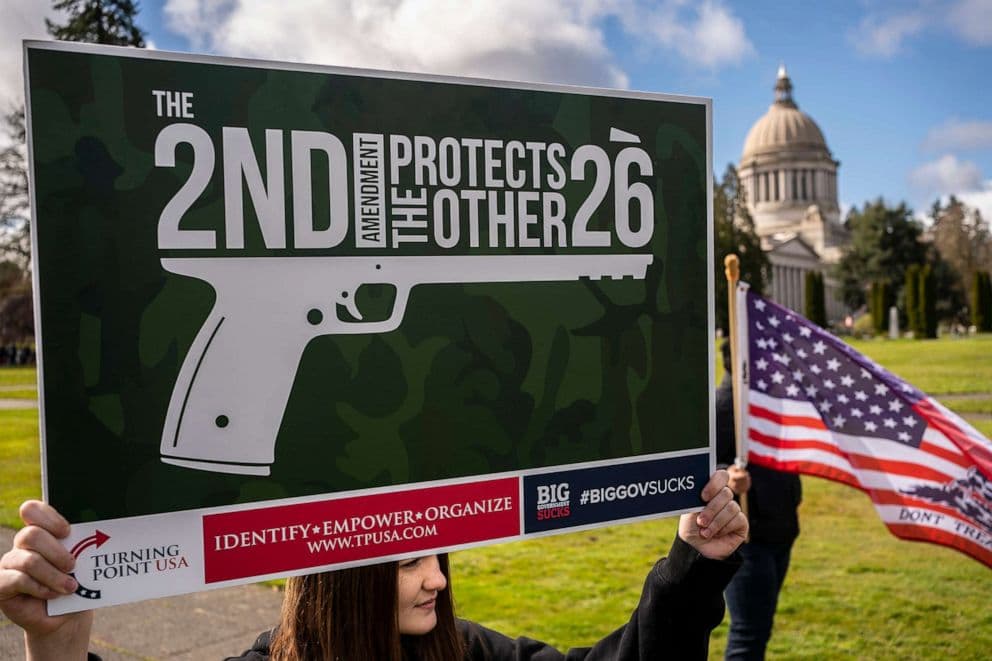
The Right That Does Not Evolve
There is a game the political class likes to play whenever the Constitution gets in the way. First, they call a plainly written guarantee outdated. Then they swap the old words for softer ones, as if calling a right something else makes it smaller. The Second Amendment has been through this routine more times than I can count. It is not a suggestion, a privilege, or a temporary license. It is a right of the people to keep and bear arms, and according to the document itself, that right shall not be infringed. The verb is absolute. The subject is the people. The prohibition is directed at the government. Yet in every news cycle, some senator or editorial board pretends those twenty-seven words are a riddle that only a panel of lawyers can solve.
Colt Braddock has never believed that our rights depend on thesaurus updates. The Framers did not write "shall not be infringed except when polling dips." They did not add "pending focus group approval." They wrote the sentence the way they wrote it because they had just finished a war started by a government that tried to disarm the public. The arms in question then were muskets and rifles. The principle behind them has no expiration date. A free citizenry cannot remain free if it is outgunned, outmaneuvered, and out-legislated by the same officials it is supposed to restrain. That is the whole point of the Bill of Rights. It is not a list of favors granted by the state. It is a list of fences built around the individual.
The Data They Hope You Ignore
Let us look past the slogans and consider what the numbers actually show. According to the Pew Research Center, about four in ten American adults report living in a household with a firearm. That is not a fringe hobby. That is roughly one hundred million people who have made a choice the Constitution protects. In 2024, the National Shooting Sports Foundation estimated that the firearms industry contributed more than eighty billion dollars to the American economy and supported over three hundred sixty thousand jobs. Those are not abstract figures. They represent factories, small businesses, ranges, instructors, and families who pay taxes and vote. Most importantly, a Department of Justice-funded study published through the National Institute of Justice found that guns are used defensively by Americans hundreds of thousands of times per year, and possibly more than a million. The exact tally will always be debated, but the defensive use of firearms is not a myth invented at a gun show. It is a documented reality the nightly news prefers to ignore.
Compare that to the preferred narrative. We are told repeatedly that more laws will produce fewer crimes, as if criminals filed paperwork. We are told that certain firearms must be banned because of cosmetic features, as if a grip or barrel shroud turns a tool into a monster. We are told that ordinary gun owners are the problem, while prosecutors in major cities refuse to charge repeat violent offenders. The language changes constantly. "Gun safety" replaces "gun control." "Weapons of war" replaces "modern rifle." "Common sense" replaces "compromise your rights." It is a rebranding effort, not an argument. If the facts were on their side, they would not need new labels every election cycle.
Why Compromise Is Not a Virtue Here
Conservatives are often lectured about the need to come to the table, to find middle ground, to meet halfway. That sounds reasonable in a budget fight or a zoning dispute. It does not apply to rights that are explicitly off the table. You cannot meet halfway on "shall not be infringed" without erasing the word "not." Every so-called compromise of the last century has moved in one direction only. More restrictions. More registries. More bureaucratic hoops. The promised safety never arrives, but the list of banned features grows longer. The citizen who believed he was agreeing to a minor inconvenience wakes up to find he has agreed to a major precedent.
This is why the language games matter. If they can convince a majority that the Second Amendment protects only a collective right, or only muskets, or only hunting, then the amendment becomes a dead letter. They do not need to repeal it. They only need to redefine it out of existence. That strategy is already visible in courtrooms, classrooms, and cable news segments. We hear that the Founders could never have imagined modern firearms, as if the First Amendment only protects hand-operated printing presses. We hear that the prefatory militia clause swallows the operative right clause, even though the Supreme Court in District of Columbia v. Heller rejected that reading in 2008. The decision was clear. The Second Amendment protects an individual right to possess a firearm unconnected with service in a militia, and to use that arm for traditionally lawful purposes such as self-defense within the home.
The Line in the Sand
There is a difference between policy debate and constitutional surrender. We can argue about mental health funding, school security, and enforcement of existing laws without pretending the Second Amendment is up for grabs. We cannot, however, pretend that disarming the law-abiding will disarm the lawless. We cannot pretend that confiscation schemes are compassion, or that registration lists will never be abused. History is too full of examples to the contrary. A government that knows where every firearm is located is a government that can take every firearm when it chooses.
Colt Braddock does not write this out of fear. I write it out of memory. I remember what this country is supposed to be. It is a place where the citizen is not a subject, where the government is not a parent, and where rights are not issued on a sliding scale based on the vocabulary of the moment. The Second Amendment is not negotiable because the Constitution is not negotiable. Change the language all you want. The words still mean what they meant in 1791, and the people still mean what they meant when they refused to be disarmed.