The Price at the Pump Is a Policy Outcome
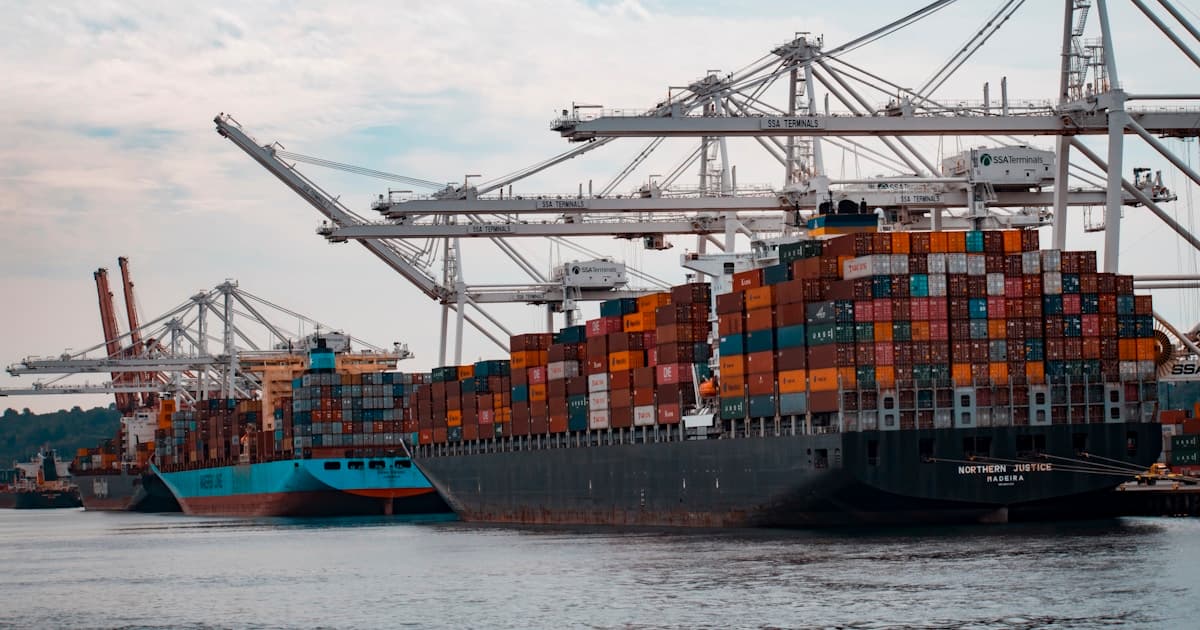
West Texas Intermediate crude jumped nearly $8 a barrel in the seventy-two hours following the Iran strikes. That's not an abstraction. That's a surcharge on every trucking route in America, every heating bill in the Northeast, every small manufacturer whose input costs are denominated in energy.
Washington doesn't frame it that way. Defense policy and economic policy live in separate bureaucratic silos with separate press briefings and separate congressional committees. But the oil market doesn't respect those silos. Every foreign policy decision with energy implications is an economic policy decision. The administration is discovering this in real time.
I talked to a small freight operator in Ohio last week — a guy who runs eight trucks and employs eleven people — who told me he'd already raised his fuel surcharges twice this year. His margins are thin enough that another sustained move in diesel prices would force him to cut a route or a driver. He's not following the Iran situation on cable news. He's following his fuel gauge and his invoice stack.
That's the economic reality the macro commentators miss when they talk about geopolitical risk premiums. The premium isn't paid by governments. It's paid by people.
The Squeeze Is Already Underway
The U.S. economy entered 2026 with inflation still running above the Fed's 2 percent target, interest rates elevated, and consumer spending showing signs of fatigue. The Iran escalation lands into that environment, not a robust expansion.
The Federal Reserve's options are limited. If oil-driven inflation re-accelerates, the Fed faces pressure to hold rates higher for longer — which directly hits small business credit. The average small business loan rate is already near 9 percent. If it climbs another point or two because the Fed is fighting oil-price inflation it can't directly control, the effect on business formation, hiring, and capital investment is measurable and real.
This is the bind that military adventurism creates when the economy is already stressed. The defense establishment calculates the cost of inaction — the nuclear timeline, the proxy casualties, the credibility loss — and it's right to do so. But the economic establishment rarely calculates the cost of action in terms that translate to Main Street. So the costs get distributed invisibly, through prices and rates and margins, to people who have no voice in the foreign policy conversation.
There's a libertarian argument here that cuts across the usual left-right frame: concentrated decisions with dispersed costs are a structural problem in democratic governance. The people who make the Iran strike decision bear none of the fuel surcharge. The freight operator in Ohio bears all of it and made none of the decision. That asymmetry should bother people across the political spectrum. It mostly doesn't.
What a Real America-First Economic Policy Would Account For
The Trump administration ran on economic nationalism. The argument was that American workers and American businesses had been sacrificed on the altar of globalist foreign policy for decades. Manufacturing exported, wages suppressed, communities hollowed out — all in service of a foreign policy establishment that prioritized abstract geopolitical goals over concrete domestic outcomes.
That critique had real substance. It connected with real voters for real reasons. But the Iran policy creates a tension with that critique that the administration hasn't resolved. If America-first means anything economically, it means accounting for what foreign military action costs the American economy before committing to it — not as a reason to never act, but as a real variable in the calculus.
Energy independence, which was advancing under domestic production increases, is only meaningful if U.S. foreign policy doesn't generate oil price shocks that eat the benefit. Right now, American oil production is near record highs, but the Iran risk premium is pushing prices up anyway because global markets price on the margin and the margin is now war risk in the Persian Gulf.
The administration can't simultaneously claim credit for energy production and ignore the price impact of military action in the world's most oil-sensitive region. Both things are real. The economic squeeze is real. Pretending otherwise doesn't help the freight operator in Ohio — or the eleven people whose jobs depend on his margins.
Getting through this without a full-blown recession requires more policy coordination between the defense posture and the economic posture than this administration has shown so far. The oil market is telling us something. Someone in the West Wing should be listening.