The Comparison The Agency Will Not Run Out Loud
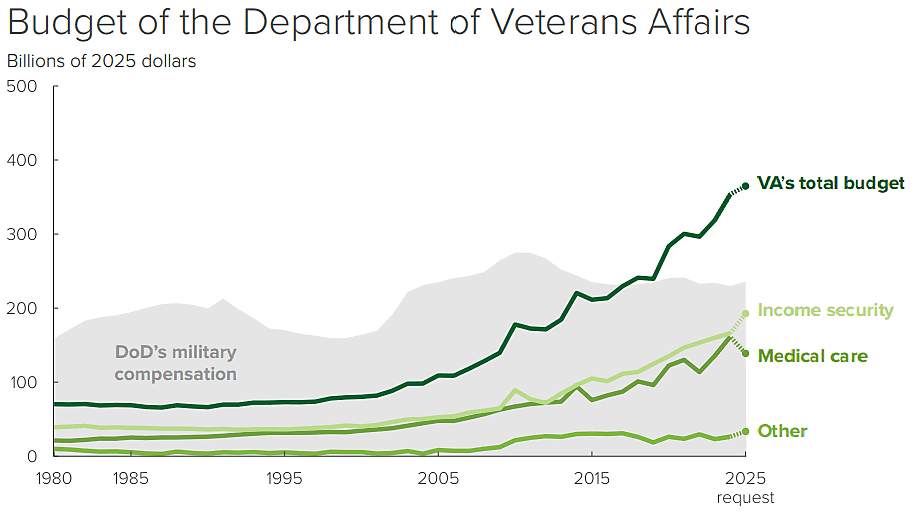
The Department of Veterans Affairs publishes administrative cost data in its annual budget submissions. The same submissions disclose the average cost of processing a disability compensation claim, the average duration of that processing, and the dollar value of the average disability award. The submissions do not, in the standard practice, run the arithmetic that produces the ratio between the administrative overhead the agency consumes per claim and the financial cost to the average veteran of a delayed claim. I did the math. The agency would prefer not to discuss the answer in public.
The most recent VA budget data show administrative cost per claim at approximately $1,640. The average claim duration is approximately 167 days. The average monthly disability award is approximately $2,150. The arithmetic produces a back-of-the-envelope number that is the number the agency does not feature in the press materials. The 167-day duration, multiplied by the monthly award divided by 30, produces approximately $11,970 in deferred income to the average veteran during the average claim processing window. The administrative cost of $1,640 is approximately 14 percent of the deferred income the agency's processing time imposes on the veteran. Read that number again.
What The Comparison Actually Means
The comparison means that the agency, on the average claim, spends roughly fourteen cents of administrative cost for every dollar of income the agency's own processing time defers from the veteran's bank account. The math is not subtle. The math is not contested. The math is in the agency's own budget documents. The math has not, by my reading of three trailing years of budget testimony, been put to any senior agency official in any congressional hearing in a form that required the official to engage with the comparison on the record.
The questions the comparison raises are obvious. Why does the administrative cost per claim run at the level it runs at, given that the cost has, by the agency's own performance data, not produced the corresponding reduction in processing time? Why does the agency's own quarterly performance reporting continue to treat processing time as a backlog metric rather than as a cost imposed on the affected veterans? Why has the agency's investment in case management technology produced the visible effect on processing time that the investment was supposed to produce, given the cumulative budget directed at the technology over the trailing decade?
The Per-Veteran Cost
The per-veteran cost of the processing delay, multiplied across the approximately 290,000 disability claims the agency processes per year, totals approximately $3.5 billion per year in deferred income across the affected veteran population. The figure is the cumulative income deferred from the veteran population by the agency's processing time. The figure is not the figure the agency uses in its budget testimony. The figure should be the figure the agency uses, because the figure is the figure that captures the agency's actual cost to its principal customer population.
Your tax dollars at work. The administrative budget the agency receives is approximately $1.6 billion per year for the disability compensation processing function. The cost the agency imposes on the affected veteran population, through the processing time the budget supports, is approximately $3.5 billion. The ratio is roughly two to one. The agency is, in the aggregate, imposing on its veteran population a cost that materially exceeds the cost the agency consumes in serving the population.
The Backlog Compounds The Math
The backlog growth I documented in an earlier column compounds the math in the direction that makes it worse, not better. The backlog growth from 425,000 pending claims at the most recent reporting represents an increase of approximately 70,000 claims over the trailing two quarters. The 70,000 additional claims, multiplied by the average deferred income per claim, represents an additional $830 million in deferred income that the agency's growing backlog is currently imposing on the affected veterans. The cost is not in any agency line item. The cost is real.
The agency's response, when pressed on the backlog, has been to note that the agency is investing in process improvements. The investment is real. The investment has not, by the agency's own performance reporting, produced the corresponding reduction in processing time across the trailing decade. The investment-to-outcome ratio is the kind of ratio that, in any private-sector context, would have triggered a substantial restructuring action long before the trailing decade had run its course.
The Veteran Service Organization Voice
The veterans service organizations have, as I noted in an earlier column, been working the backlog issue at the policy level. The VSOs have produced specific recommendations for process changes that would, by the recommendations' analytical models, reduce average processing time by approximately 28 percent over a two-year implementation window. The recommendations have been submitted in formal regulatory comment periods. The recommendations have not been adopted in the agency's final rulemaking.
The agency's framing of the non-adoption is that the recommendations require resources beyond the agency's current appropriated budget. The framing is true at the surface. The framing is also incomplete, because the agency has not, in any of the trailing three budget cycles, requested the resources the recommendations would require in a form that would force the appropriations committees to make a clean decision on the request. The non-request is the structural pattern. The pattern produces the backlog. The backlog produces the deferred income. The deferred income is the cost the veteran population pays.
Follow The Money
Follow the money. The aggregate flow goes from the affected veteran population to the agency, through the budget that funds the agency's payroll, that maintains the case management infrastructure, that supports the regional offices, and that produces the performance reporting that does not adequately characterize the cost the agency imposes on the population it serves. The flow is documented in the budget. The flow is not contested. The flow has not, in the trailing decade, been adequately addressed.
I will do the math for you. The math will keep being the math. The math will keep being uncomfortable. The 167 days will keep being 167 days, the $1,640 administrative cost per claim will keep being the cost, and the $11,970 deferred income per claim will keep being the cost the agency imposes on the average affected veteran. Let that sink in. This is not a rounding error. This is policy. Here are the receipts.