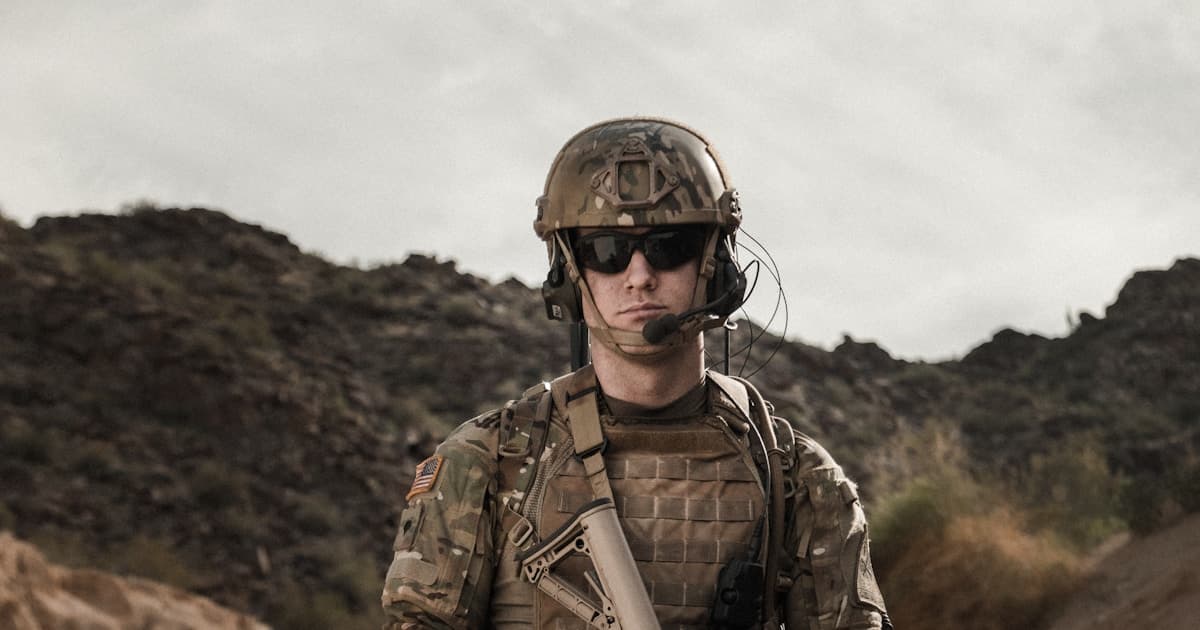
Who Is Shay Whitcomb?
The name hit search trends hard this week. Shay Whitcomb — Navy SEAL, combat veteran, the kind of man who exists at the intersection of physical and moral discipline that the modern military is increasingly uncomfortable celebrating. His story circulated because it's the kind of story that circulates when people are hungry for something real.
Whitcomb served multiple combat deployments. He's not a Pentagon spokesman. He's not a diversity initiative. He's a warfighter, and the fact that his name is trending tells you something about what Americans are looking for right now — and what they feel they're not getting from their armed forces' public messaging.
I want to be direct: I don't know Whitcomb personally. But I've watched enough of the military's institutional drift over the past decade to recognize the significance of a name like his capturing public attention. It means something. People are voting with their clicks.
The Pentagon's Identity Crisis
The U.S. military has a recruitment problem. The Army missed its recruiting target by 10,000 soldiers in fiscal year 2023. The Navy has struggled. The Air Force has struggled. Every branch that wasn't the Marine Corps — which has held the line on certain cultural questions more aggressively than its sister services — has reported shortfalls.
The Pentagon's response has been to double down on the messaging that alienated potential recruits in the first place. Advertising campaigns that emphasize everything about military service except what military service actually involves. Diversity metrics applied to promotion boards. Training time redirected toward ideological content that has no relationship to combat effectiveness.
Meanwhile, names like Shay Whitcomb trend. The gap between what the institution projects and what the public actually wants to see in its warriors has never been wider.
This isn't complicated. Young men — and the military draws disproportionately from young men — are not inspired by institutional messaging that seems designed by committee to avoid inspiring anyone in particular. They're inspired by specific human beings who did specific difficult things. That's been true since the first armies organized around individual champions. It's still true in the age of social media, maybe more so.
What Trending Actually Means
Google Trends is a crude instrument. The reasons a name trends are varied and not always flattering to the subject. But the pattern is recognizable: when someone embodies something people feel is missing, their story spreads.
What's missing is the unapologetic celebration of military competence. Not diversity. Not inclusion metrics. Not carefully worded statements about the military's evolving understanding of gender. Competence. The thing that keeps enemies from killing Americans. The thing that requires physical and psychological toughness that cannot be manufactured by a committee in the Pentagon's HR directorate.
The military exists to fight and win wars. That's not a controversial statement. It was the operating premise of every person who built the American armed forces into the most formidable military organization in human history. The generals who won World War II — Eisenhower, Patton, Nimitz, MacArthur — did not optimize for representation metrics. They optimized for killing the enemy before the enemy killed their men.
We have drifted from that. The drift has been gradual and bipartisan. It accelerated under the Obama administration, continued under Trump's first term despite rhetorical pushback, and then sprinted under Biden. The results are visible in the recruiting numbers.
The Shay Whitcomb phenomenon — if we can call it that — is the correction asserting itself from below. The institution may not be ready to hear it. The public clearly is.
The Culture War the Military Can't Afford to Lose
There's a tendency among certain conservatives to treat the military's cultural battles as secondary — important, yes, but less urgent than procurement and readiness. That's wrong. Culture IS readiness. An institution that cannot attract, train, and retain the kind of men who become names like Shay Whitcomb cannot win wars against enemies who don't share its ideological commitments.
China's People's Liberation Army is not running diversity training seminars. Russia's military, for all its documented failures in Ukraine, draws on a warrior culture that has no patience for the kind of institutional navel-gazing that occupies American defense bureaucrats. The adversaries are real. The stakes are real.
When a Navy SEAL's name trends because people are hungry for what he represents, that's a signal. The question is whether anyone in the Pentagon's E-ring is paying attention.
The answer, based on recent evidence, is probably not. Which means the correction will have to come from outside — from voters, from Congress, from the executive branch, from the cultural pressure that puts names like his in front of millions of people who are quietly, persistently asking for something better.