The Geography of Power
The Northern Sea Route — the shipping corridor running along Russia's Arctic coastline from Murmansk to Vladivostok — is becoming navigable for longer periods each year. By 2030, the route is projected to be accessible for 6-8 months annually, cutting the Europe-to-Asia shipping distance by 40% compared to the Suez Canal.
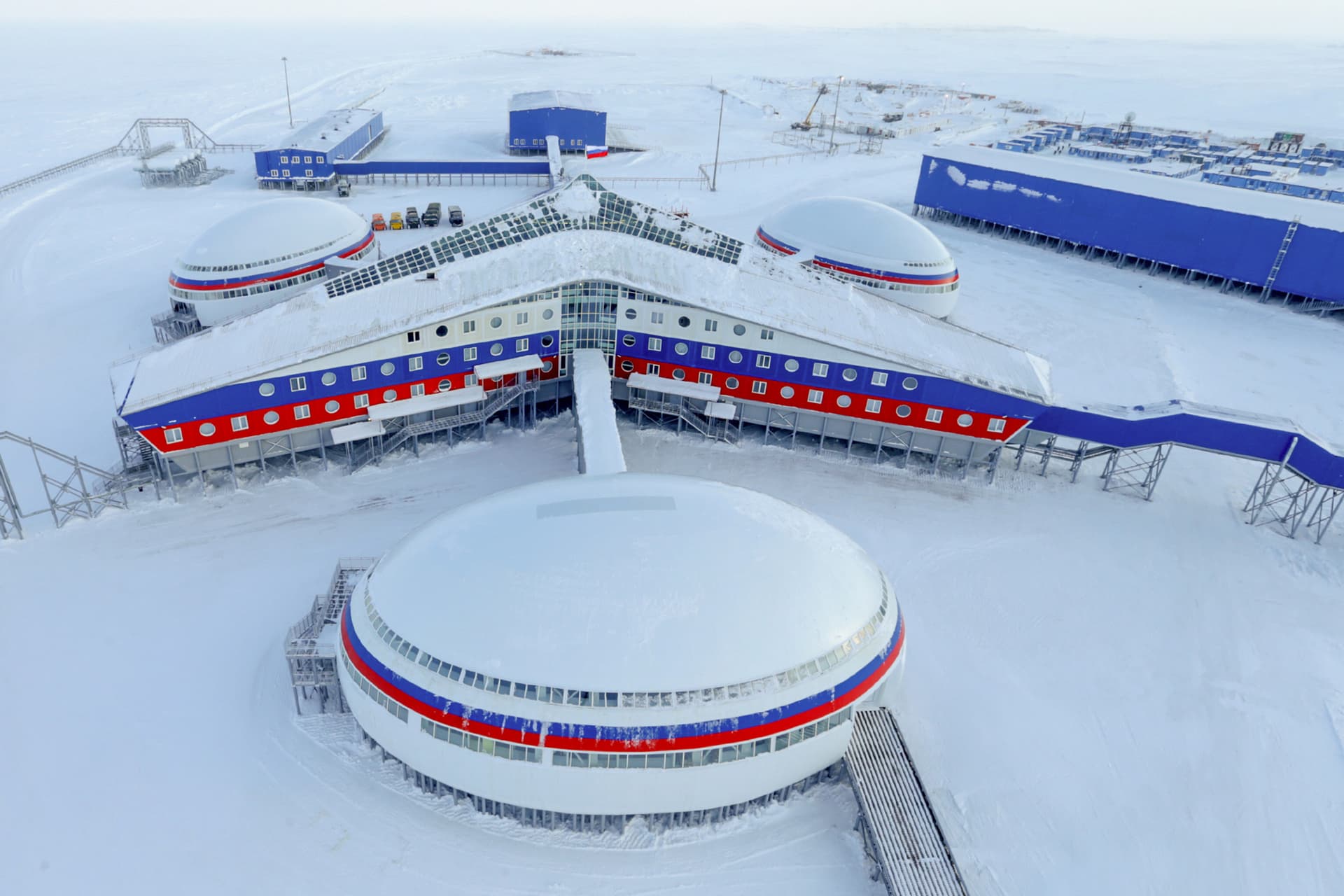
Russia has responded not with environmental policy but with military infrastructure. Since 2015, Moscow has constructed or reactivated seventeen Arctic military bases. The Northern Fleet has been upgraded with nuclear-powered icebreakers — Russia operates seven, the United States operates two — and Bastion anti-ship missile batteries have been deployed along the entire corridor.
This is not about protecting polar bears. This is about controlling the next century's most important shipping lane.
The Strategic Calculus
Control of the Northern Sea Route gives Russia leverage over global trade that it currently lacks. Russia's warm-water port access has been a strategic vulnerability for centuries — it's why Sevastopol matters, why the Syrian naval facility at Tartus matters, and why the Arctic corridor represents something entirely different: a trade route that runs through sovereign Russian waters.
Any vessel transiting the Northern Sea Route must comply with Russian regulations, accept Russian pilotage, and effectively acknowledge Russian sovereignty over the corridor. This isn't a disputed passage like the South China Sea. Under UNCLOS, much of the route falls within Russia's exclusive economic zone.
Western Inattention
NATO's Arctic strategy remains primarily defensive and substantially underfunded. The United States has one operational heavy icebreaker — the USCGC Polar Star, commissioned in 1976. The Coast Guard's Polar Security Cutter program, intended to deliver three new heavy icebreakers, has experienced repeated delays and cost overruns.
Meanwhile, Canada's Arctic sovereignty claims — critical to any Western counter-strategy — remain largely undefended. The Canadian military's presence in the Arctic consists of seasonal patrols and a single deep-water port under construction in Nanisivik that won't be fully operational until 2027.
Strategic advantage doesn't wait for committee reports. Russia is building while the West is studying. By the time the policy papers are published, the bases will be operational.
What Needs to Happen
The Arctic requires the same strategic attention the Pacific received with the pivot to Asia. Accelerated icebreaker construction. Enhanced surveillance capabilities. Bilateral agreements with Canada, Norway, and Denmark on Arctic defense cooperation. And a frank acknowledgment that the melting ice isn't just an environmental story — it's a geopolitical one.
Russia understands this. China — which declared itself a "near-Arctic state" in 2018 despite being 900 miles from the Arctic Circle — understands this. The question is whether the West will understand it before the strategic map is redrawn.