Parsing What Iran Actually Said
State-controlled media in Tehran doesn't generate noise. It generates signal. That distinction matters enormously when interpreting what Iranian officials said last week about Diego Garcia — the remote British-American air and naval facility in the Indian Ocean, roughly 1,000 miles south of the Indian subcontinent, which serves as one of the most critical strategic logistics nodes in the world for projecting power into the Middle East and Central Asia.
The characterization floating through Western coverage — "Iran puts Europe on notice with game changer Diego Garcia missile incident" — frames this as a threat, a provocation, a piece of saber-rattling from a cornered regime. That framing is wrong. Not strategically wrong, factually wrong. Iran wasn't threatening Europe. Iran was demonstrating range capability and naming a target of known strategic consequence to signal to multiple audiences simultaneously what the Islamic Republic has actually built.
This is doctrine, not drama. And the failure to treat it as doctrine is how Western analysts keep getting surprised.
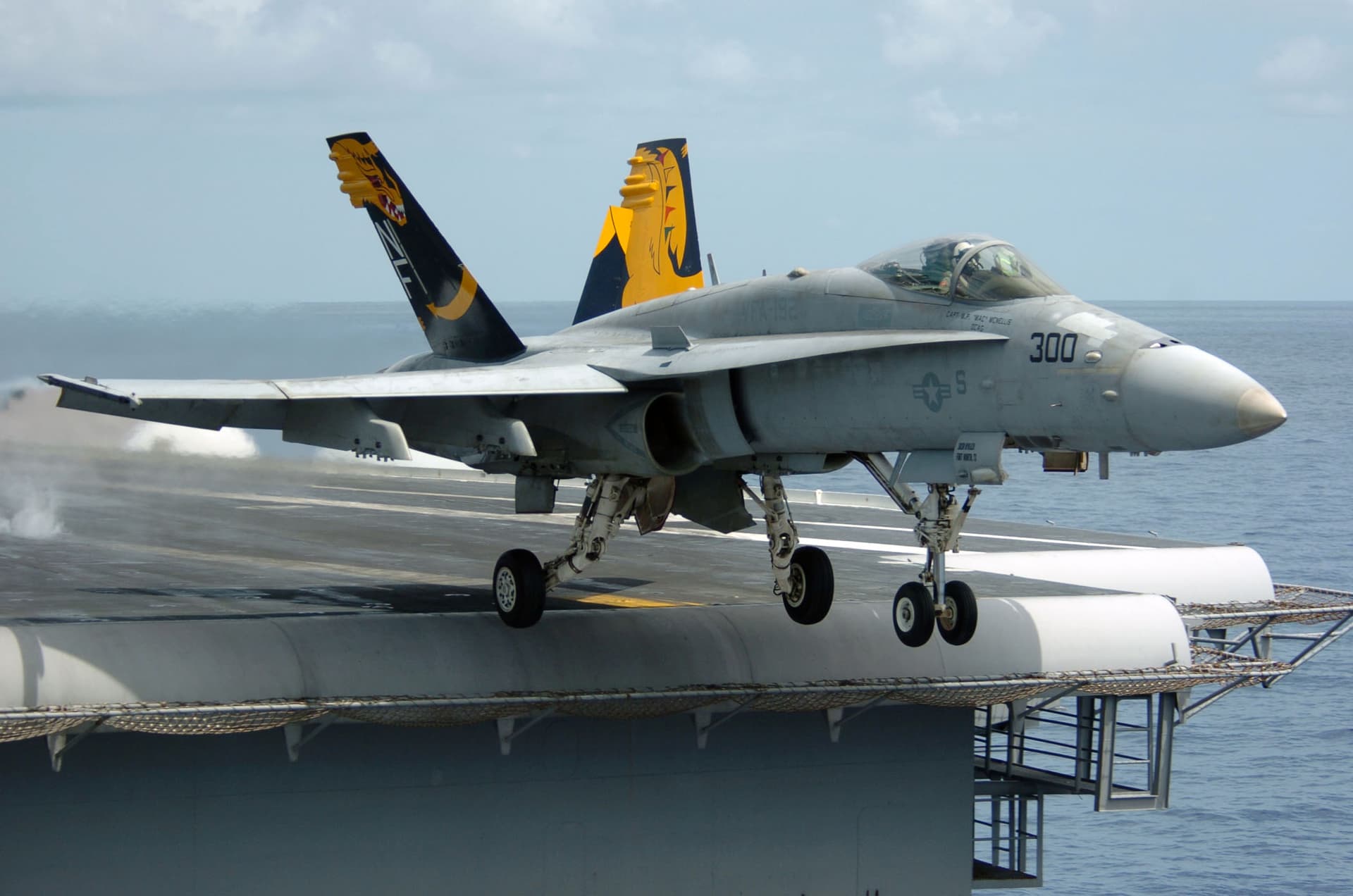
Diego Garcia hosts B-2 Spirit bombers. It hosts P-8 Poseidon maritime patrol aircraft. It has a deep-water port capable of staging carrier strike groups. During the 1991 Gulf War, the 2001 Afghanistan campaign, and the 2003 Iraq invasion, Diego Garcia was among the most operationally significant pieces of real estate the United States controlled. The Iranians have been studying this geography for twenty years. When they name it, they name it deliberately.
What the Missile Capability Actually Represents
Iran's Khorramshahr-4, also designated Kheybar, has an assessed range of approximately 2,000 kilometers. Diego Garcia sits at roughly 3,800 kilometers from Iran's southwestern territory. The Fattah-2 hypersonic glide vehicle, unveiled in 2023 and tested against regional targets, represents Iran's most ambitious attempt to close that gap with speed that defeats current theater missile defense architectures.
Whether Iran has actually achieved operational Diego Garcia strike capability is a legitimate intelligence question. The Defense Intelligence Agency and Israel's military intelligence directorate have published conflicting assessments. What is not in question is that Iran has publicly asserted this capability as a matter of deterrence strategy — meaning they want their adversaries to behave as though it's real, regardless of technical verification.
That's a sophisticated deterrence posture. More sophisticated than many Western commentators have credited.
The European angle is this: British territory hosts Diego Garcia. British territory is therefore implicitly named in any Iranian statement about targeting it. France and the UK, both of which have maintained their own Iran nuclear deal frameworks independent of American policy, are being told in clear terms that their cooperation with US force projection infrastructure comes with a price. That's not a threat in the colloquial sense — it's a strategic communication, precisely calibrated for the audience Tehran most needs to influence right now as European-Iranian diplomatic back-channels remain quietly open.
Europe's Comfortable Illusion
The European foreign policy establishment has operated for twenty years on a foundational assumption: that Iran is a transactional actor whose aggressive behavior can be modulated through economic incentives and diplomatic engagement. The JCPOA was built on this assumption. The E3 process — Britain, France, Germany negotiating independently with Tehran — was built on this assumption. Each iteration of this approach has encountered the same problem. Iran takes the concessions, continues the enrichment, and names new targets.
Ninety percent of Iran's uranium is now enriched to 60 percent purity. Not 20 percent, the level the JCPOA was designed to cap. Not the 3.67 percent specified in the original agreement. Sixty percent. Weapons-grade is 90 percent. The distance remaining is technical, not political. Any European diplomat who describes the current situation as "manageable" through talks is either uninformed or performing for a domestic audience.
The Diego Garcia statement should function as a moment of clarity for European capitals. Tehran is not requesting accommodations. Tehran is declaring strategic reach. There is a difference, and the difference matters for how Europe decides to handle the coming American-Iranian confrontation over the nuclear program — whether it facilitates, whether it stands aside, or whether it finally acknowledges that its preferred outcome is not achievable on the terms it has been pursuing.
The Strategic Logic Tehran Is Running
Iran's calculus here is not irrational. It's cold and it's competent. Tehran has watched the post-2003 regional environment carefully. It watched what happened to Gaddafi after he surrendered his WMD program. It watched what happened to Saddam. It watched the Assad regime's survival correlate almost perfectly with Russian military intervention and the credible threat of chemical weapons use as a last resort.
The lesson the Islamic Republic drew is the lesson any rational actor in their position would draw: conventional deterrence requires either a nuclear weapon or the credible threat of one, combined with the ability to impose costs on American power projection that make a strike prohibitively expensive. Diego Garcia is part of that calculus. Naming it publicly is part of that calculus.
And here is where European discomfort with American unilateralism leads to dangerous confusion: the United States is not wrong about the nature of the Iranian nuclear program. The IAEA's own documentation, suppressed in Western coverage but publicly available, describes an enrichment trajectory with no civilian justification. Iran's stated civilian nuclear needs do not require 60 percent enriched uranium. Full stop.
Europe can have its preferred diplomatic process. But it should drop the pretense that the process is achieving anything other than buying Iran time. The Diego Garcia statement is Tehran telling anyone paying attention that the time has been well spent. Washington should respond with clarity. Europe should decide which side of clarity it wants to be on before that decision gets made for it.