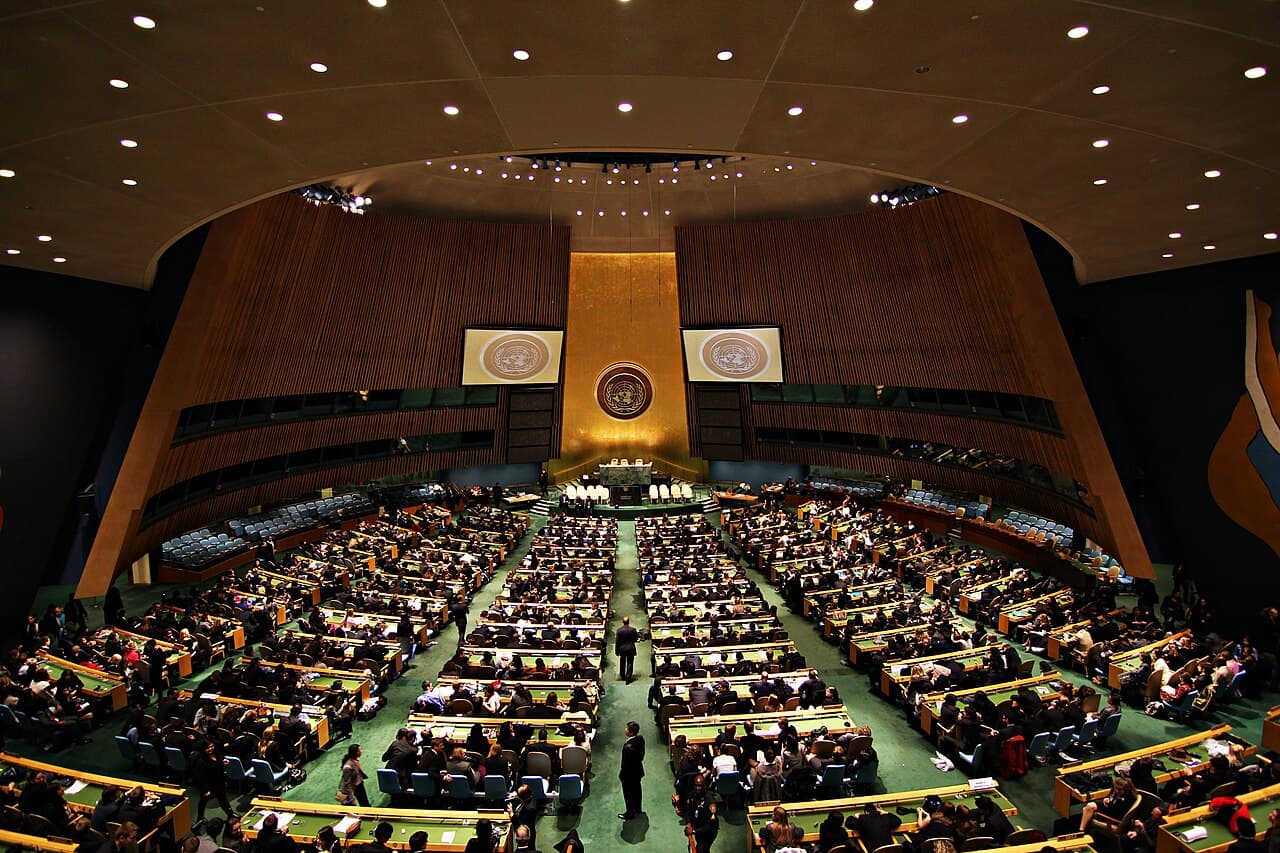
The United Nations Security Council convened in emergency session on February 28, called by an unusual coalition of five council members — Bahrain, France, Russia, China, and Colombia — in response to what Secretary-General Antonio Guterres described as an action that risks "igniting a chain of events that nobody can control in the most volatile region of the world."
Guterres's language was notably stronger than typical UN diplomatic hedging. "Everything must be done to prevent further escalation," he told ambassadors, his tone reflecting the gravity of a situation that has already escalated beyond most contingency planning frameworks.
The Diplomatic Divide
Russia's ambassador condemned the strikes in the strongest terms, demanding that the US and Israel "immediately cease their aggressive actions" and resume diplomatic efforts. China's state-run Xinhua news agency headlined its coverage: "U.S.-Israeli attack on Iran plunges Mideast into new conflagration, uncertainty" — framing that positions Beijing as a defender of regional stability against Western military adventurism.
The European response was more nuanced but no less concerned. The UK, France, and Germany issued a joint E3 leaders' statement that stopped short of condemning the strikes but emphasized the urgency of preventing further escalation. British Prime Minister Keir Starmer released a separate statement calibrating London's position between its alliance obligations to Washington and its growing unease with the scope of operations.
The Limits of Multilateralism
The Security Council session exposed a familiar structural limitation: any resolution condemning or restraining the US-Israeli operation would face an American veto. The emergency session was therefore less about legislative action than diplomatic signaling — an opportunity for aggrieved parties to register objections on the record and for the international community to voice collective anxiety about the trajectory of events.
Chatham House, the London-based foreign policy think tank, published early analysis noting that the US and Israeli strikes appeared designed to force regime change in Tehran — a strategic objective that goes well beyond the stated justification of neutralizing nuclear threats and degrading military capabilities.
The gap between stated and actual objectives will likely become a central point of diplomatic contention in the weeks ahead, particularly as the humanitarian consequences of the strikes — the Iranian Red Crescent reports over 200 civilian deaths and 747 injuries — become more fully documented.
For now, the UN has done what the UN does best: it has convened. Whether that convening produces anything beyond carefully worded statements remains, as always, an open question.