Ninety Miles and Sixty-Five Years
In 1962, American U-2 spy planes photographed Soviet nuclear missiles being installed in Cuba. The Kennedy administration went to the edge of nuclear war to get them removed. We understood then that a hostile regime that close to our shores was an existential problem.
Then we forgot that lesson for six decades.
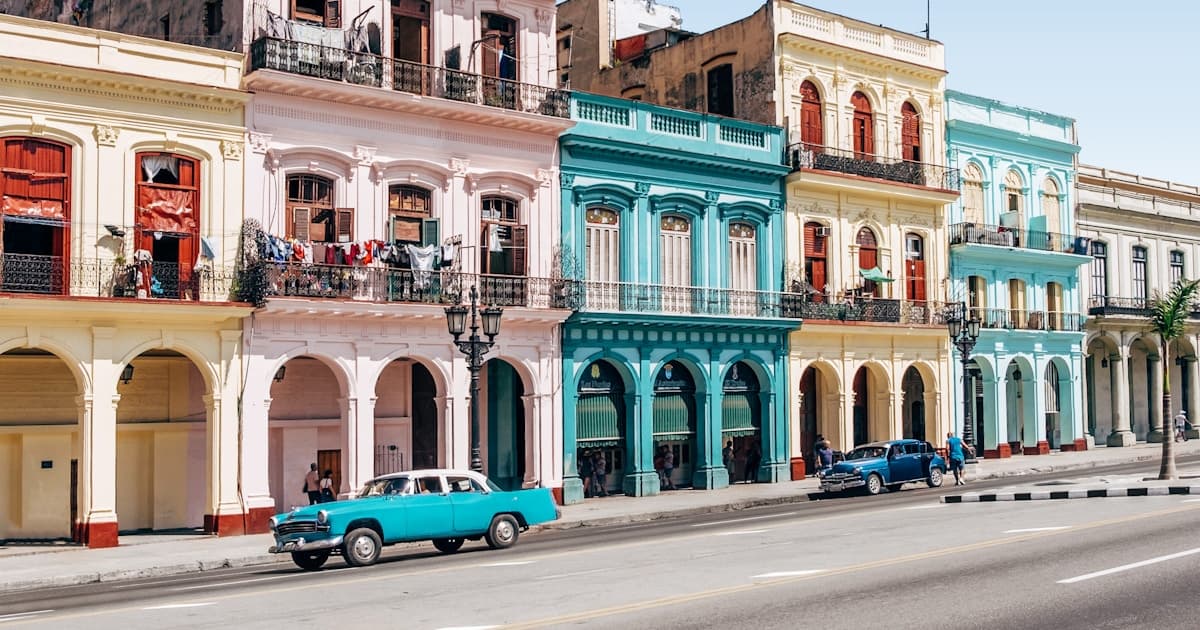
The Castro regime — now the Díaz-Canel regime, because the dynasty just swapped the front man — has been running a surveillance state, political prison system, and economic catastrophe ninety miles from Key West since 1959. The Obama administration decided the answer to this was to normalize relations, open an embassy, and flood the regime with tourism dollars. The regime responded by tightening its grip. Because of course it did.
Trump is now signaling Cuba is next on the pressure list, and the foreign policy establishment is having its predictable meltdown. But look at the actual record and the meltdown makes no sense.
What Engagement Actually Bought
The argument for engagement with Cuba was always the same: economic opening will produce political liberalization. Expose Cubans to American commerce and culture, let the middle class grow, and the regime softens. This is the theory. The theory has been tested. The results are in.
Between 2015 and 2020, under normalized relations, U.S. tourist arrivals in Cuba increased dramatically. American dollars flowed in. The regime took the money, invested it in regime security infrastructure, and used the diplomatic legitimacy to deflect international pressure. Political prisoners weren't released — the number grew. The dissident community wasn't empowered — it was further suppressed. Journalists and activists were jailed at higher rates during the normalization period than before it.
The engagement theory failed. Not partially. Completely.
And yet the same foreign policy voices who championed engagement are now criticizing Trump's pressure campaign as reckless. They don't have a different theory that works. They just don't like this one because it's his.
What Pressure Actually Looks Like
I've talked to Cuban-Americans in Miami's Little Havana neighborhood — people whose families fled in the 1960s, people who still have cousins in Havana sending voice notes about food shortages and power blackouts. They're not confused about what the regime is. They've never been confused. The confusion has always been in Washington.
The pressure playbook Trump is reportedly considering — tightening sanctions, designating Cuba back onto the state sponsors of terrorism list, restricting remittances that the regime skims — is not new. It's the pre-Obama approach that kept genuine pressure on Havana. It didn't topple the regime, but it also didn't fund it.
There's a meaningful difference between a policy that fails to achieve regime change and a policy that actively finances the regime's survival. Engagement was the second kind. Pressure is the first. The first kind is less satisfying but less actively harmful.
The Biden administration removed Cuba from the terrorism list in a last-minute maneuver in January 2025 as part of a deal brokered to release political prisoners. Cuba promptly released fewer prisoners than promised and the regime suffered no consequences. That's the engagement playbook in miniature: make a deal, get stiffed, blame the critics.
The Hemisphere Is Watching
This isn't just about Cuba. Venezuela. Nicaragua. Bolivia. The authoritarian left in Latin America operates as a network, and Havana has been the hub of that network for sixty years. Cuban intelligence services have their fingerprints on political operations across the continent. The Cuban military provided the advisors who helped Maduro consolidate power in Venezuela. This is documented. It's not a theory.
When Washington treats Cuba as a normal diplomatic partner, it signals to every aspiring authoritarian in the hemisphere that the United States has lost the will to hold the line. When Washington applies pressure — real pressure, not theatrical gestures — it signals the opposite.
The foreign policy establishment will argue that pressure hasn't worked in sixty-five years. But sixty-five years of pressure, interrupted by a decade of engagement that demonstrably failed, is not the same as sixty-five years of unbroken pressure failing. The engagement experiment was tried. It failed. The lesson is not to try it again.
Trump is drawing a line in the Caribbean. It's a line that should have been drawn consistently for decades. Better late than never isn't a satisfying foreign policy doctrine, but it beats the alternative we've been living with.