The Man in White Standing in Front of the Wreckage
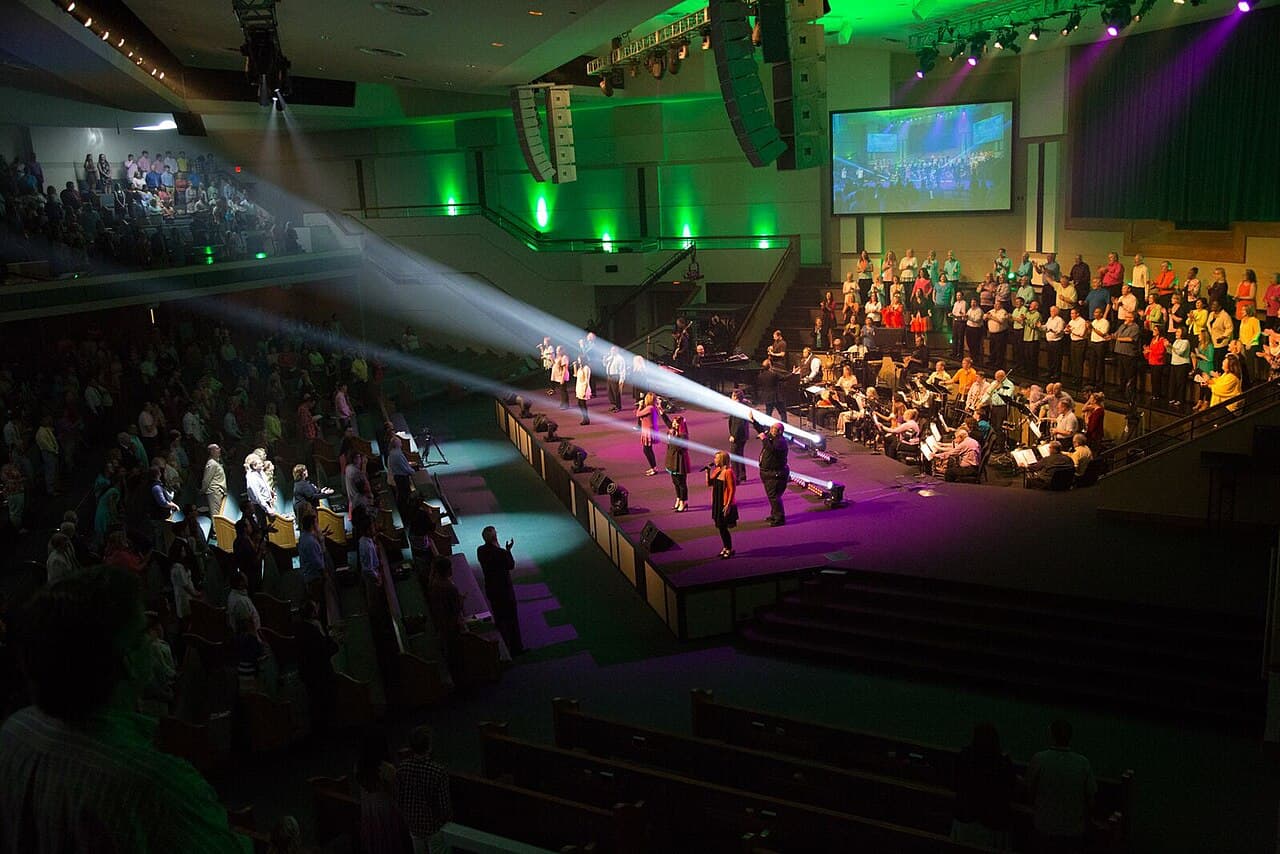
Easter Sunday 2026. St. Peter's Square packed. Pope Leo — barely months into a papacy that nobody fully predicted — delivers his first Urbi et Orbi address to a world that has not stopped bleeding since he was elected. Gaza. Ukraine. The Iran escalation. Sudan. The South China Sea. He calls for hope. And somewhere in a Manhattan newsroom, an editor is already drafting the headline about how the Pope's message is "naive" given current geopolitical realities.
That editor is missing the entire argument.
Hope — in the Christian theological sense, which is the only sense in which a pope is operating — isn't optimism. It isn't a personality trait or a mood or a preference for looking on the bright side. It's a claim about what the universe is made of and who's running it. When Leo stands in front of half a million people and says there is reason for hope amid global conflicts, he isn't saying the conflicts aren't real. He's saying something is more real than they are. That's a different statement entirely. And it's one worth engaging on its actual terms rather than dismissing as politically irrelevant.
The Credibility Question Nobody Wants to Ask
I've covered the border for years. I've met people who crossed deserts, who lost children in the crossing, who arrived with nothing except a story about why staying was worse than the journey. Some of them — not all, but some — will tell you that what kept them moving was not policy analysis. Not a rational calculation of odds. Something they'd describe, if you pressed them, in terms that sound a lot like what Pope Leo is talking about.
The secular West has spent fifty years building institutions that are systematically unable to make that kind of claim. Courts can adjudicate. Legislatures can allocate. Bureaucracies can process. None of them can tell a Sudanese mother why her child's life matters in terms that don't ultimately bottom out in a preference or a convention. Christianity can. That's not a small thing. That's actually the load-bearing structure underneath most of what we call human rights.
When a pope speaks on Easter Sunday, he's speaking as the visible head of an institution that has outlasted every empire since Rome. Whatever you think of Catholicism's specific truth claims, the institutional track record for survival under pressure is unmatched. The Roman Empire is a history department. The Catholic Church is still issuing press releases and filling squares.
Why This Easter Message Is Politically Relevant
Pope Leo's call for hope isn't politically naive. It's politically necessary. Because the conflicts he's addressing — Ukraine, the Middle East, the broader instability of the international order — are not going to be resolved by additional UN resolutions or strongly worded diplomatic communiques. They require the kind of moral grounding that secular liberalism, at its current level of development, cannot provide.
What does a purely secular framework say to the Ukrainian soldier who needs a reason to hold a position that has no strategic value except that it's home? What does it say to the Israeli family trying to build a future in a neighborhood that has been rocketed three times? What does the ledger of costs and benefits say when the costs are total and the benefits aren't visible?
Something. The answer has to be something beyond pure calculation. Historically, that something has come from exactly the kind of source that spoke from St. Peter's Square on Easter morning.
Dismiss it if you want. Call it pre-modern. Call it a relic. But look at what the pre-modern world built, and look at what the post-God secular order has managed to produce in terms of meaning, in terms of willingness to sacrifice for something beyond the self, in terms of the cultural glue that holds civilizations together under pressure. The ledger isn't flattering for the critics.
A new pope stood in front of a hurting world on Easter Sunday and said: there is reason for hope. That's not naive. That's the most serious claim anyone made all week.