A Diplomat Who Said What He Saw
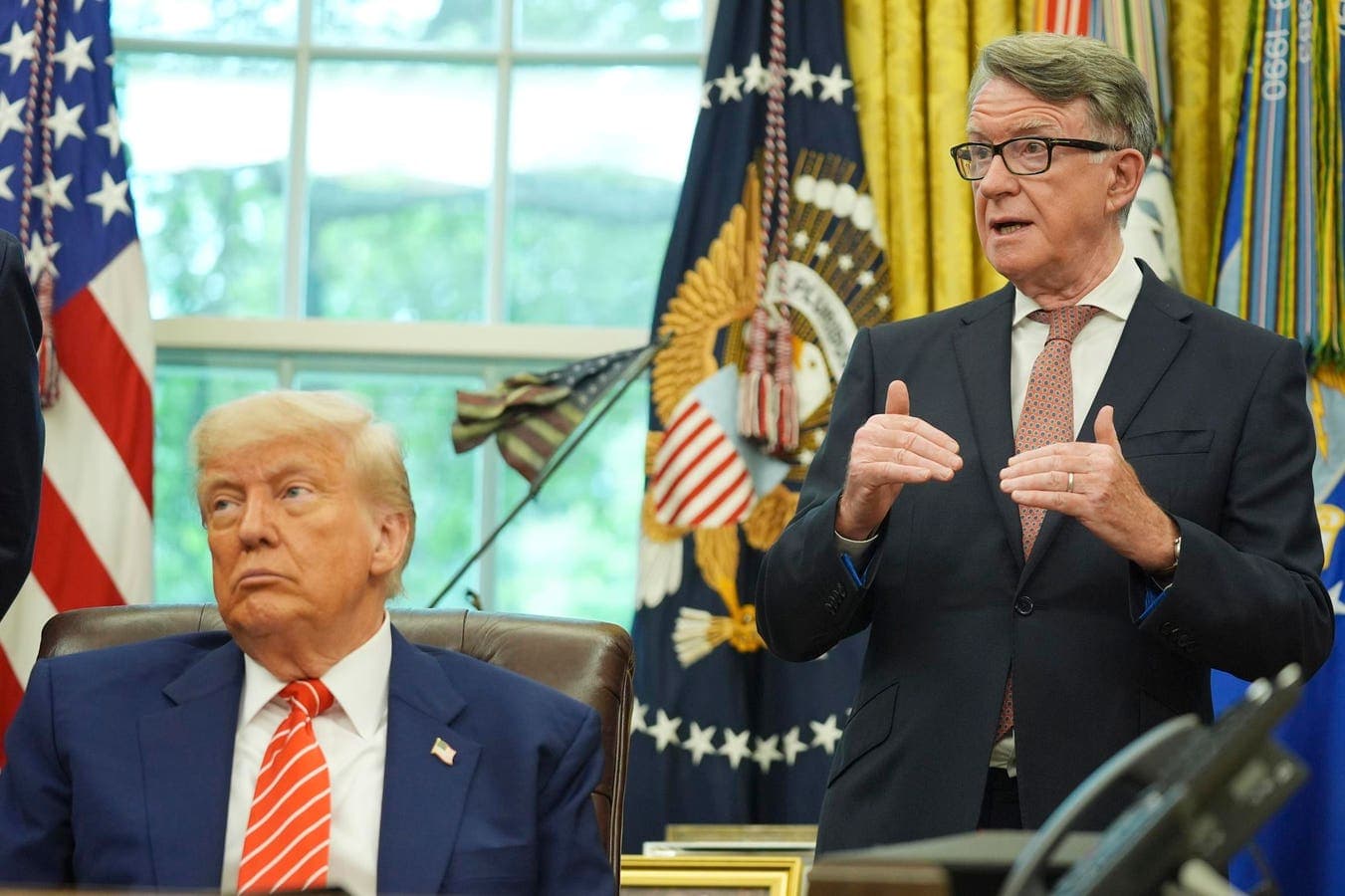
Christian Turner, Britain's newly credentialed ambassador to the United States, made headlines not for anything catastrophic, no leaked cable, no diplomatic incident, no accidental insult. He made headlines for saying, essentially, that Donald Trump is politically talented and that working with him requires taking that talent seriously.
The word "genius" was reportedly used. The British press had a moment. The American commentary class had a longer one.
Watching the reaction, you'd think Turner had committed an act of diplomatic malpractice. In reality, he'd done something far more subversive: he'd described what he actually observed instead of what the foreign policy establishment would prefer he'd observed.
I watched Trump's 2024 campaign from beginning to end. I was at a rally in Greensboro in August. The crowd stretched further than I could see. These were working people, nurses, contractors, small business owners, retirees. They weren't there because they'd been deceived. They were there because someone was saying, plainly and without apology, what they'd been thinking for years. Whatever you think about Trump's policies or his character, a politician who commands that kind of loyalty across multiple election cycles is operating with real political intelligence. Calling it genius isn't flattery. It's description.
What the Mandelson Vetting Says About the Foreign Policy Machine
Turner's predecessor, Peter Mandelson, was a choice that baffled observers who'd been paying attention. Mandelson, architect of New Labour, EU loyalist, vocally anti-Trump, was the outgoing Labour government's appointment to Washington precisely at the moment when managing the Trump relationship was the most important diplomatic task Britain had. It was a self-sabotaging pick dressed up as a principled one.
The vetting circus that followed Turner's appointment, reported with breathless attention by the British press, tells you everything about how the foreign policy establishment processes reality. Turner had to demonstrate that he wasn't reflexively hostile to the current American president. That this counts as a vetting concern, that not hating Trump is a disqualifying attribute that must be carefully managed, explains why so much of our diplomatic class produces analysis that's useless to actual policymakers.
Good ambassadors represent their country's interests to the host government. That means engaging seriously with whoever holds power. Turner appears to understand this. The commentators who are scandalized by his Trump assessment do not.
The Chagos Tensions and What Actually Matters
The Chagos Islands dispute is the real substance underneath all the diplomatic theater. Britain's agreement to transfer sovereignty of the Chagos archipelago to Mauritius, negotiated by the outgoing Labour government, created a direct tension with American interests because Diego Garcia, the strategically critical military installation in the Indian Ocean, sits on Chagos territory.
Diego Garcia is not an abstraction. It's a B-52 base, a submarine tender facility, and a logistics hub that has been central to every major American military operation in the Middle East and South Asia for the last thirty years. Operations in Afghanistan, Iraq, the ongoing counter-terrorism architecture across the Indo-Pacific, all of it runs through or is supported by Diego Garcia.
The Trump administration made clear that the Chagos deal, as structured, was unacceptable. And the administration was right. Transferring effective control of territory that hosts a critical American installation to a small island nation with close ties to China, in the name of decolonization, is the kind of move that plays well at UN General Assembly debates and very badly in actual strategic terms.
Turner's job is to navigate that tension without blowing up the US-UK relationship. Calling Trump a genius, or at minimum, a genuinely capable political operator whose instincts deserve serious engagement rather than patronizing management, is actually the right starting posture for that negotiation. Arriving in Washington with Mandelson's barely concealed contempt for the current American president would have made the Chagos conversation impossible.
The Media Cycle Is the Story
Here's what I find telling about this whole episode: the coverage focused almost entirely on the "genius" comment and almost not at all on the Chagos strategic question, which is genuinely consequential.
Diego Garcia's operational future affects American power projection across two theaters. The terms of any renegotiated agreement will have real implications for the military posture that underwrites the Indo-Pacific deterrence architecture. These are not small things.
But the press found the word "genius" more interesting. Because the press has spent nine years treating any positive assessment of Donald Trump as the real story, the scandal, the deviation from proper thinking, rather than treating it as a data point in a larger strategic picture.
Turner seems like someone who doesn't do that. He looked at what he saw and described it. That's what good diplomacy requires. That's what honest analysis requires. The chattering class's meltdown over his word choice is evidence that he's doing his job right.