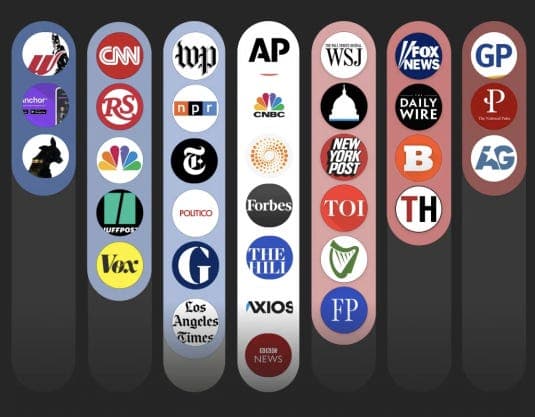
The Viewership Collapse
The cable news networks are imploding. Fox News prime time averaged 2.1 million viewers in January 2026. MSNBC averaged 800,000. CNN averaged 470,000. Together, these three networks reach fewer people than a single popular podcast. Add in the network evening newscasts and you're still under 10 million viewers for all legacy television news combined. That's smaller than the audience for a single Twitch streamer.
The trendline is unambiguous. Cable news viewership was 7.2 million viewers per night in 2015. It's now 3.4 million. The networks are aging out. The median age of a Fox News viewer is now 67. MSNBC viewers average 68. These audiences aren't being replaced by younger viewers. They're declining as older viewers die and younger viewers never tune in.
Network evening newcasts are in steeper decline. The three broadcast networks (ABC, CBS, NBC) combined reach 5.8 million viewers for evening news. Ten years ago, that figure was 22 million. The decline is steeper than cable. Broadcast news is hollowing out.
Where News Consumption Is Happening
Americans are now getting news primarily from digital sources. Pew Research shows that 67 percent of Americans get news from social media feeds, 48 percent from news websites, 31 percent from podcasts, 24 percent from newsletters. Notice these numbers add to more than 100 percent. People are consuming news across multiple channels simultaneously.
The fragmentation is extreme. There's no longer a shared information ecosystem. A person reading Substack newsletters and following independent journalists on social media is consuming entirely different news than someone watching cable news. The partisan divides that existed in the cable era are now reinforced by complete consumption fragmentation. Conservative consumers and progressive consumers aren't just disagreeing about what stories mean. They're not consuming any of the same stories.
Podcast news shows are the growth segment. The New Yorker's politics podcast, The Daily from New York Times, and independent shows like those hosted by former journalists have found audiences in the hundreds of thousands. These shows don't have the massive reach of legacy news, but they're growing. Every percentage point gained by podcasts is lost by cable networks.
What Legacy News Is Trying
Cable news networks are attempting digital transformation, but they're doing it slowly and half-heartedly. They're hiring digital producers, launching websites, posting video clips to social media. But the core economics of their business still depend on cable carriage fees. Cable subscribers pay a fixed monthly fee. The networks get a cut. That incentivizes cable news to keep attracting the aging cable audience rather than investing aggressively in digital growth.
The Wall Street Journal and the New York Times have successfully built paywalled digital subscriptions. The Journal has 3.5 million digital subscribers paying money monthly. But neither of these outlets has displaced cable news as the primary source for breaking news and political opinion. They've carved out a premium segment. The mass market for news is elsewhere.
Some networks are experimenting with streaming. CNN has announced a standalone streaming service. Fox News is planning similar moves. But they're launching these services while simultaneously trying to keep their cable audiences intact. That's a strategy with inherent contradictions. You can't build a successful streaming news service while protecting a declining cable business. You have to choose.
The Trust Question and the Consequence
Trust in media institutions has collapsed alongside viewership. In 2016, 40 percent of Americans expressed trust in major media institutions. In 2026, that number is 18 percent. People aren't just leaving cable news because there are better alternatives. They're leaving because they don't trust the institutions delivering the news.
This creates a problem for democracy. Democratic societies require some level of shared factual understanding. If the information ecosystem fragments completely and trust in any news source is negligible, the society loses common reference points. People retreat to tribal information sources. Those sources have zero credibility to anyone outside the tribe. Political agreement becomes impossible.
The legacy news networks aren't going to disappear. Some version of cable news will continue serving older audiences. But their role as the primary mechanism for establishing shared national political conversation is over. That role is now distributed across hundreds of smaller outlets, social media platforms, podcasts, and digital publishers. Whether that's an improvement is debatable. It's definitely a change that the industry's institutions have been too slow to fully acknowledge.