The Edit That Became Law
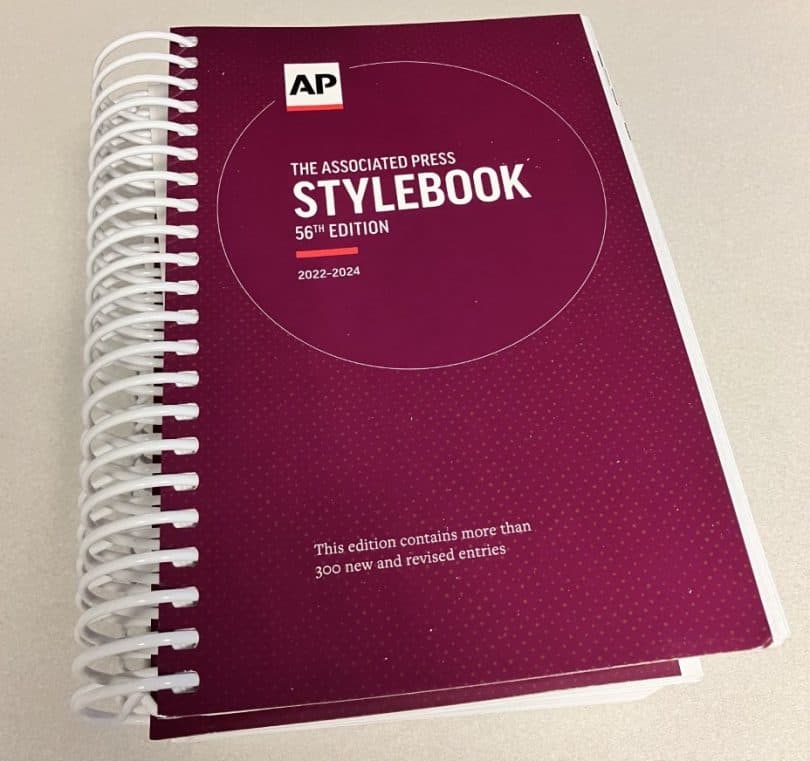
In 2013, the Associated Press instructed the nation's newsrooms to stop using the phrase 'illegal immigrant.' Reporters were told to prefer 'undocumented,' a term that sounds like a paperwork problem rather than a violation of federal law. The Stylebook announced the change as a matter of precision and sensitivity. What it really delivered was a political victory dressed up as grammar.
AP controls the vocabulary of American journalism. Thousands of newspapers, wire services, broadcast outlets, and digital platforms follow its guidance. When AP declares a term out of bounds, it does not merely suggest a synonym. It redraws the boundary of acceptable public speech. 'Illegal immigrant' was not inaccurate. Federal law still describes unlawful presence as a civil violation and illegal entry as a misdemeanor or felony. The word 'illegal' described the act, not the person's soul, which was the cheap objection activists used to banish it.
By 2013, the pressure campaign was already mature. Advocacy groups had spent years telling editors that 'illegal' was a slur and that 'undocumented' humanized migrants. Humanizing people is not the job of a style guide. The job of a style guide is clarity. When journalists accepted the swap, they accepted a frame. They stopped reporting that someone had broken immigration law and started reporting that someone lacked documents, as if the documents were simply misplaced.
The change spread quickly. Within months, major newspapers and broadcast networks adopted similar language. University journalism programs taught students that 'illegal' was loaded and 'undocumented' was fair. A single decision by an editorial committee in New York cascaded through every institution that takes its cues from the press. That is not sensitivity. That is centralized speech regulation.
Words Shape Enforcement
The linguistic shift did not stay in the newsroom. It followed the language into courtrooms, congressional hearings, and eventually the executive branch. If the press would not call illegal immigration illegal, politicians learned they did not have to either. Softened vocabulary preceded softened enforcement. The Biden administration did not invent this trend, but it mastered it, turning bureaucratic language into a shield against accountability.
Consider the numbers. In fiscal year 2023, U.S. Customs and Border Protection recorded more than 2.4 million encounters along the southwest border. That figure does not count the unknown number who evaded capture. Yet many legacy outlets covered that surge with the same vocabulary AP had mandated a decade earlier. Migrants were 'undocumented,' 'unauthorized,' or simply 'newcomers.' The policy disaster was visible to anyone who looked at the border, but the language pretended nothing was wrong.
The framing has consequences. A 2021 Pew Research Center survey found that only 36 percent of Americans expressed confidence that journalists acted in the public interest. That collapse did not happen because the public dislikes professional writing. It happened because the public can see when reporters choose euphemism over fact. When every border crisis becomes a 'migration flow' and every deportation becomes 'family separation,' citizens stop trusting the messenger. They know the words are being massaged.
Euphemism also warps legislation. Lawmakers draft bills using the terms the press has normalized. When 'illegal alien' disappears from coverage, it becomes easier for 'undocumented American' to appear in press releases. The semantic drift moves in one direction. Yesterday's neutral descriptor becomes today's slur, and yesterday's euphemism becomes tomorrow's required term. The policy debate never resets to first principles. It resets to the latest approved word list.
Reclaiming Plain Speech
Conservatives often complain about media bias and then keep reading the same outlets. The better response is to stop accepting the premise. Plain speech is not cruel. Calling an illegal crossing illegal is no more dehumanizing than calling a speeding ticket a speeding ticket. The act is the offense, not the person. That distinction was always available to anyone who wanted to preserve accuracy, yet it was surrendered without a fight.
Reclaiming the vocabulary means more than swapping one word back in. It means refusing to let style guides set political limits. News organizations that still value their audiences should ask a simple question: does this term describe what happened, or does it describe what activists wish had happened? If the answer is the latter, the term belongs on an opinion page, not in a news report.
Conservative outlets and independent journalists have an opportunity here. By refusing the euphemism treadmill, they can report the border crisis in language that matches the experience of border patrol agents, ranchers, and communities overwhelmed by migrant arrivals. Those Americans do not use the term 'undocumented' at kitchen tables. They use plain words because plain words match plain reality. Journalism that refuses to meet them there is not elevated. It is aloof.
The AP Stylebook could reverse its 2013 guidance tomorrow. It will not, because the change was never about linguistics. It was about normalizing a particular view of sovereignty, law, and citizenship. The rest of us are not required to cooperate. We can keep saying illegal immigrant, illegal alien, and illegal crossing because those phrases still match the statutes on the books. Accuracy is not a partisan weapon. It is the minimum requirement of honest debate.
Language is policy. The Associated Press proved it when it deleted one phrase and elevated another. The border crisis we now face is not merely a failure of enforcement. It is a failure of description. The first step toward fixing either is to call things by their proper names.