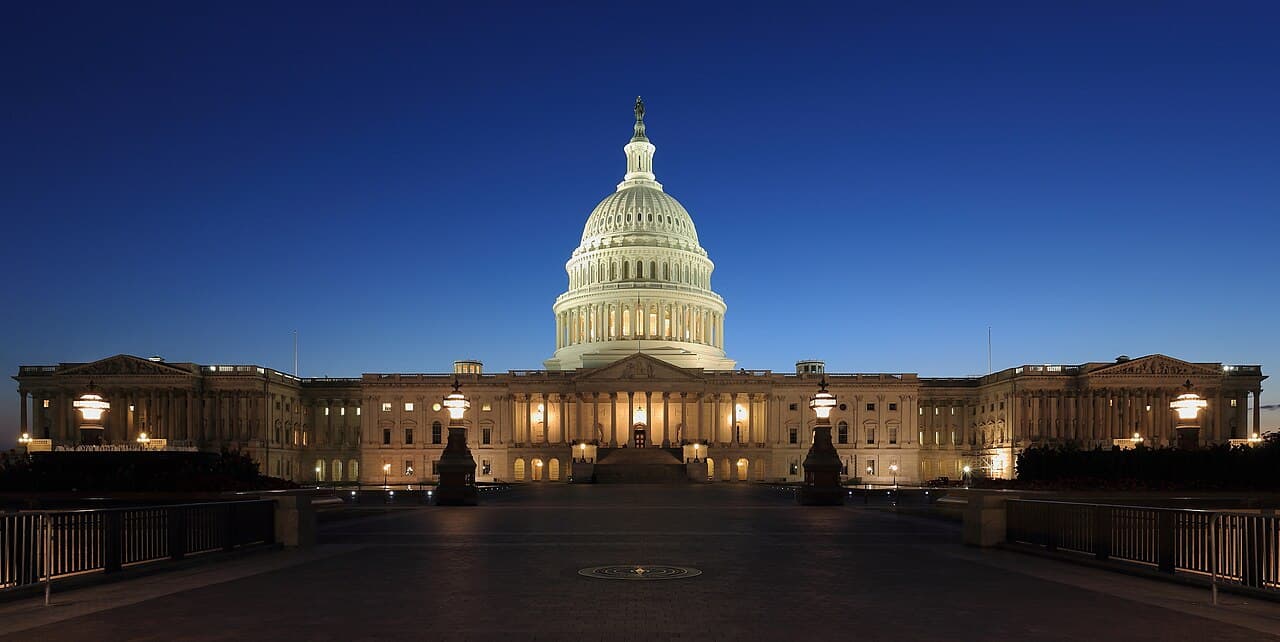
The Vote That Should Have Been Easy
The House voted down a resolution that would have curbed the President's military authority regarding Iran. The resolution failed. It wasn't close. Republicans voted against it in large numbers, which was expected. A meaningful number of Democrats crossed over too, which is where the story gets uncomfortable for people who spent four years calling executive power overreach the defining threat to American democracy.
I'm a libertarian. I've been one consistently, which means I was concerned about executive war-making authority when Obama was doing it in Libya, when Trump was doing it in Syria in 2017 and 2019, and right now. The principle doesn't change based on the party holding the White House. The Constitution is not a partisan document, even when both parties treat it as one.
Article I, Section 8 of the Constitution assigns Congress the power to declare war. Unambiguously. The Founders gave this power to the legislature deliberately, having observed what hereditary monarchs did with unchecked military authority. They didn't trust a single executive with the power to commit the nation to armed conflict without legislative consent. That judgment has held up reasonably well over two and a half centuries of history.
The War Powers Resolution Is Already a Compromise
The War Powers Resolution of 1973 was Congress's attempt to reassert its constitutional authority after Vietnam demonstrated what presidential military adventure without meaningful legislative oversight looks like. The resolution requires the president to notify Congress within 48 hours of committing forces and limits unauthorized military action to 60 days without congressional authorization.
Every president since Nixon has either ignored the resolution, worked around it, or complied minimally while disputing its constitutionality. The resolution has never been definitively adjudicated by the Supreme Court. It has functioned as a speed bump, not a constraint.
The Iran-specific resolution that just failed wasn't even asking for a full war powers rollback. It was asking for Congress to reassert its role in one specific theater where military escalation has historically carried catastrophic risk. Iran has proxies across the Middle East. An escalation with Iran is not a geographically contained conflict. The 2020 Soleimani strike demonstrated how quickly a single executive action can bring two countries to the edge of open war and how little Congress had to say about it in real time.
What Bipartisan Surrender Looks Like
The Democrats who crossed over to defeat this resolution will have explanations. They always do. Some will cite the specific language as too broad. Some will argue this wasn't the right moment. Some will say they support the principle but not this vehicle. These are the standard escape hatches that members of Congress use when they want to avoid casting a vote that their donors or their leadership or their electoral calculations make uncomfortable.
What they won't say, but what the vote reveals: Congress has become institutionally comfortable with outsourcing the war decision to the executive. Not comfortable in a reluctant, we-have-no-choice way. Comfortable in the way that institutions become comfortable with arrangements that reduce their accountability. If the war goes badly, the President is responsible. If it goes well, they voted for the President's authority to prosecute it. The downside is insured and the upside is shareable.
That's not constitutional governance. That's institutional cowardice wearing the costume of pragmatism.
The libertarian position is simple: if Congress believes military action against Iran is justified, pass an Authorization for Use of Military Force. Debate it. Vote on it publicly. Put members of Congress on record. Let the deliberative process that the Founders designed for exactly this purpose actually function. The AUMF process is not perfect, but it is infinitely preferable to a blank check issued via inaction.
Congress didn't give Trump authority to use military force against Iran. It just declined to take that authority away. In practice, that's the same thing. And the pretense that it isn't — that inaction is a neutral act rather than a choice — is the lie that has been gutting Article I for decades. Both parties participate. The Constitution loses every time.