The Machine That Changes Everything
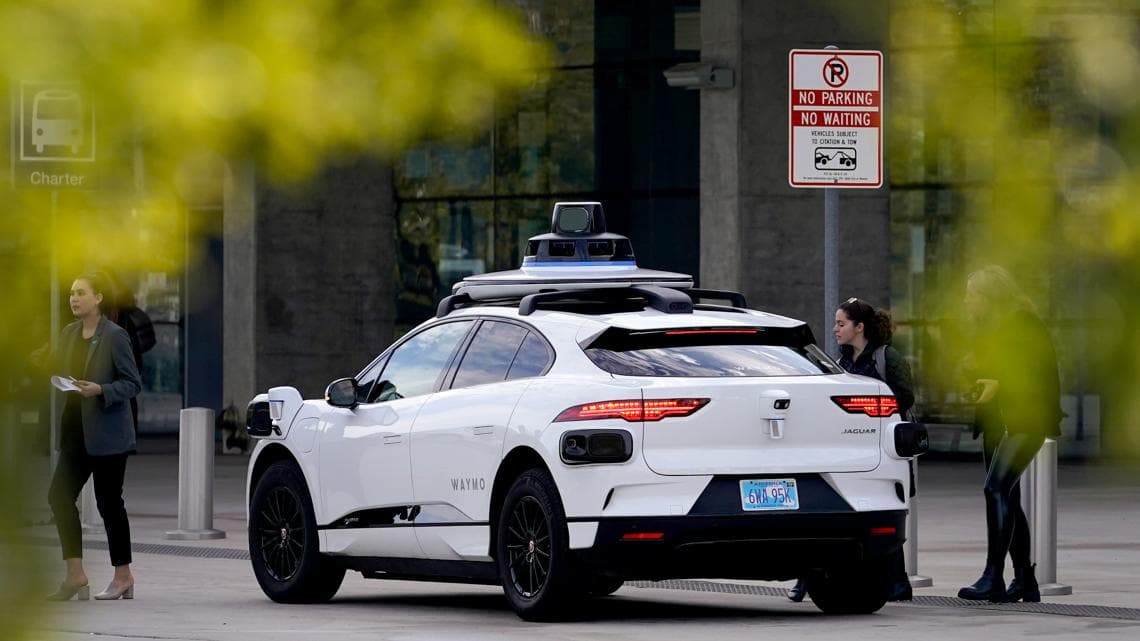
Waymo announced last week it's rolling out robotaxis in Texas and Florida. Austin and Miami first, two cities that have become, not by accident, the proving grounds for what American technological ambition looks like when it gets out of California's regulatory shadow.
I rode a Waymo in Phoenix last spring. Not as a test. Just as transportation, the way you'd call a cab. The car navigated a construction zone, a school pickup line, and a sudden pedestrian in a crosswalk without any drama. No driver. No intervention. It just worked. And the experience clarified something that's easy to miss in abstract debates about autonomous vehicle policy: this technology is ready. The question is whether the regulatory and political environment will let it scale.
That question has a geopolitical dimension that most coverage misses entirely.
The Competition That's Already Underway
China's autonomous vehicle sector, companies like Baidu's Apollo, Pony.ai, and WeRide, has been conducting large-scale robotaxi operations in multiple Chinese cities for years. Wuhan alone has logged millions of autonomous miles. The Chinese government treats AV deployment as a strategic priority and has structured its regulatory environment accordingly: permissive for domestic champions, restrictive for foreign competitors.
The United States has the best AV technology in the world, full stop. Waymo's safety record, accumulated over more than 20 million fully autonomous miles, is the most robust dataset in existence. No human-driven comparison comes close. But technology leadership is not the same as market leadership, and market leadership in autonomous vehicles will be won or lost in the next five years based on who can scale fastest.
Scale requires regulatory clarity. Texas and Florida provide it. California, where Waymo originated, spent years wrapping the technology in conditional permits, mandatory reporting requirements, and political interference every time a vehicle had a notable incident. The result: Waymo's most aggressive expansion is happening in states that treat innovation as a feature rather than a liability.
What This Means for American Workers and American Strategy
The Teamsters will make the obvious argument: robotaxis eliminate driving jobs. This is true in the narrow sense and misleading in the broader one. The autonomous vehicle ecosystem creates jobs in software engineering, sensor manufacturing, fleet maintenance, data management, and infrastructure deployment. The Bureau of Labor Statistics estimates that AV-adjacent roles could represent over 300,000 new positions by 2030, even accounting for displacement of traditional driving roles.
More importantly, the alternative to American AV dominance isn't American driving jobs preserved in amber. It's Chinese AV dominance. And Chinese-built autonomous vehicle fleets operating in American cities, with all the data collection that implies, is a national security concern that should concentrate minds in ways that California's regulatory posture has conspicuously failed to do.
Texas and Florida are right to welcome Waymo. The federal government should be doing everything in its power to accelerate the regulatory frameworks that let American companies compete. This isn't a case for zero oversight, safety standards matter, and Waymo has demonstrated it takes them seriously. It's a case for fast, clear, competent oversight instead of the slow, vague, politically reactive kind that has characterized the federal AV regulatory process since 2017.
The robots are already driving. America built them. Whether we let them run is now a policy choice, not a technology question.