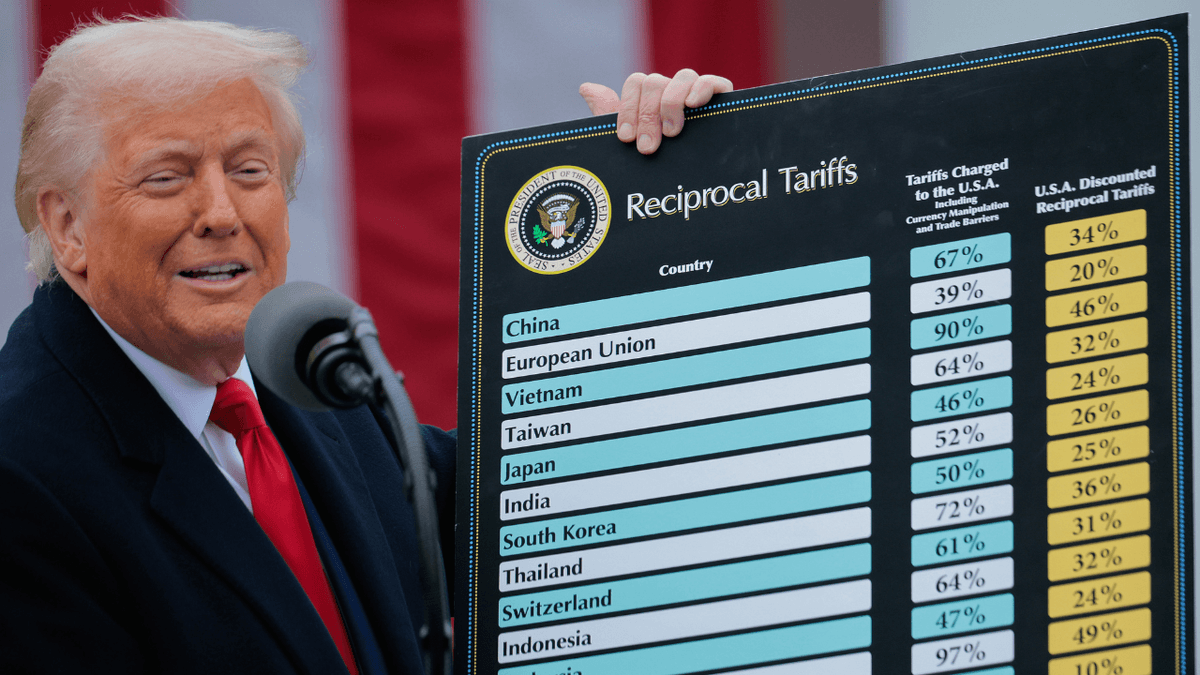
The Cheering Is Loud. The Economics Are Uncomfortable.
I watched voters react to Trump's tariff pitch at the State of the Union with the particular interest of someone who has spent years arguing that the federal government is too large, too expensive, and too involved in economic decisions that free markets handle better. The enthusiasm was real. The factual case for tariffs as a prosperity tool is not.
Trump called his tariff program "the most beautiful word in the dictionary." His supporters in the chamber, and in the focus groups that ran on every cable network afterward, nodded along. Working-class voters in Michigan and Ohio, who watched their manufacturing towns hollow out over three decades of trade liberalization, aren't wrong to feel aggrieved. Their anger is legitimate. Their diagnosis of the cause is partially correct. The prescription is where things go sideways.
A tariff is a tax. This is not a controversial statement among economists of any political persuasion, it's definitional. When the U.S. government imposes a 25 percent tariff on imported steel, the steel importer pays that tax to the federal government. The importer passes the cost downstream. It ends up in the price of every product made with that steel: appliances, automobiles, construction materials, canned goods. The American consumer pays it. The foreign exporter doesn't.
What the Voters in Those Focus Groups Are Actually Saying
The focus groups that ran after the State of the Union showed something interesting. Voters weren't primarily responding to tariff policy as economics, they were responding to it as identity and narrative. The story Trump tells about tariffs is a story of American strength, of fighting back against countries that cheated, of putting working people first. That story is emotionally true even when the policy mechanics are questionable.
A voter in a Youngstown-area focus group, carried on Fox News, said something that stuck with me: "I don't care if prices go up a little. At least we're not rolling over for China anymore." That's not economic analysis. That's a values statement about sovereignty and dignity. And it's a sentiment that free-trade conservatives, myself included, have badly underweighted for a decade.
The libertarian argument, open trade, global markets, consumer surplus, has been winning the economic debate for forty years while losing the political one. There's a reason. The gains from free trade are diffuse and invisible: slightly cheaper goods distributed across 330 million consumers. The losses are concentrated and visible: a plant closes in Lordstown, 5,000 people lose jobs, a community dies. Concentrated, visible pain beats diffuse, invisible gain in democratic politics every time.
I get it. I really do. And I'd rather have a president who fights for American workers than one who lectures them about comparative advantage while their town disappears.
But the Bill Comes Due
The Peterson Institute for International Economics estimated that Trump's 2018-2019 tariffs cost the average American household roughly $1,300 per year, and that was a much more targeted tariff regime than what's currently on the table. The new proposal involves sweeping tariffs on goods from dozens of countries. The math is not friendly.
Small businesses that rely on imported inputs are already building contingency plans. A manufacturing company in Texas that makes outdoor furniture told me last month they source aluminum hardware from Vietnam because domestic supply can't meet their volume at any price. A 25 percent tariff on that input doesn't bring the production home, the domestic capacity doesn't exist. It just makes their product more expensive, and the cost gets passed to the customer.
The federal government also benefits, of course, tariff revenue flows to the Treasury. That's the part that should make any small-government conservative uncomfortable. Tariffs are a tax increase. They're a tax that happens to be politically popular, but the revenue goes to Washington, and Washington has never met a revenue source it didn't want to expand. Giving the federal government a new, politically popular tax tool and expecting fiscal restraint is wishful thinking.
What American workers actually need, and what no State of the Union address has delivered in a generation, is the domestic policy environment that makes manufacturing here competitive: lower regulatory burden, cheaper energy, tort reform, infrastructure that doesn't embarrass us. Tariffs are the easy answer that feels like action. The hard work is the stuff that doesn't fit in an applause line.
Trump's voters heard what they wanted to hear Tuesday night. In eighteen months, when the price tag shows up, we'll have a harder conversation.