The Consensus And Its Assumptions
The free trade consensus that organized American economic policy from approximately 1992 through the late 2010s was built on a set of assumptions about how participants in the international trading system would behave. The assumptions were that participants would honor the rules they signed up for, would compete on commercial terms, would refrain from using state subsidies and intellectual property theft as competitive instruments, and would, over time, converge toward the institutional patterns of liberal market economies as their citizens grew wealthier. The assumptions were not entirely wrong about most of the participants. The assumptions were entirely wrong about the participant that mattered most.
Where I come from, we knew what state-directed economies looked like from the inside. We knew that they did not converge with the liberal market economies the way the American economic policy class assumed they would. We knew that the convergence narrative was, in the eyes of the regimes it was supposedly describing, a useful illusion that the regimes had every incentive to maintain while pursuing the opposite strategy in practice. The American policy class did not have this from experience. The Eastern European policy class did. The disagreement was visible for thirty years to anyone who wanted to see it.
What The Data Now Shows
The data now shows what the experience predicted. The People's Republic of China produces approximately 46 percent of the world's commercial shipbuilding output, approximately 56 percent of its steel, approximately 60 percent of its electric vehicles, and approximately 80 percent of its solar panels. The concentration is not the product of market competition. The concentration is the product of sustained state subsidy, sustained intellectual property acquisition through both authorized and unauthorized channels, and sustained industrial policy that the World Trade Organization framework was not designed to address.
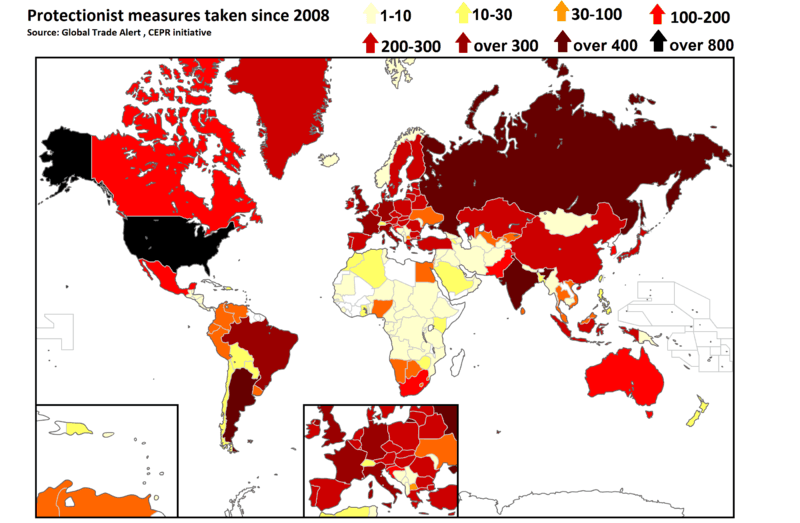
The American economic policy response, from approximately 2018 forward, has been a partial reversal of the prior consensus. The reversal has included tariffs on selected categories, export controls on selected technologies, and investment restrictions on selected sectors. The reversal has not, however, been accompanied by the corresponding industrial policy on the American side that would rebuild the productive capacity the consensus era allowed to atrophy.
The Productive Capacity That Was Lost
The productive capacity that was lost is not abstract. It is a network of small and mid-sized manufacturing firms whose closure or relocation eliminated the cumulative know-how that the upstream and downstream industrial supply chain depended on. The know-how was not principally machinery. The know-how was the skilled workforce, the trained engineers, the procurement networks, the regional logistics, and the local supplier ecosystems that allow a manufacturing economy to scale up production in response to a strategic requirement.
The American economy, in the consensus era, allowed approximately 5.8 million manufacturing jobs to leave the country between 2000 and 2017. The job loss is the headline number. The cumulative capacity loss is larger than the headline number suggests because the supplier ecosystems that supported the lost firms also dissolved, and the dissolution is harder to reverse than the establishment of new firms is.
The Strategic Implication
The strategic implication is straightforward. The United States now faces a strategic competitor whose industrial capacity exceeds American industrial capacity in categories that, in the prior strategic era, were assumed to favor the United States. The competitor's industrial capacity is, in the relevant categories, sufficient to sustain a protracted economic competition, a protracted technological competition, and in the worst case, a protracted military competition, on terms that the United States would prefer not to face.
The implication is not that war is imminent. The implication is that the bargaining position the United States holds in international forums has narrowed materially relative to the prior strategic era, and that the narrowing is the consequence of the policy assumptions the consensus operated under. Where I grew up, they promised the same things. The promises did not produce the convergence. The promises produced the leverage that the regimes acquired while the convergence narrative was running.
What The American Response Should Look Like
The American response should be more serious than the response the policy class has been willing to articulate publicly. The response should include, in my reading, sustained federal investment in manufacturing reshoring, sustained federal investment in critical mineral supply chain reconstitution, sustained federal investment in workforce development tied to the manufacturing skill categories that have been lost, and sustained federal action against the state-subsidized export practices that the consensus framework allowed.
The response should also include the kind of immigration policy that recruits the skilled population the American manufacturing renaissance requires. The American manufacturing economy of the late nineteenth century was the manufacturing economy that the open immigration of skilled workers built. The American manufacturing economy of the next decade requires the same kind of recruitment, calibrated to the contemporary geopolitical realities, but no less serious in its intent.
The Eastern European Read
The Eastern European read on the American moment is that the country still has the architecture, still has the resources, still has the institutional capacity to rebuild the productive base the consensus era allowed to erode. The Eastern European read is also that the country has only a finite window in which the rebuilding remains feasible, and that the window is closing more quickly than the policy debate currently registers.
America is worth fighting for. I chose it. I chose it because it remains, in spite of everything the consensus era cost, the country whose architecture is best positioned to absorb the lessons of the last thirty years and to act on them in the time remaining. The acting requires the kind of political will the country has demonstrated in earlier inflection points. The will, at the moment, is uneven. The window is finite. Don't tell me this can't happen here. I have seen it happen.