The Number Everyone Got Wrong
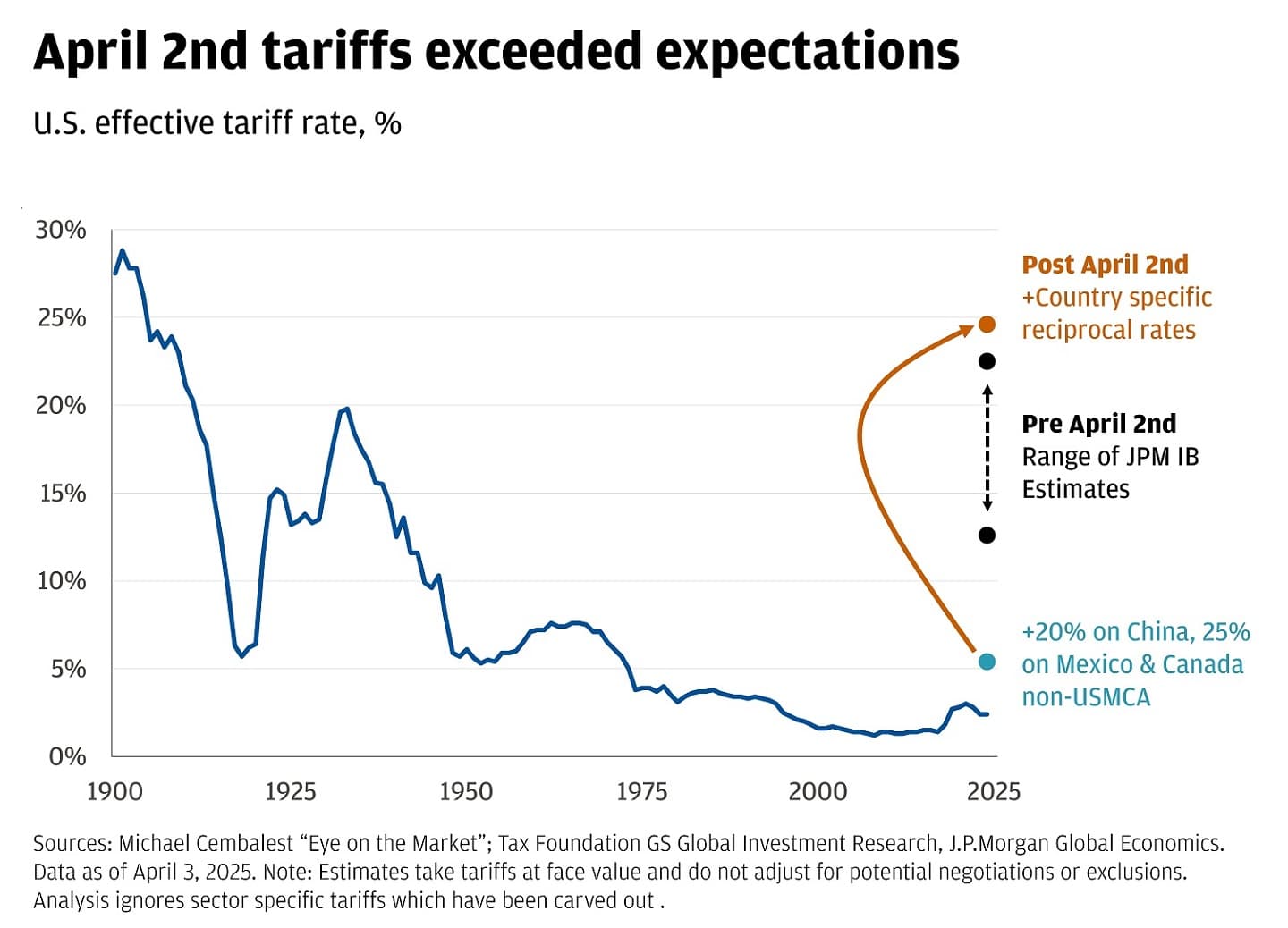
Trade Representative Jamieson Greer announced this week that tariff rates for certain trading partners will rise to 15 percent. The financial press treated this as confirmation of worst fears, protectionism, inflation risk, retaliatory spirals. The editorial boards weighed in on schedule. The economists who spent thirty years telling us free trade was an unqualified good dusted off their objections.
What's missing from almost all of this commentary is a reckoning with why we're here. The 15 percent figure didn't emerge from nowhere. It emerged from three decades of trade policy that prioritized theoretical economic efficiency over actual industrial capacity, that measured success in GDP growth while hemorrhaging manufacturing employment, and that treated American leverage in trade negotiations as something to be apologized for rather than deployed.
I teach political economy. I've assigned the Ricardo comparative advantage model more times than I can count. It's not wrong. But it's incomplete in ways that matter enormously when the trading partner with whom you're supposedly mutually benefiting is a state-directed economy that subsidizes production, manipulates currency, and has no intention of honoring the liberal trading order's underlying assumptions.
What Free Trade Orthodoxy Got Wrong About Race and Place
Here's the part of the trade debate that economists consistently underweight: the distributional consequences weren't neutral, and they weren't random. The manufacturing communities gutted by import competition in the 1990s and 2000s were overwhelmingly concentrated in specific geographies, the Midwest, the rural South, Appalachia, and specific demographics. The aggregate GDP gains that trade economists celebrated were real. They were also captured almost entirely by coastal metropolitan areas and the professional class.
This isn't a new observation. The work of economists David Autor, David Dorn, and Gordon Hanson, published in 2013, not exactly a MAGA think tank product, documented the "China shock" with precision. Regions exposed to Chinese import competition experienced not just job losses but cascading social effects: declining marriage rates, rising mortality, drug overdose increases. The economists who dismissed concerns about free trade in 1995 spent 2015 wondering why working-class voters were angry.
A 15 percent tariff schedule is a blunt instrument. It will raise prices on some goods. It will prompt some retaliation. These costs are real and shouldn't be dismissed. But the alternative, a continuation of the trade posture that produced the China shock, that allowed our pharmaceutical supply chains to become 80 percent dependent on Chinese and Indian API production, that let our semiconductor manufacturing capacity atrophy to near-zero, isn't a cost-free option. It has costs too. We just paid them invisibly, in places that don't show up in financial press coverage.
Leverage and the Logic of Negotiation
The announced 15 percent rate is explicitly framed as a negotiating position, not a permanent fixture. Greer made this clear. Some nations will face lower rates if they come to the table with genuine concessions, on market access, on currency practices, on intellectual property protection. The tariff is leverage, not ideology.
This is how trade negotiation has always worked for every country except the United States, which spent the post-WWII era treating its market access as a gift rather than a card to be played. Japan protected its automotive sector while selling cars in America. South Korea built its electronics industry behind tariff walls while we opened ours. China accessed the WTO's trading privileges while maintaining practices that violated every principle the organization was built on.
And we let it happen, because the theory said the long-run equilibrium would be worth it. The long run has arrived. The equilibrium isn't what the textbooks predicted.
Does 15 percent fix this? No. No single tariff rate fixes thirty years of policy decisions compounded across a global supply chain. But it changes the negotiating dynamic. It signals to trading partners that American market access is conditional on behavior, on currency practices, on labor standards, on reciprocal openness, rather than on the good feelings of the diplomatic community. That signal is worth something. Possibly quite a lot.
The Inflation Concern, Taken Seriously
The criticism I take most seriously is inflationary pressure. Consumer prices on tariffed goods will rise. For households at the lower end of the income distribution, that's a real burden. Import prices on consumer electronics, clothing, and certain food categories will increase, and the people least able to absorb those increases are the same working-class communities that trade policy has been failing for thirty years.
This is a genuine tension, and any honest analysis has to acknowledge it. But it's also a tension that exists within a policy choice, not between policy and no-policy. The alternative, continued trade deficits, continued manufacturing atrophy, continued supply chain vulnerability, also has distributional consequences. The question is which set of costs we're willing to bear, and whether we can construct domestic policy responses, worker retraining, supply chain investment, targeted relief, that mitigate the transition costs of the new posture.
That's the actual policy debate worth having. Not whether tariffs are philosophically pure, but whether 15 percent combined with domestic industrial policy produces better outcomes than the status quo. My read is that it can, if the administration governs the transition seriously rather than treating the tariff announcement as the end of the policy rather than the beginning.