The Governor and the Crystal Ball
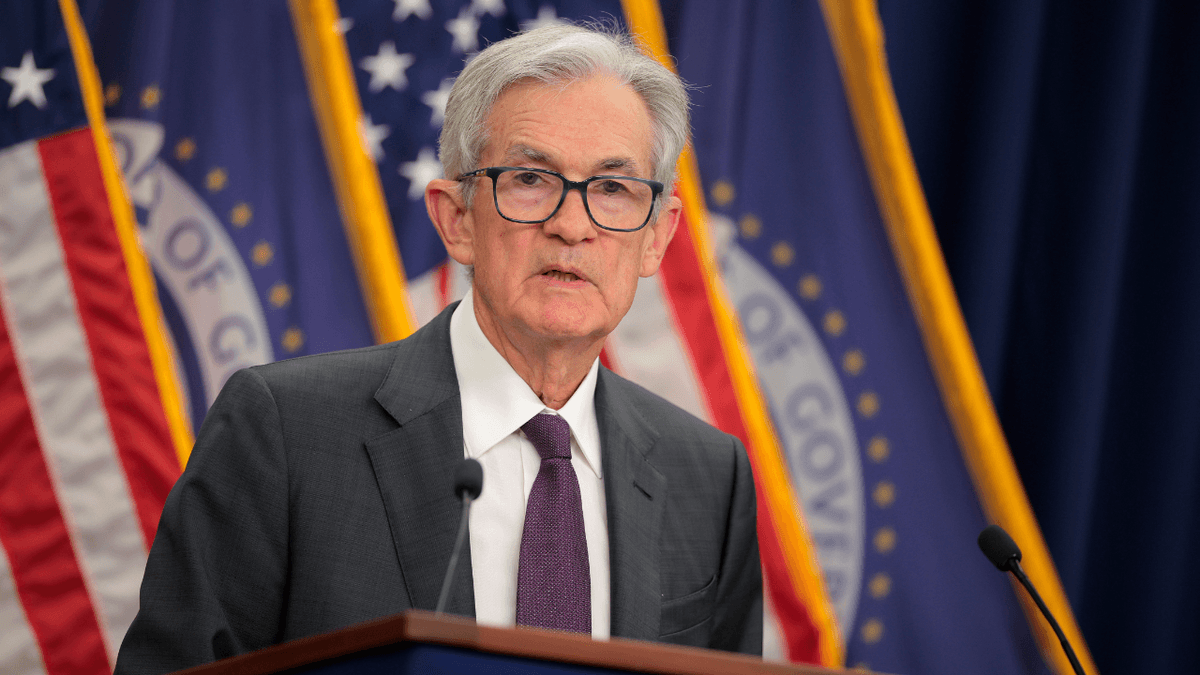
Federal Reserve Governor Adriana Kugler gave a speech warning that artificial intelligence poses meaningful risks to the labor market, that the technology's adoption could push unemployment higher and that the Fed needs to factor AI disruption into its policy framework.
This is the same Federal Reserve that missed the 2021-2022 inflation surge until CPI was running at 9.1 percent. The same institution that described inflation as "transitory" for the better part of eighteen months while Americans watched their grocery bills climb. The same body whose 2022-2023 rate hiking cycle, eleven consecutive increases bringing the federal funds rate from near-zero to 5.25-5.50 percent, was a direct consequence of getting the 2021 read catastrophically wrong.
And now this institution wants to tell us what artificial intelligence will do to the labor market in the next decade.
Hard pass.
What the Fed's Mandate Actually Is
The Federal Reserve has a dual mandate: price stability and maximum employment. Those are statutory objectives, assigned by Congress. The Fed's job is to manage monetary policy, interest rates, reserve requirements, open market operations, in service of those two goals.
Notice what's not in the mandate: technology forecasting. Industrial policy. Labor market restructuring advice. Sectoral economic analysis of emerging technology adoption curves.
The moment a Fed governor starts opining on how AI will reshape employment, she's not doing monetary policy. She's doing something else, something that sounds like it belongs in a McKinsey report or a Senate hearing or a think-tank symposium. All of those have their place. None of them is the Federal Reserve.
This matters because mission creep at the Fed isn't cost-free. When the Fed speaks, markets listen. When a Fed governor warns that AI poses unemployment risks, that statement lands differently than the same statement from a labor economist or a technology analyst. It has the weight of the institution behind it. It implies policy consequences. It shapes expectations in ways that a McKinsey report does not.
Using that institutional weight to advance speculative technology analysis, dressed up as forward economic guidance, is an abuse of the platform.
The Actual History of Automation Panic
Let me offer some data points that the governor's speech apparently didn't engage with.
In 1964, Lyndon Johnson convened the National Commission on Technology, Automation, and Economic Progress because American labor leaders and intellectuals were convinced that automation would produce permanent, structural unemployment. The commission produced a 115-page report. Mass unemployment from automation did not materialize. Employment rose.
In 1995, Jeremy Rifkin published "The End of Work," arguing that technology would permanently displace workers across every sector. The 1990s subsequently produced the longest sustained employment expansion in postwar American history. The unemployment rate hit 3.9 percent in 2000.
In 2013, Oxford researchers Frey and Osborne published a widely cited paper estimating that 47 percent of US jobs were at high risk of computerization. A decade later, the US economy employed more people, in more sectors, at higher wages than it did when that paper was written.
The pattern is consistent. Technology disrupts specific jobs while creating new categories of work that didn't previously exist. The net effect, across every wave of technological change since the industrial revolution, has been more employment at higher productivity, not less. This is not an argument that AI will produce no disruption, it will, and specific workers in specific sectors will face genuine transitions. That's real and it deserves attention.
But a Federal Reserve governor treating AI-driven unemployment as a serious near-term risk to monetary policy calculus is projecting a scenario that has failed to materialize every other time serious people have projected it. That's not analysis. That's anxiety dressed as economics.
The Real Risk the Fed Is Ignoring
Here's the monetary policy question that should actually concern Kugler: AI adoption is productivity-enhancing. Rapidly. The deployment of AI tools across services industries, legal, financial, medical, administrative, is compressing the cost of knowledge work in ways that could produce significant disinflationary pressure over the next five years.
If the Fed is too focused on the unemployment-risk narrative, it risks keeping policy tighter than warranted during a period of AI-driven productivity growth. That's the mirror-image error of 2021: missing a deflationary signal because you're worried about a phantom inflationary one.
I'm not saying the Fed should target AI adoption in its models. I'm saying the technology's macro effects are genuinely uncertain, cut in multiple directions, and are better engaged through honest acknowledgment of that uncertainty than through confident warnings about rising unemployment.
The Fed does best when it does less. It has two assigned jobs. Both are hard. Both require deep institutional focus and disciplined execution. The 2021-2023 inflation episode proved that the Fed can still catastrophically fail at its core mandate when it gets distracted.
Put down the crystal ball. Read the labor market data. Set the rate. That's the job.