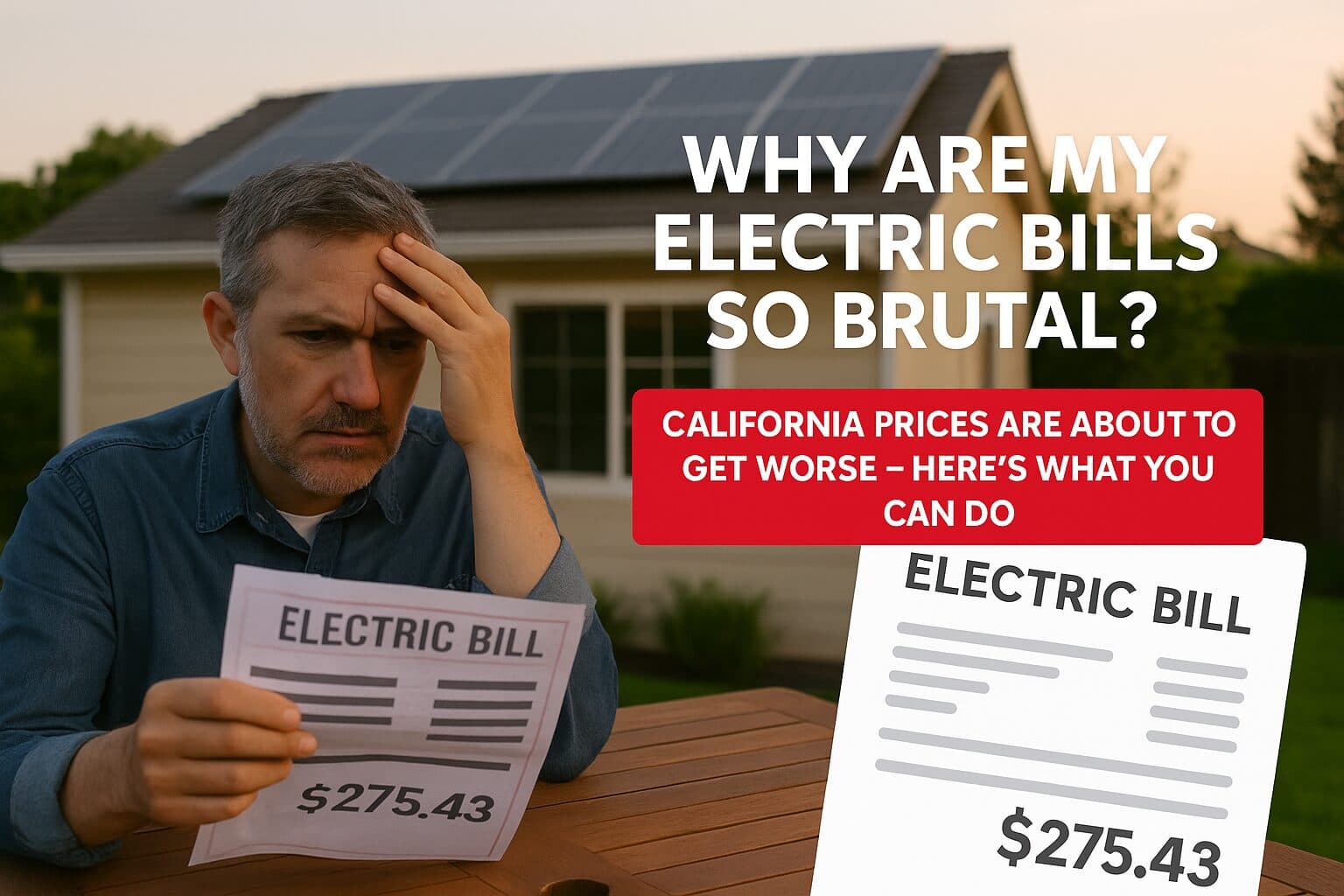
Every household in America knows the monthly ritual. You open the envelope from the utility company, scan the bottom line, and wonder how keeping the lights on became a budget crisis. For millions of working families, that question is about to get an even more unpleasant answer. Electricity rates are climbing again, and the cause is not a shortage of windmills, a heat wave, or some conspiracy by utility executives. It is the predictable result of policy choices made in Washington.
For years, federal agencies have treated affordable electricity as an acceptable casualty of the climate crusade. The Environmental Protection Agency has issued rule after rule designed to force coal and natural gas plants into early retirement, while the Treasury Department showers tax credits on wind, solar, and battery projects that cannot reliably keep the grid running. The result is a market that is becoming less competitive, less dependable, and more expensive every year.
The Mandates Are Driving Up Costs
The evidence is already showing up in household budgets. The Energy Information Administration's March 2026 Short-Term Energy Outlook projects that U.S. residential electricity prices will rise by 6.2% over the course of this year. That increase is roughly double the headline inflation rate and comes after several years of above-average rate growth. In plain terms, the typical family will pay hundreds of dollars more this year for the same amount of power.
Those higher prices are not an accident. They follow directly from regulations that make it prohibitively expensive to operate the coal and natural gas plants that still provide roughly 60% of the nation's electricity. When a power plant that was producing affordable baseload power is forced offline before a reliable replacement exists, two things happen. The replacement power costs more, and consumers absorb the difference through higher rates.
The subsidies make the problem worse by distorting investment decisions. Developers chase federal tax credits instead of building the most economical source of generation for a given region. Ratepayers are then left covering the cost of transmission upgrades, backup capacity, and the inevitable shortfall when the wind stops blowing or the sun goes down. Washington promises cheaper power tomorrow, but families are paying more today.
Reliability Is the Hidden Casualty
Higher bills are only part of the story. The grid itself is becoming less reliable, which is the last thing a modern economy can afford. In 2025, the North American Electric Reliability Corporation warned that large portions of the country face an elevated risk of power shortfalls during periods of peak demand. Grid operators in the Midwest and Mid-Atlantic have been especially blunt. A 2025 report from PJM Interconnection, which manages the largest power market in the United States, estimated that proposed EPA power plant rules could force the retirement of approximately 40,000 megawatts of dispatchable generation by 2030. That is enough capacity to power roughly 30 million homes.
Dispatchable power matters because it can be turned on when needed. Wind and solar cannot do that. Battery storage remains expensive and limited, and no amount of political enthusiasm changes the physics of energy density. When the federal government mandates the premature closure of plants that keep the lights on, it is not only risking blackouts. It is handing ratepayers a bill for the replacement capacity, the transmission lines, and the emergency measures required to keep hospitals and factories running.
The left likes to dismiss these warnings as scare tactics, but grid operators are not politicians. They are engineers whose job is to balance supply and demand in real time. When they say the margin for error is shrinking, responsible leaders ought to listen.
A Better Path Forward
There is a better way to approach energy policy, and it starts with humility about what government can engineer. Washington should stop treating electricity markets as a laboratory for ideological experiments. Instead, policymakers should prioritize reliability, affordability, and consumer choice.
That means permitting reform that allows natural gas, nuclear, and hydroelectric projects to be built in less time than it takes to raise a child. It means ending the sweetheart tax credits that pick winners and losers in the generation market. It means requiring that any plant retired for environmental reasons be replaced with dispatchable capacity before the switch is flipped. And it means acknowledging that American families should not be forced to finance a transition they cannot afford.
The cost of ignoring these realities is steep. The Congressional Budget Office estimates that the energy tax credits contained in the Inflation Reduction Act will cost roughly $1.2 trillion over ten years. That is money that does not come from some magic treasury. It comes from taxpayers, from borrowed dollars, and from higher rates passed along by utilities that are legally required to recover their costs.
If policymakers want lower electricity bills, the recipe is straightforward. Let markets choose the lowest-cost reliable fuel. Approve pipelines and transmission lines without a decade of litigation. Stop pretending that weather-dependent sources can carry the load alone. And respect the fact that a grandmother in Texas should not have to choose between running her air conditioner and buying groceries because a regulator in Washington decided coal was unfashionable.
Electricity is not a luxury. It is the foundation of modern life, from the factory floor to the family refrigerator. The next time you wince at your utility bill, remember that the price is not set by the wind. It is set by choices made in Washington. Better choices would bring lower bills. Until then, families will keep paying for a green agenda that never seems to deliver the savings it promised.