The Strategic Geography
The Arctic isn't a high-priority theater for U.S. military planning. Cold, remote, sparse population, minimal economic activity. That changed when climate scientists confirmed that Arctic sea ice is declining faster than predicted and polar routes between Europe and Asia are becoming viable year-round. That reframes Arctic territory from a wasteland into a strategic chokepoint.
Russia is 50 percent of the Arctic Circle's land area. It sits on the transpolar route between European ports and Asian markets. Climate change gives Russia an opportunity to control a major shipping corridor without competing with U.S. naval power in the South China Sea or Persian Gulf. Russia is building the military infrastructure to seize that opportunity.
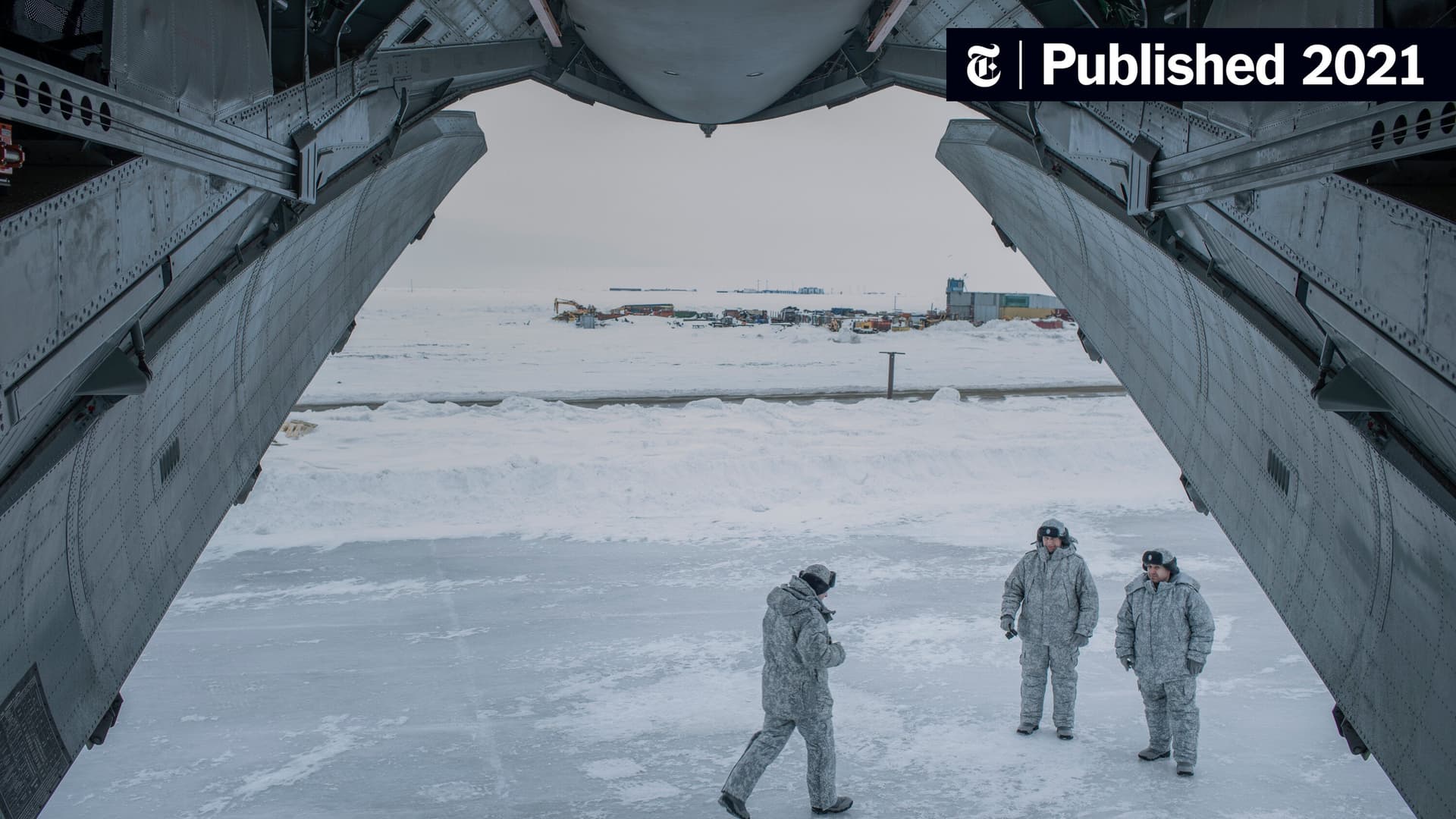
In the past eighteen months, Russia has deployed 8,000 additional troops to Arctic military installations. It's completed three new Yamal-class icebreaker-capable patrol vessels. It's established new air defense systems at the northern Kola Peninsula base. It's conducting exercises simulating contested Arctic operations. The pattern is unmistakable: Russia is treating the Arctic as a future operational theater.
Why This Matters Strategically
If Arctic shipping routes become viable, they'll reduce transit times from European ports to Asian markets by 40 percent relative to the Suez Canal route. That's economically significant. It's also militarily significant. A northern route under Russian control creates leverage over global shipping. Russia can tax ships, impose restrictions, or threaten closure. That's a form of economic power.
The U.S. has a minimal Arctic military presence by comparison. A single Coast Guard icebreaker serves the entire U.S. Arctic region. The Navy has minimal ice-capable ships. Greenland is the only Arctic territory the U.S. has meaningful military presence in, and that's shared with Denmark. If Russian-dominated Arctic shipping becomes the default route, the U.S. loses the ability to project power or enforce order in that region.
Climate change is making this a near-term problem. The Arctic isn't becoming passable in 2050. It's becoming passable in 2026 and beyond. Commercial shipping companies are already studying transpolar routes. If Russia is the only military power present, it controls the domain from the start. That's reversible only through expensive military build-up and confrontation.
The Institutional Response
The Pentagon has requested budget authority for Arctic military expansion. New icebreakers. New bases in Alaska. New Arctic-capable units. Congress is receptive to the request because Arctic competition with Russia is broadly recognized as real. But the budget cycle is slow. New icebreakers take five years to build. By the time U.S. military capacity reaches parity with Russian capacity, Russia will have been operating unopposed for years.
The Trump administration has also pursued acquisition of Greenland explicitly to increase U.S. Arctic presence. The proposal was politically controversial, but the strategic logic is sound. Greenland is positioned to dominate Arctic shipping routes. U.S. control of Greenland would give the U.S. leverage over Russian Arctic operations. This idea is likely to be revisited as Arctic competition accelerates.
NATO is slowly recognizing the Arctic as a theater. Finland and Sweden's recent NATO accession brings Arctic Nordic capacity into the alliance. But NATO's Arctic posture remains underdeveloped. The alliance is still oriented toward Atlantic and European defense. Arctic defense is emerging as a priority, but the build-up will take time.
The Longer Strategic Gamble
Russia is making a bet that the U.S. won't prioritize Arctic competition. If the U.S. stays focused on the Pacific, Middle East, and Atlantic, Russia gets uncontested Arctic dominance. If the U.S. pivots Arctic-focused military investment, Russia faces eventual peer competition. Russia's strategy is to establish presence and lock in economic benefits before the U.S. mobilizes.
The gamble may work. The U.S. military budget is finite. Shifting resources to the Arctic means reducing presence elsewhere. Congress won't fund equivalent increases across all theaters simultaneously. Russia may successfully establish Arctic hegemony by default, winning through the U.S. inability to compete everywhere.
This is one of several theaters where the U.S. is losing initiative. Russia in the Arctic. China in the Pacific. Iran in the Persian Gulf. U.S. military dominance is no longer global. The era of unchallenged U.S. power is over. The next decade is about managing decline and competing in priority theaters. Russia is betting that the Arctic is a low-priority theater for the U.S., and Russia may be right.


