The Recruitment Crisis
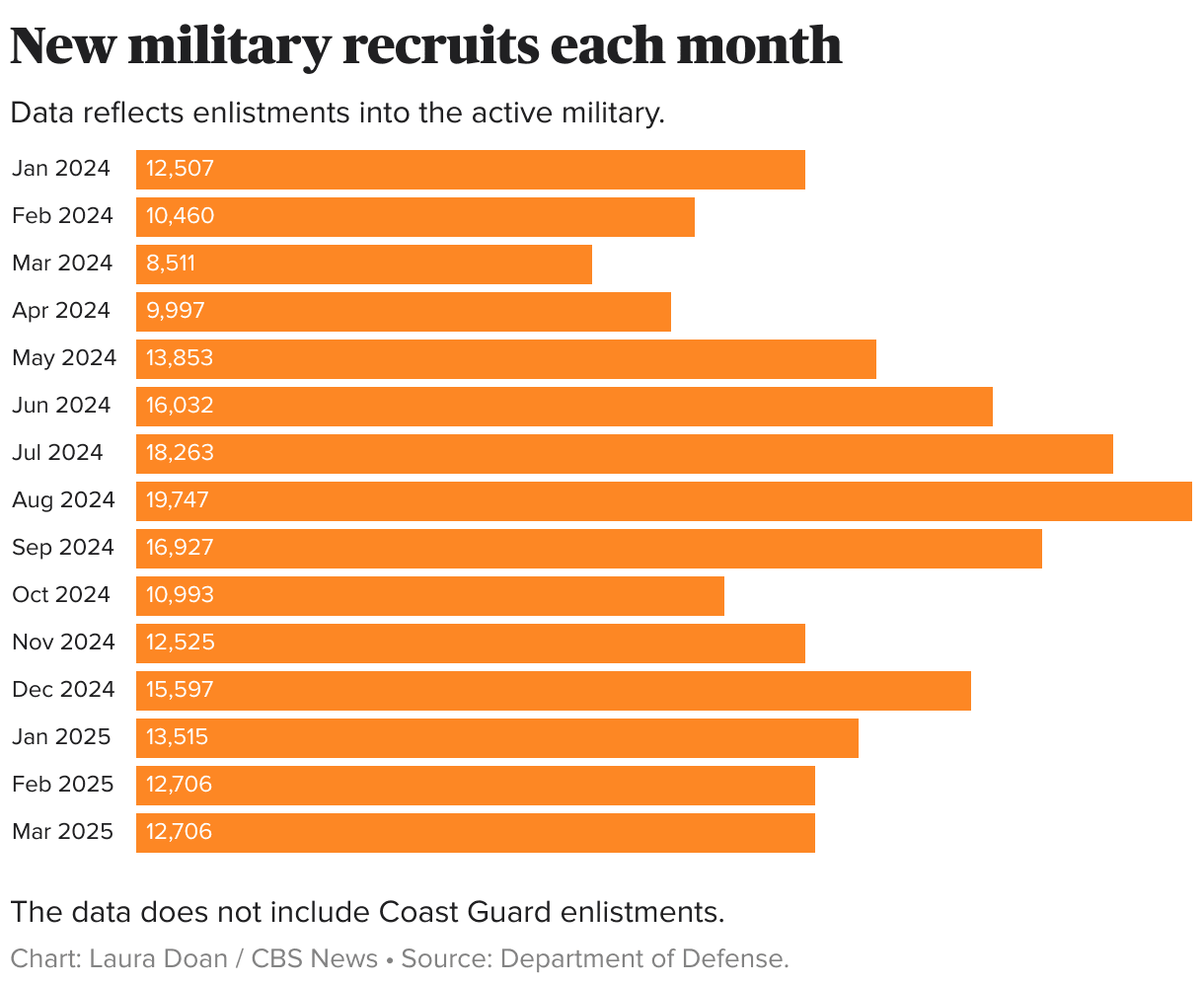
The U.S. Army missed its 2025 recruiting goal by 2,400 soldiers. That's not a huge shortfall as a percentage, but it's the second consecutive year of missing targets. The issue isn't recruiting. It's disqualification. The Army is seeing more applicants, but more of them fail the medical or mental health screens.
Of 1.2 million Americans aged 17 to 24 who applied for military service in 2025, 923,000 were immediately disqualified. The disqualification rate is 77 percent. Most of them never made it past the initial physical or medical history review. Some had documented mental health diagnoses. Others were overweight. Some had tattoos the military deemed disqualifying. Some had THC in their bloodstream.
The Army is desperate enough that it's starting to waive some disqualifications. A soldier with depression or ADHD would have been rejected automatically a decade ago. Now the Army is granting moral waivers. The result is a force that's less physically and mentally healthy than the historical norm. That creates downstream problems: higher medical costs, higher injury rates, shorter service durations.
Why Disqualification Numbers Are So High
The obesity rate among American youth is 21 percent nationally. In some regions, it's above 30 percent. The military has strict weight standards. A recruit can't be overweight. Simple arithmetic: if 21 percent of the population is overweight, that's an automatic 21 percent disqualification. Add in mental health diagnoses, drug use history, and other medical issues, and 77 percent disqualification isn't surprising.
Mental health is a key driver. The number of young Americans with diagnosed depression, anxiety, or ADHD has increased dramatically in the past decade. Part of that is real increase in mental illness. Part of it is better diagnosis and willingness to seek help. But from the military's perspective, the effect is the same: more applicants have documented mental health conditions and thus fail the screening.
Drug use is another factor. Many states have legalized marijuana. Young people who used marijuana recreationally may test positive on the military's drug screening. Military policy traditionally barred anyone with THC in their system. Recently, the military started considering the recency of use and granting waivers for single past uses, but the policy still eliminates many applicants.
What This Means for Force Readiness
The military is facing a force quality problem. It can either maintain strict standards and field smaller, healthier units, or relax standards and field larger units with more medical and mental health complications. It's choosing the latter. That's not a value judgment. It's a forced choice between bad options.
A drill sergeant told an interviewer this week that training a soldier with depression or ADHD requires more attention than training a soldier without those conditions. "It slows training. It creates complications. But we need the people, so we're taking them." That attitude is realistic and grim. The military needs manpower more than it needs a population of elite warriors.
The disqualification rate also correlates with socioeconomic status. Wealthier young people are more likely to have been diagnosed with ADHD because they have access to healthcare. Poorer young people are more likely to be overweight. The military's inability to recruit across the socioeconomic spectrum means it's becoming less representative of the population it serves. That's a downstream problem for civil-military relations.
The Policy Response
The Pentagon has asked Congress for authority to revise medical and mental health standards. The proposal would allow more waivers for depression, anxiety, and ADHD diagnoses if the applicant is stable on treatment. It would relax weight standards slightly. It would allow more flexibility on drug use history.
Congress is likely to approve this because the alternative is a smaller military. The U.S. maintains a 1.3-million-strong active duty force under current standards. If disqualification rates stay at 77 percent and the number of age-eligible applicants stays constant, the recruiting pool shrinks unless standards change.
What nobody's saying publicly is that the U.S. military may face a hard ceiling on force size dictated by the health of the American population. If 77 percent of young people are disqualified and that rate keeps rising, at some point the military can't fill ranks no matter how desperate it gets. We're not there yet, but we're on a trajectory toward it. That's a strategic problem that no amount of recruiting money solves.


