The Barrage Was a Message, Not Merely a Strike
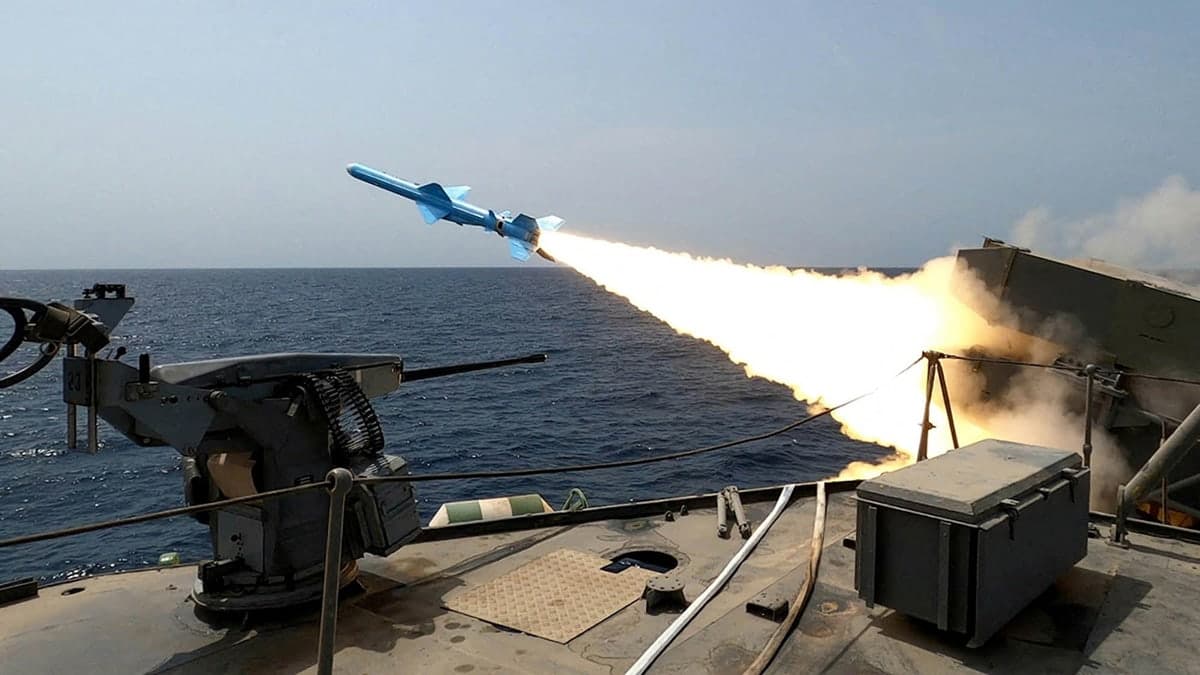
On the night of March 1, the Islamic Republic answered American resolve with a display of its own. Iranian forces fired 137 missiles and launched 209 one-way attack drones against 27 U.S. and coalition bases stretching from the Persian Gulf to the Levant. The numbers alone tell the story of a regime that has spent years preparing for exactly this moment. Tehran did not send a symbolic warning shot. It sent a coordinated, multi-axis assault designed to overwhelm air defenses, test coalition response times, and bloody American forces in front of the world.
Initial Pentagon reports indicate that U.S. and allied defenses intercepted the majority of incoming weapons. That is a testament to the skill of American war fighters and the value of layered missile defense. But interception is not the same as invulnerability. Several projectiles got through, damaging runways, fuel depots, and radar arrays at five installations. Two American service members were wounded. The bill for the interceptors expended already exceeds $200 million, while Iran’s entire salvo is estimated to have cost less than $80 million. Those figures reveal a hard truth: a determined adversary can afford to keep shooting, even when most of its rounds miss.
The attack was also a propaganda operation. Iranian state media framed the strike as proportionate retaliation within hours, complete with carefully selected footage of fires and secondary explosions. What they did not show was the mismatched economics of the exchange. Each American interceptor fired costs between $1 million and $4 million, depending on the system. Iranian drones cost a fraction of that amount. A war of attrition favors the side willing to build cheap weapons in bulk, and Tehran has built plenty.
Perhaps most telling is the tempo. The Revolutionary Guard Aerospace Force unloaded its entire opening salvo in roughly 90 minutes. That is not the work of a militia or a proxy. It is the work of a nation-state military that has studied Western doctrine, stockpiled precision munitions, and built a drone industrial base capable of feeding multiple war zones at once. Iran used this attack to announce that it can reach American forces wherever they sit in the Middle East.
Years of Appeasement Bought Us This Reckoning
No honest accounting of March 1 can ignore how the region reached this point. For years, Washington pursued a policy of accommodation toward Tehran. Sanctions were relaxed, frozen assets were released, and diplomatic outreach was treated as a substitute for credible deterrence. The result was predictable. Iran’s missile arsenal grew by roughly 40 percent between 2021 and 2025, according to open-source estimates from the Foundation for Defense of Democracies. Its drones have appeared over Ukraine, Gaza, and the Red Sea, proving that the regime has become an arms exporter for aggressors worldwide.
The regime in Tehran watched America shrink its footprint, beg for nuclear talks, and treat retaliation as something to be negotiated away. When Washington paid $6 billion for hostages in 2023, it signaled that American citizens were leverage. When enforcement of oil sanctions collapsed and Iranian exports climbed back toward two million barrels per day, the mullahs pocketed the cash and poured it into missiles and drones. Every concession was met with escalation, because that is how totalitarian regimes read weakness.
Meanwhile, the regime moved ever closer to a nuclear threshold. International inspectors reported that Iran had enriched uranium to 60 percent purity at multiple facilities, putting it within weeks of weapons-grade material if it chose to sprint. The Obama-Biden diplomatic model assumed that economic incentives would moderate Iranian behavior. The March 1 barrage disproves that theory with missile exhaust and drone wreckage.
The Biden-era policy of de-escalation did not de-escalate anything. It merely postponed the confrontation while Iran armed itself for a harder fight. The March 1 barrage is the bill coming due. The United States did not stumble into this conflict because it was too strong. It stumbled into it because its adversary no longer feared the consequences of open attack.
Only Strength Will Restore Deterrence
The answer is not another round of talks. The answer is the restoration of American strength and the credible threat of overwhelming retaliation. First, the administration must halt all negotiations over sanctions relief and reimpose the maximum pressure campaign that drained Tehran’s treasury before. Second, the United States should surge additional air and missile defense assets to the region, including Patriot and THAAD batteries, and place them under rules of engagement that permit preemptive strikes against launch sites when hostile intent is clear. Third, Washington must make plain that any future attack on American bases will be answered with strikes on the Iranian military infrastructure that produced it, not on proxy militias that Tehran treats as disposable.
America’s allies are watching. Israel, the Gulf states, and our partners in Europe need to see that the United States will defend its forces and its interests without apology or hesitation. That does not mean rushing into a ground war. It means making the cost of attacking Americans so high that even the ayatollahs conclude the price is not worth paying. Deterrence is not a slogan. It is the product of capability, clarity, and the demonstrated willingness to use both.
Finally, Congress should stop treating defense spending as a bargaining chip. The Navy and Air Force need the munitions, basing rights, and maintenance budgets required to sustain a credible presence in the Gulf. Empty hangars and delayed missile replenishment send the same signal of weakness that invited this attack. Strength is not provocative; weakness is. When the United States projects resolve, enemies calculate risk. When it projects confusion, they calculate opportunity.
The 137 missiles and 209 drones fired on March 1 were not just an attack on 27 bases. They were a test of American will. If Washington responds with more sanctions waivers and diplomatic letters, the next salvo will be larger. If it responds with strength, the regime in Tehran will rediscover a truth older than the Islamic Republic itself: free nations that refuse to be bullied eventually stop the bully in his tracks.


