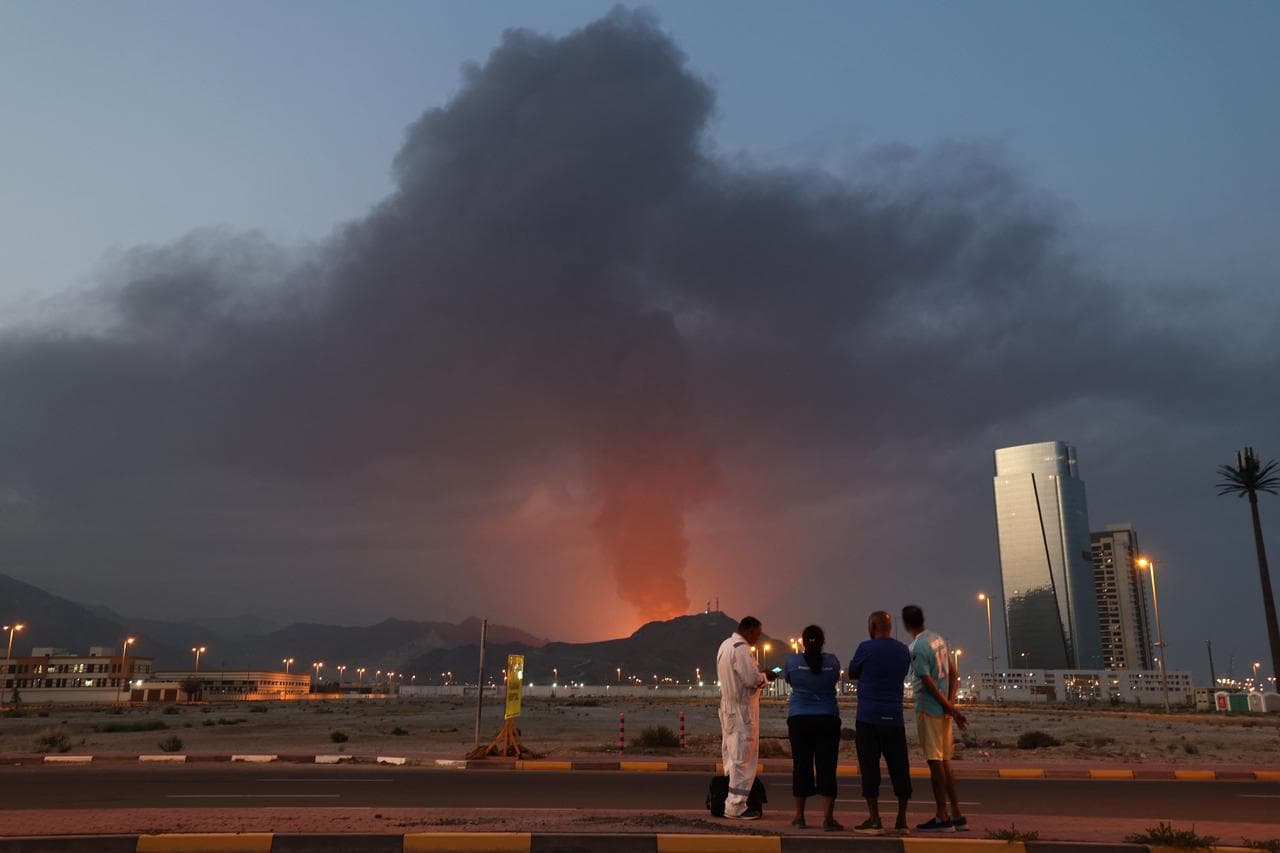
The Night the Missiles Fell
At 2:47 a.m. local time on March 1, 2026, the Persian Gulf stopped pretending it was at peace. Iranian Revolutionary Guard ballistic missiles arced across the darkened sky and struck the Burj Khalifa district, Hamad International Airport, and the Ras Tanura oil terminal. Within forty minutes, 147 ballistic missiles had been fired at civilian and energy targets across the United Arab Emirates, Qatar, and Saudi Arabia. The death toll stands at 312 confirmed dead, with another 1,800 wounded across the three nations. The fires in Dubai alone are expected to cause more than $14 billion in insured damage, making this the most costly single-night attack on Gulf infrastructure since Saddam Hussein's 1990 invasion of Kuwait.
Iranian state media did not bother with denial. The mullahs called the strikes "divine vengeance" against "American lackeys" and warned that any retaliation would be met with chemical and drone waves against shipping in the Strait of Hormuz. Global oil prices surged 23 percent before Asian markets even opened. The world watched livestreams of burning skyscrapers and asked the same question: how did the most powerful nation in history let this happen?
The answer is not complicated, though our foreign policy establishment will pretend otherwise. For four years, Washington sent signals of retreat. We emptied the Persian Gulf of carrier strike groups to chase distractions elsewhere. We begged Tehran back to negotiating tables it never intended to honor. We lectured allies in Riyadh and Abu Dhabi about human rights while Iranian proxy militias encircled them. We treated the ayatollahs like misunderstood reformers rather than the fanatical theocrats they are. Weakness invites aggression. Last night, the invoice arrived.
The Price of Appeasement
Let us be clear about what this attack represents. It is not a regional spat between rival tribes. It is a direct, state-sponsored act of war by the Islamic Republic against sovereign American partners, against the global energy market, and against the international order that keeps sea lanes open and commerce flowing. The missiles that hit Hamad International were not precision instruments aimed at military bunkers. They slammed into a civilian passenger terminal packed with families, business travelers, and transit workers. Security camera footage shows the concourse ceiling collapsing on a duty-free hall where children had been sleeping during a layover. That is not strategy. That is barbarism.
The Biden-era policy of "de-escalation" failed exactly as its critics predicted. The administration released $6 billion in frozen Iranian assets in exchange for promises that Tehran promptly broke. It removed the Houthis from the terrorist list, only to watch them shut down Red Sea shipping for eighteen months. It slow-walked arms sales to Israel and the Gulf states while Iranian drones flooded into Gaza, Lebanon, Syria, and Yemen. Every concession was interpreted in Tehran not as goodwill, but as green light. Every hesitation was read as opportunity.
Our European allies, addicted to Iranian oil loopholes and nuclear fantasy, share the blame. They clung to the 2015 nuclear deal long after its corpse had cooled. They called for "restraint" every time Israel defended itself. They built a parallel financial system so European firms could trade with a regime that hangs homosexuals from cranes and funds terror from Buenos Aires to Bulgaria. Restraint is a virtue when practiced by the civilized. It is an invitation when preached to predators.
The economic fallout will be felt in American kitchens before Ramadan ends. Gasoline futures jumped the equivalent of thirty cents per gallon overnight. Freight insurers are refusing coverage for vessels transiting Hormuz without armed escort. The United States imports only modest amounts of Gulf crude directly, but we do not live in an economic bubble. When Brent crude spikes, American truckers, farmers, manufacturers, and commuters pay the price. A single night of Iranian aggression just added billions to the cost of living for working families who are already squeezed by inflation.
What Must Come Next
The first duty of the American president is to defend American interests and American allies. That duty is not fulfilled by issuing strongly worded statements at the United Nations. It is fulfilled by making the cost of attacking our partners so high that only a suicidal regime would dare try it again. The immediate response must be military, decisive, and proportionate in scale but not in sentiment. Iran's missile launch sites, drone factories, Revolutionary Guard command nodes, and the nuclear facilities that make this blackmail possible should be struck simultaneously and with overwhelming force. The era of pinprick responses is over. Pinpricks do not deter fanatics. They entertain them.
Beyond kinetic action, the United States must end its financial courtship of Tehran permanently. Reimpose the full sanctions architecture that was dismantled in the name of diplomacy. Designate the entirety of the Islamic Revolutionary Guard Corps and its economic empire as terrorist entities, not merely a single bureau. Seize the tankers that smuggle Iranian oil through ghost fleets. Expel Iranian diplomats from Western capitals. And tell the truth, finally, that the Iranian regime is a revolutionary terror state, not a candidate for normalization.
Our Gulf allies must also be armed without apology. Saudi Arabia, the Emirates, Qatar, and Bahrain have spent years trying to diversify security partnerships toward Beijing and Moscow because Washington proved unreliable. That drift must be reversed. Sell them the missile defense, fighter aircraft, and intelligence sharing they have requested. Station additional Patriot and THAAD batteries in the region. Restore the carrier presence that deters by its mere existence. America first does not mean America alone, and it certainly does not mean abandoning friends to theocratic murderers.
Finally, Congress and the American people must understand that this war did not begin on March 1. It began decades ago when students in Tehran seized our embassy. It continued through Hezbollah's bombing of Marines in Beirut, the Khobar Towers massacre, the arming of Iraqi insurgents, and the drone war against Israel and Gulf shipping. Iran has been at war with us while we pretended otherwise. Last night, they widened the battlefield. The only question left is whether we have the will to win.
History is not kind to empires that refuse to defend their own order. Britain learned it. Rome learned it. We will learn it too, unless we act. Dubai burns. Doha shakes. The Gulf is a war zone because our enemies no longer fear us. That can change. It must change. And it starts with the understanding that peace is not the absence of American strength. Peace is the result of it.


