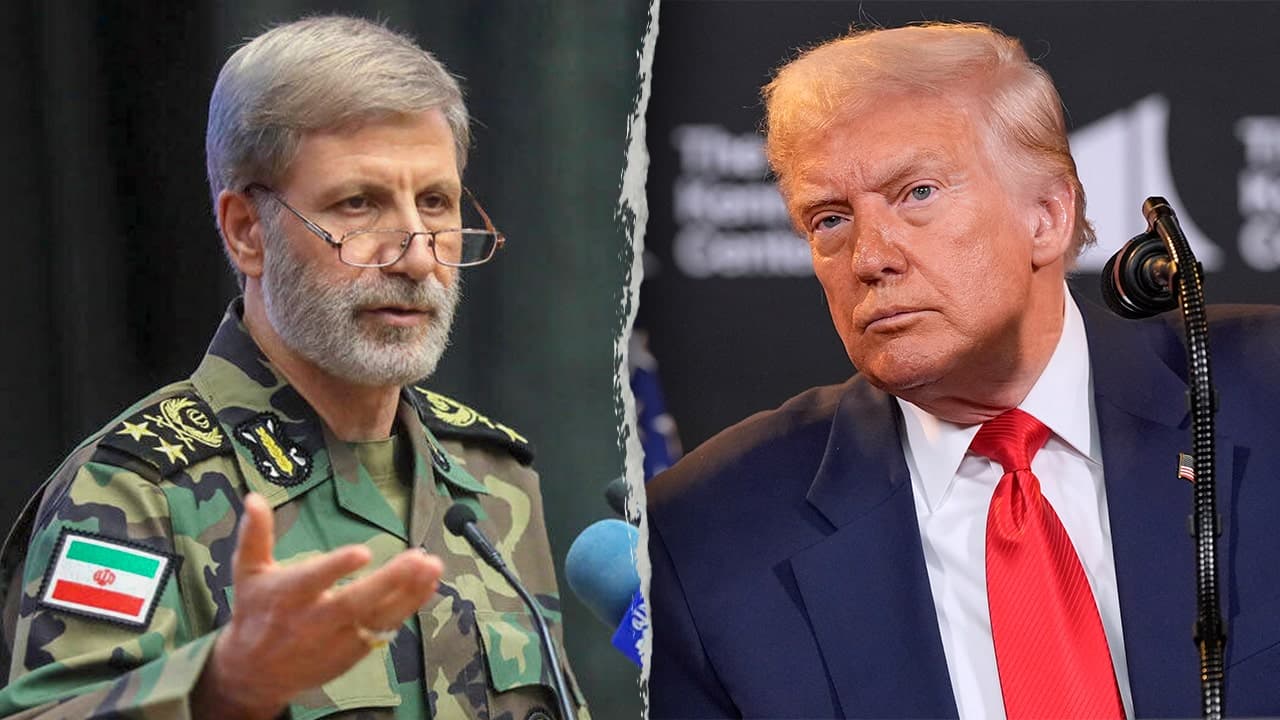
A Party Without a Spine on the World's Most Dangerous Question
When you can't decide whether a regime that chants "Death to America" at state functions is a threat worth confronting, you've lost something more important than a foreign policy debate. You've lost a moral framework.
Senate Democrats are reportedly divided, some support Trump's pressure campaign on Iran, others are arguing for diplomatic re-engagement, and the press is covering this as a nuanced policy disagreement between thoughtful lawmakers. Maybe. But watching Democrats tie themselves in knots over whether to back American strength against a theocratic regime that has sponsored terror, murdered Americans through its proxies, and funded every destabilizing force from Yemen to Lebanon for forty years, I keep thinking: what exactly do they stand for?
The Islamic Republic of Iran has been at war with the United States, in every meaningful sense except an official declaration, since November 4, 1979. That is not editorial opinion. It is the documented history of the seizure of the American Embassy in Tehran, the Marine barracks bombing in Beirut in 1983 that killed 241 Americans, the Khobar Towers bombing in 1996, the arming and training of militias that killed American soldiers in Iraq for a decade, and the ongoing support for Houthi attacks on international shipping that affect American economic interests daily.
What the Democrats Who Support Engagement Are Actually Saying
The Democrats arguing for re-engagement with Iran, a return to something like the JCPOA framework, are making a case that diplomacy is always preferable to pressure, and that the Trump maximum-pressure campaign makes war more likely. That's an argument worth engaging.
But the track record of engagement is not encouraging. The JCPOA, signed in 2015, did not moderate Iran's regional behavior. Tehran used the unfrozen assets and sanctions relief to dramatically expand its support for Hezbollah, Hamas, and the Houthi movement. It continued its ballistic missile development, a program not covered by the JCPOA's terms. And it enriched uranium to levels well beyond what any civilian nuclear program requires, moving closer to weapons-grade enrichment while the agreement was technically in force.
The argument that engagement produces moderation requires at least one example of engagement having produced moderation. Forty-six years into the Islamic Republic, that example doesn't exist.
I'm a person of faith, and I understand the instinct that says every conflict has a diplomatic solution if you try hard enough. I've prayed for peace in places that seemed beyond it. But Scripture also teaches that a ruler who fails to restrain evil within his borders is failing his people, and that peace purchased by tolerating the intolerable isn't peace, it's delay. America has been delaying its reckoning with Iran for four decades.
The Senators Who Are Getting This Right
A handful of Democratic senators, most prominently those with hawkish foreign policy records and constituencies that include large Jewish or military communities, have been willing to support elements of the Trump Iran strategy while criticizing the tactics. That's intellectually honest. You can believe that maximum pressure is the right strategic posture while disagreeing about how it's being executed.
What's harder to respect is the faction arguing for a return to diplomacy with no explanation of why the next engagement attempt will produce a different result than the last one. Senate Republicans went through this too, there's a real isolationist wing that wants to disengage from Middle Eastern commitments entirely, and their argument has its own coherence. But the Democrats' dovish Iran wing isn't making an isolationist argument. They want engagement. They just can't explain what successful engagement looks like after half a century of failed attempts.
The American people have a clearer view than the Senate. Poll after poll shows that Americans believe Iran is a serious threat and do not trust the Iranian government to honor any agreement it signs. That's not warmongering, that's paying attention to forty-six years of behavior. The Democratic senators who can't figure out their Iran position aren't waiting for more information. They're waiting for political cover. And some things are too important to wait for that.


