The Assessment The Press Skipped
The Drug Enforcement Administration published its 2026 National Drug Threat Assessment in early January. The document runs 187 pages. The press coverage, in the major newsrooms that covered the prior year's assessment in substantial form, this year ran to roughly a one-column wire summary in most outlets. The assessment deserves more than the wire summary. I stood on that line. Look, the network the assessment describes is bigger than the press coverage suggests, and the dimensions the assessment characterizes are the dimensions the border agents have been telling their leadership about for three years.
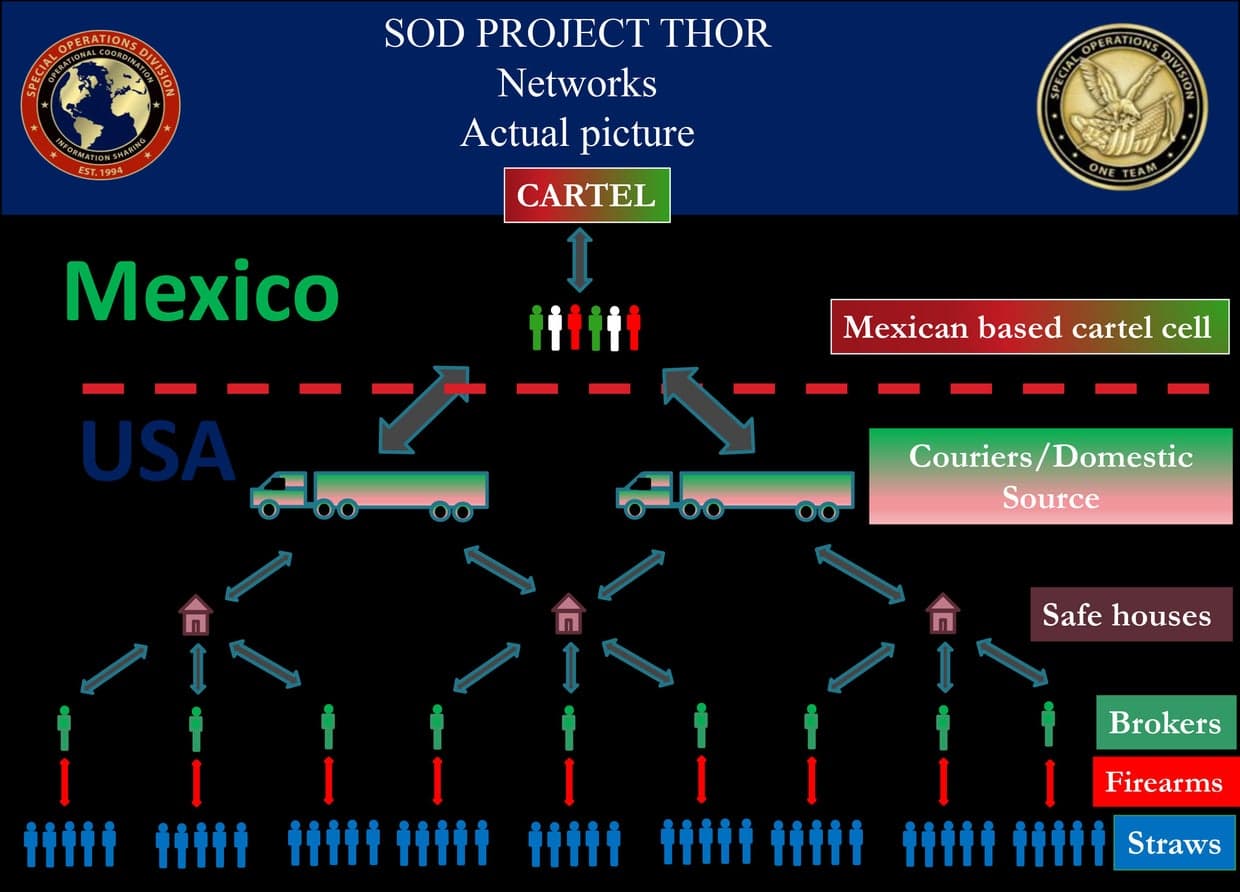
The 2026 assessment expands the prior framework by adding three new analytical categories. The first is the cartel network's penetration of U.S. transportation and logistics infrastructure on the receiving side of the border. The second is the cartel network's financial infrastructure within the U.S., including the laundering networks that move proceeds back through legitimate financial channels. The third is the cartel network's recruitment of U.S.-based personnel, including in some cases recruitment of personnel with U.S. government affiliations.
The Logistics Penetration
The logistics penetration is the dimension the agents on the ground have been seeing for the trailing five years and that the assessment now characterizes at the institutional level. The cartels operate, by the assessment's analysis, distribution networks that integrate with U.S. domestic logistics infrastructure to move product from southwestern border entry points to consumer markets across the country. The networks involve U.S.-licensed commercial drivers, U.S.-registered transportation companies, and U.S.-owned warehousing facilities that operate as legitimate businesses with cartel-aligned operational priorities.
The penetration is not principally a matter of the cartels owning the businesses. The penetration is principally a matter of the cartels having operational control over specific personnel within the businesses, through compensation arrangements that the businesses' own management is, in some cases, unaware of. The compensation arrangements range from cash payments to specific drivers, to family-coercion arrangements that affect drivers with cross-border family ties, to extortion arrangements that affect businesses whose principals have specific vulnerabilities. The numbers don't lie. The penetration is real.
The Financial Infrastructure
The financial infrastructure dimension is the dimension the assessment treats most carefully because the dimension intersects with U.S. financial regulation in ways that produce litigation risk for the assessment's authors. The financial dimension involves a network of money services businesses, real estate transactions, and informal value transfer systems that, in the aggregate, move cartel proceeds back through U.S. financial channels at scale.
The Financial Crimes Enforcement Network, the Treasury bureau responsible for anti-money-laundering enforcement, has, in its own coordinated reporting, characterized the cartel financial infrastructure as the most sophisticated transnational criminal financial network operating in the U.S. The characterization is, in plain reading, more direct than the prior assessment's language and reflects the operational visibility the U.S. enforcement community has developed over the trailing two years.
The U.S. Personnel Recruitment
The U.S. personnel recruitment dimension is the dimension that should produce the most public attention and has produced the least. The assessment characterizes, with appropriate analytical caution, a pattern in which the cartel network recruits U.S.-based personnel for specific operational roles. The roles include commercial driver recruitment, real estate professional recruitment, money services business operator recruitment, and in a smaller but documented number of cases, recruitment of personnel with U.S. government affiliations who provide operational information to the network.
The U.S. government affiliation recruitment is, by the assessment's careful framing, a documented pattern rather than a generalized accusation. The pattern includes specific cases the assessment summarizes without identifying the individuals involved. The cases include personnel at federal law enforcement agencies, at state and local law enforcement agencies, and at federal civilian agencies with relevant operational visibility. The numbers, by the assessment's reporting, are small in absolute terms and large in operational consequence given the role-specific access the recruited personnel provide.
What The Frontline Knows
What the frontline knows, what the agents at the line and at the Forward Operating Bases have known for years, is that the cartel network is more sophisticated and more deeply embedded than the public discussion has acknowledged. The frontline has been telling leadership. The leadership has been managing the institutional posture. The institutional posture has been calibrated for political consumption rather than for the operational realities the frontline reports.
The assessment, in its current form, represents the institution's most direct public acknowledgment of the realities the frontline has been reporting. The acknowledgment is, by the standard of prior assessments, more direct. The acknowledgment is also, by the standard the frontline experience would suggest, still cautious. The structural gap between the institutional posture and the frontline reality has not been closed by the assessment. The closure of the gap is the work that remains.
What The Operational Response Should Look Like
The operational response, in my reading, requires three categories of action. The first is sustained federal investment in the cross-jurisdictional task forces that combine federal, state, and local enforcement capacity against the cartel networks. The investment has been inadequate to the scale of the network for two decades. The investment requires sustained funding rather than the episodic surges that have characterized the federal response.
The second is targeted action against the U.S.-side financial infrastructure that supports the cartel networks. The action requires the regulatory and enforcement coordination between Treasury, Justice, and the affected state-level financial regulators. The coordination has improved over the trailing five years. The coordination is still inadequate to the scale.
The third is the workforce-side action that addresses the U.S. personnel recruitment dimension. The action requires improved cleared-personnel vetting at the federal agencies whose personnel are at recruitment risk, improved background-investigation cadence, and improved counterintelligence awareness training across the affected agencies. The actions are not glamorous. The actions are the actions the country actually requires. They don't want you to see this. The assessment is sitting on the DEA website. The assessment is the public record. The public record is in the public hands. The public should be reading it.


