What The Polling Shows
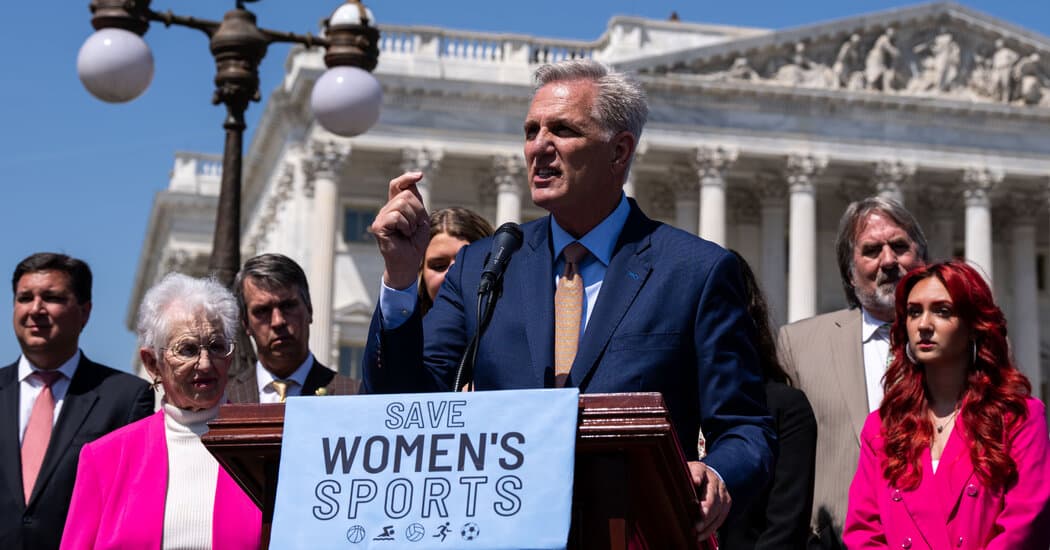
The polling on the question of biological-male participation in women's sports has stabilized over the last eighteen months in a position the activist class did not anticipate and has not adjusted to. The most recent comprehensive poll, from a major nonpartisan polling organization, shows approximately 71 percent of Americans saying that participation in women's sports should be restricted to biological females, with approximately 21 percent saying that participation should be open to transgender women, and the remainder declining to take a position. The numbers are stable across age cohorts, across regional lines, and across party affiliation in ways that other cultural questions are not stable.
The stability matters more than the headline number. The American public has been polled on this question repeatedly since 2019. The numbers have moved very little over six years. The numbers are not, in the polling literature, a position that is shifting. The numbers are a position that has, in the considered judgment of the American public, settled. As a mother, I can tell you that the settled position is not surprising to the mothers and fathers I have spoken with. The settled position is the position that anyone who has watched a high school athletic event would arrive at after twenty minutes of observation.
The State-Level Policy Pattern
The state-level policy pattern is following the polling on a one-year lag. Twenty-six states now have legislation restricting biological-male participation in women's sports at the high school level. Twenty-one of those states have extended the restrictions to the collegiate level for public institutions. The pattern includes states whose general political alignment is conservative, moderate, and in a small but growing number of cases, traditionally liberal. The pattern is broader than the activist framing acknowledges.
The legislation is, in most of the states that have passed it, the result of bipartisan voting majorities. The bipartisan character is not always reported in the national press coverage, which has tended to frame the legislation as a partisan exercise driven by the Republican governors who signed the bills. The framing is incomplete. The legislative records show that the bills, in most cases, passed with crossover votes from legislators in both major parties, and in some cases with majorities of women legislators in both parties.
The Activist Class Has Not Caught Up
The activist class organizing on this issue has been slow to incorporate the polling and the state-level pattern into its strategic posture. The activist class continues to frame the issue as a question of inclusion versus discrimination, which is the framing the activist class used effectively in earlier phases of the cultural debate over LGBT rights more broadly. The framing is not landing on this question because the public is treating this question as a question of fairness in athletic competition, not as a question of inclusion in society.
The activist class is, in its public posture, also treating any voter who agrees with the 71 percent position as a person whose position requires education rather than as a person whose position has been considered and is firm. The educational posture is the posture that, more than any other tactical choice, has produced the polling stability against the activist class's preferred outcome. The educational posture treats the voter as the obstacle. The voter notices.
The High School Coaching Community
The high school coaching community has been carrying the operational consequences of the policy debate while the activist class has been organizing the rhetorical debate. The coaches I have spoken with across three states are the coaches who run the actual programs, who set the actual lineups, who handle the actual locker room conversations with the actual girls on the actual teams. The coaches have, with the consistency that the polling reflects, communicated to school administrators and to state legislators that the policy clarity is what they need to do their jobs.
The clarity has, in the states that have passed legislation, been provided. The clarity has produced, in the descriptions of the coaches I have spoken with, a noticeable improvement in the operational running of the programs. The improvement is the kind of improvement that does not show up in any national news coverage because the improvement is small, local, and structural.
The Female Athlete Population
The female athlete population, particularly at the high school and collegiate level, has been the population that the policy debate is supposedly being conducted on behalf of. The female athletes I have spoken with, and the female athletes my own daughters know, have a consistent message that the activist class has not adequately engaged with. The female athletes want the policy clarity that allows them to compete in athletic categories that are organized around the biological category their sport historically represents. The female athletes have, in the available polling of student-athletes specifically, supported the policy position the broader public has supported.
The female athlete voice is the voice the activist class has had the most difficulty engaging with because the activist class's framing requires the female athletes to either accept the activist position or be characterized as obstacles to the activist position. The framing produces no good outcomes for the activist class because the female athletes refuse, in most of the available reporting, to accept either of the two assigned roles.
What The Policy Conversation Should Look Like Now
The policy conversation now should be a conversation about how the states that have not yet legislated will incorporate the clear public position into their state policy frameworks. The conversation should be a conversation about how the federal Title IX framework will be updated to align with the state-level pattern. The conversation should be a conversation about the smaller and harder question of how to construct competitive opportunities for transgender athletes in categories that do not displace the female athlete population from the categories the female athletes have historically occupied.
The harder conversation is the conversation the activist class is, in my reading, best positioned to lead if the activist class chooses to accept the broader settlement on the larger question. The choice has not yet been made publicly. The choice is, in private conversations, being discussed more seriously than the public posture suggests. We trusted the system to clarify this. The system is clarifying it. The clarification is slower than the parents would prefer. The clarification is also, on the available evidence, in the direction the parents have asked for.