The Warning No One Wanted to Hear
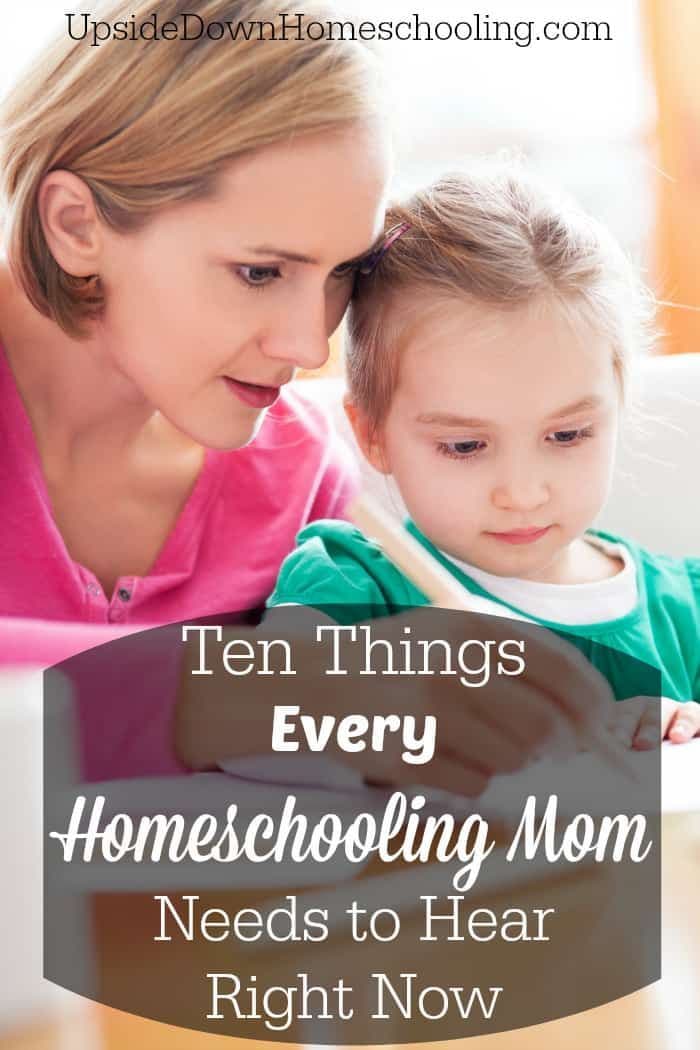
Back when school boards still met in person and teachers' unions called the shots, every homeschool mom knew the eye roll. It came at the grocery store checkout, the church potluck, the family reunion. “You are sheltering them,” relatives said. “What about socialization?” neighbors asked. “You are not a real teacher,” the system implied, usually with a smile. The homeschool mother nodded, packed the library books, and kept right on teaching phonics at the kitchen table. After the last five years, she deserves an apology. In fact, she deserves the floor.
The lockdowns did more than close classrooms. They pulled back the curtain. Parents who had been told for decades that professional educators held a monopoly on knowledge suddenly found themselves squinting at Zoom screens, trying to explain Common Core math while a teachers' union president appeared on cable news explaining why empty buildings should stay empty. For millions of American families, the question stopped being theoretical. They began to wonder whether the institution they had been trained to revere was actually serving their children, or merely serving itself.
Long before the pandemic, homeschool mothers were issuing warnings that polite society preferred to ignore. They pointed out that reading instruction had been politicized, that history had been rewritten to satisfy adult agendas, and that classroom discipline had collapsed in many districts. They warned that the one-size-fits-all factory model was crushing boys, boring gifted children, and leaving struggling readers behind. For their trouble, they were labeled reactionaries, religious zealots, or overprotective cranks.
The caricature never matched the reality. Modern homeschooling families come from every religious and political background, and their reasons are as varied as their zip codes. Some pull a child out of a school that refused to stop bullying. Some want a classical curriculum because the local middle school eliminated advanced literature. Some watched their special-needs student languish in an individualized education program that was neither individualized nor educational. They did not leave the system because they rejected expertise. They left because they could see the expertise was failing the child sitting across from them at dinner.
The Numbers Tell a Different Story
The case for homeschooling used to rest on principle. It now rests on results. Between 2019 and the 2020-2021 school year, the number of American homeschool students surged from roughly 2.5 million to an estimated 3.7 million, according to the National Home Education Research Institute. That is not a fringe migration. That is a nationwide vote of no confidence cast by parents who looked at the alternatives and chose the dining room table.
Those parents had good reasons. The 2024 Nation's Report Card showed that only 27 percent of eighth graders reached proficiency in math. The long-term trend assessment for 13-year-olds recorded a nine-point drop in mathematics between 2019-2020 and 2022-2023, the single largest decline in a half century of testing. Reading scores for the same age group fell to levels not seen since the 1970s. While the public education establishment blamed the pandemic, the homeschoolers quietly produced a counterexample. The very children who were supposedly locked out of professional instruction kept learning at home, and in many cases learned more.
EdChoice's 2024 Schooling in America Survey added another layer. It found that 79 percent of homeschool parents were satisfied with their child's schooling experience, compared to just 69 percent of public district school parents. Among district parents, 32 percent described themselves as somewhat or very dissatisfied, a level of discontent that should embarrass the bureaucracy collecting their tax dollars. Those numbers cannot be waved away with lectures about credentialing. They represent actual children, actual report cards, and actual parents who have done the arithmetic on what works.
Academic outcomes reinforce the parental verdict. According to the National Home Education Research Institute, homeschooled students typically score 15 to 25 percentile points above their public school peers on standardized academic achievement tests, a gap that remains steady across income and parental education levels.
A Lesson in Trusting Parents
The real lesson of the last several years is not that every family must homeschool. That is a decision that belongs to parents, not columnists or bureaucrats. The lesson is that the experts were wrong to treat parental judgment as the problem. The experts who designed remote learning on the fly, who kept schools closed while bars opened, who insisted that five-year-olds could learn to read through a mask and a laptop screen, did not cover themselves in glory. The mothers who taught long division between loads of laundry and lunch did.
Public education has a role in a free society, but it is not a sovereign power. It exists to serve families, not to replace them. When it forgets that order, parents have every right to withdraw their children, their tax dollars, and their trust. School choice, education savings accounts, and charter expansion are not attacks on public schools. They are accountability measures for institutions that have spent too long answering only to themselves.
The homeschool mom did not need a pandemic to prove her point, but the pandemic proved it anyway. She knew that a child is not a widget on an assembly line. She knew that curiosity, character, and competence are cultivated best in places where love comes first. She trusted herself when the culture told her to defer, and she was right.
So the next time a mother explains that she is teaching her children at home, do not ask about socialization. Ask what the rest of us can learn from her.