Hollywood has spent the better part of a decade blaming everyone but itself for the collapse of the movie business. Streaming, COVID, ticket prices, inflation, short attention spans, and fickle audiences have all taken their turns as the villain of choice. Studio publicists trot out new excuses every quarter, as if the public cannot recognize a deflection when it hears one. But the explanation is simpler than the executives in Burbank want to admit. Americans are not walking away from movies. They are walking away from Hollywood.
The numbers make the case plain. The domestic box office finished 2025 with roughly $8.5 billion in ticket sales, according to industry estimates. That sounds large until you remember that 2019 produced more than $11.3 billion. Adjusted for inflation, the gap is a canyon. The average price of a ticket has risen, yet total admissions in North America fell below 620 million in 2025 for the fifth consecutive year. In 2002, theaters sold more than 1.5 billion tickets. The audience has not disappeared. It has been driven off.
The institutional rot runs deeper than any single flop. The men and women who once built studios around storytellers have been replaced by corporate strategists chasing quarterly reports and four-quadrant formulas. Every decision is filtered through spreadsheets, global market tests, and the latest consulting fad. The result is an industry that knows the price of everything and the value of almost nothing.
The Audience Did Not Leave; Hollywood Pushed Them Away
For generations, the movie theater was a shared ritual for ordinary Americans. Families, teenagers, veterans, and church groups gathered under the same roof to watch a story unfold. Hollywood understood that its job was to entertain, not to lecture. The bargain was straightforward: hand over a few dollars and receive two hours of escape, wonder, or catharsis. That contract has been broken.
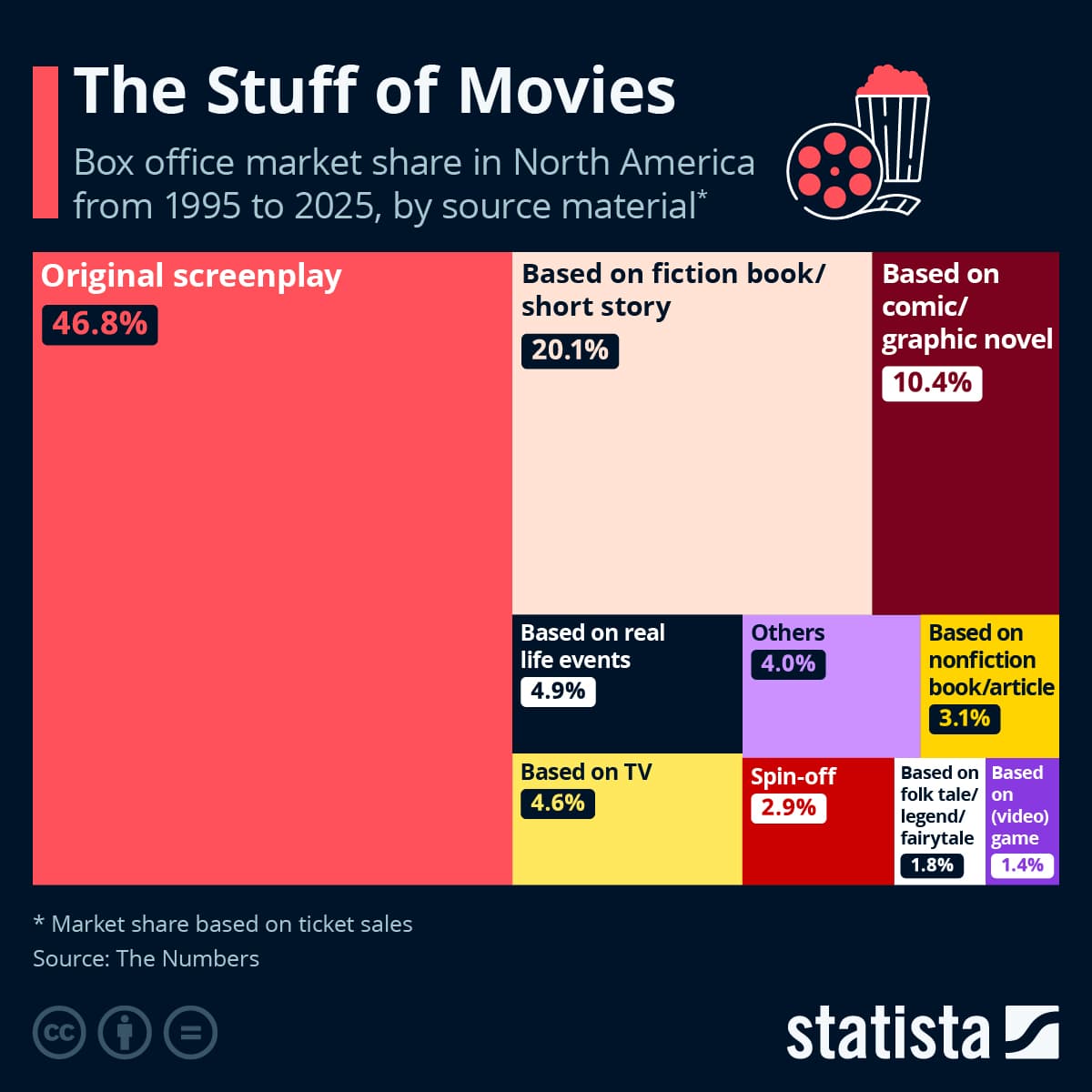
Studios now treat the paying public like a problem to be managed rather than a customer to be served. Franchises are strip-mined for nostalgia while original ideas are treated as risky luxuries. Sequels, reboots, and multiverse sagas dominate release calendars, often written by committee and tested by focus groups until every sharp edge is sanded away. The result is a product that feels manufactured instead of made. Audiences can smell the cynicism, and they are responding by keeping their wallets closed.
The decline is not limited to ticket stubs. Home viewing has changed habits, yes, but it has not killed the theatrical experience. When a film genuinely excites people, they still show up. The success of lower-budget, crowd-pleasing hits proves that Americans will buy popcorn and reserve seats if they believe the movie will be worth their time. The problem is not distribution; it is trust. Hollywood has burned through too much goodwill.
Politics Replaced Storytelling
Nothing has damaged that goodwill more than the industry's open contempt for the values of Middle America. For years, studios have pumped out stories in which the traditional family is mocked, faith is treated as a punchline, and patriotism is depicted as a character flaw. Meanwhile, awards shows and press tours have become televised sermons on the latest progressive cause. The public noticed.
Take the recent record of major releases. Disney's live-action Snow White reportedly cost more than $250 million and opened to a disastrous $43 million domestic weekend. Audiences were told the classic fairy tale needed ideological renovation. They disagreed with their feet. The Marvels lost an estimated $200 million after marketing costs, and Indiana Jones and the Dial of Destiny erased roughly $100 million for its studio. These were not small bets. They were billion-dollar brands bankrupted by arrogance.
The pattern repeats across genres. War films lecture soldiers about privilege. Comedies scold viewers about language. Children's programming introduces concepts that parents do not want explained during Saturday morning cartoons. Lead actors use press junkets to insult half their potential customers before the premiere. Audiences are not asking for sermons. They are asking for heroes, villains, jokes, and redemption. Those things are old-fashioned only to people who have forgotten why stories matter.
The Path Back Is Hard Work, Not Finger-Pointing
Some in the industry have begun to whisper that the public has grown too sensitive, too political, or too lazy to leave the house. The truth is the opposite. Americans are discerning customers with limited time and rising bills. They will spend money on entertainment that respects them.
The evidence is already visible for anyone willing to look. Top Gun: Maverick soared past $1.5 billion worldwide because it celebrated skill, loyalty, and country without apology. Smaller films that honor faith and family regularly outperform their modest budgets because they serve an audience the studios ignore. The hunger is there. The supply is the problem.
The fix is not another marketing campaign or a government bailout. It is a return to craft. Hire writers who understand plot and character instead of activists who understand Twitter. Cast based on talent and fit rather than checkbox demographics. Greenlight stories that honor courage, family, and country without apology. Make the hero someone a father would want his son to emulate. Stop treating half the country as the enemy.
This is not a call for censorship or uniformity. Conservatism welcomes argument and variety. But art that openly despises its audience deserves the empty seat it receives. The box office is a voting booth where every ticket is a ballot, and the verdict has been clear for years.
Hollywood does not have a streaming problem. It does not have a COVID hangover. It has a respect problem. The solution is as simple as the problem itself: make better movies, and stop insulting the people who pay for them.